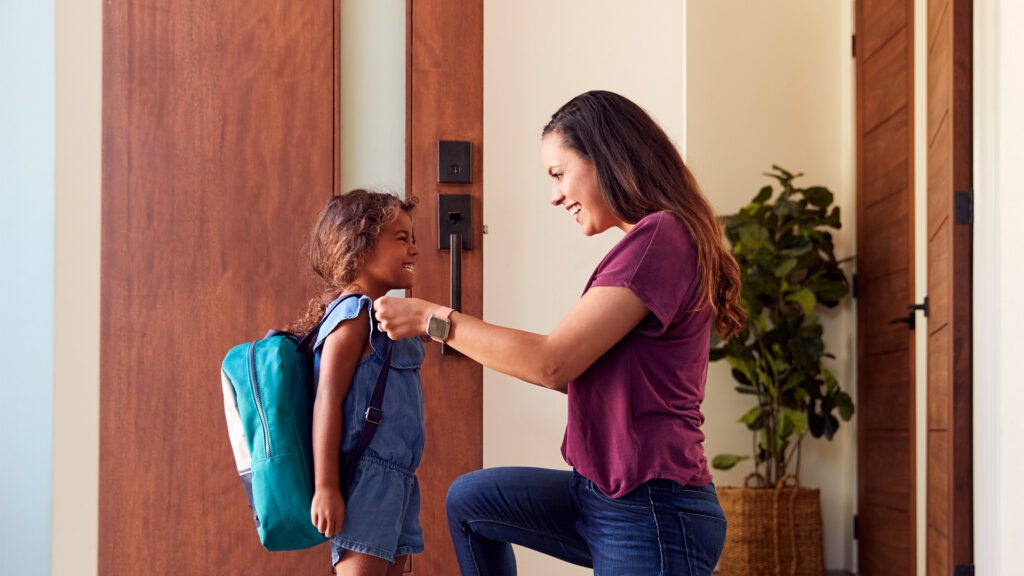
For many families, drop-off can be the hardest part of the day. A child clings. Tears fall. A parent’s heart sinks.
It’s easy to wonder whether something is wrong, whether they’re ready, whether you should stay longer.
The good news? Separation anxiety is a completely normal and healthy part of development.
At Ages in Stages Childcare, we walk alongside families through this transition every year — especially during new enrollments and seasonal transitions. Understanding what separation anxiety truly is (and how to respond) makes all the difference.
What Separation Anxiety Really Is
Separation anxiety is not a sign that a child isn’t ready. It’s actually a sign of secure attachment.
Children who have strong bonds with caregivers naturally protest when that caregiver leaves. Around toddler and preschool age, children are developmentally wired to seek safety and predictability.
When their safe person leaves, their nervous system signals: “Wait — something changed.”
That reaction may look like:
- Crying
- Clinging
- Refusing to enter
- Saying “Don’t go!”
But underneath that behavior is something healthy: connection.
The goal is not to eliminate attachment — it’s to help children build confidence in separation.
What Helps: Consistency Is Everything
The most powerful tool in easing separation anxiety is routine. Children feel safest when they know what to expect.
Helpful strategies include:
- Create a predictable goodbye ritual — Hug, kiss, phrase, wave at the window: same every day.
- Keep drop-off short and confident — Even if you feel unsure, your calm tone matters.
- Arrive at consistent times — Irregular timing can increase anxiety.
- Partner with the teacher — Let staff guide the transition. They’re trained for this moment.
When drop-offs are consistent, children learn: “Mom/Dad always comes back.”
And that belief builds resilience.
What Makes It Worse (Even Though It Feels Loving)
The instinct when a child cries is to stay longer. But lingering often increases anxiety.
When parents come back in repeatedly, extend goodbyes, sneak out, or show visible worry, it sends mixed signals. Children read your hesitation, and it confirms their worry.
The kindest thing you can do is:
Be warm. Be brief. Be confident.
Even if tears happen.
In most classrooms, children settle within minutes once engaged in an activity.
When to Seek Extra Support
While separation anxiety is normal, there are times to check in more deeply.
Consider additional support if:
- Distress lasts longer than 30–45 minutes consistently
- Physical symptoms (vomiting, panic-level distress) persist
- Anxiety does not improve after several weeks
- Sleep and behavior change dramatically at home
At Ages in Stages, our teachers actively watch for these signs — so you don’t have to navigate it alone. Sometimes children need slower transitions, shorter days, or extra support during the adjustment period.
A conversation with your child’s teacher — or pediatrician — can help determine next steps.
The Bigger Picture
Confidence in separation is a life skill. Every drop-off your child navigates is a small step toward the moments that matter later — kindergarten, sleepovers, field trips, sports practice — all of which begin with one foundational belief:
“I am safe, and my caregiver comes back.”
At Ages in Stages, our classrooms are built around secure attachments, predictable routines, and intentional teacher-child relationships — because emotional safety comes before learning.
If your child is struggling with drop-off, you are not alone.
It’s a phase — and with consistency, it passes.
Any content, resident submissions, guest columns, advertisements, and advertorials are not necessarily endorsed by or represent the views of Best Version Media LLC (BVM) or any municipality, homeowners associations, businesses, or organizations that this publication serves. BVM is not responsible for the reliability, suitability, or timeliness of any content submitted, inclusive of materials generated or composed through artificial intelligence (AI). All content submitted is done so at the sole discretion of the submitting party.