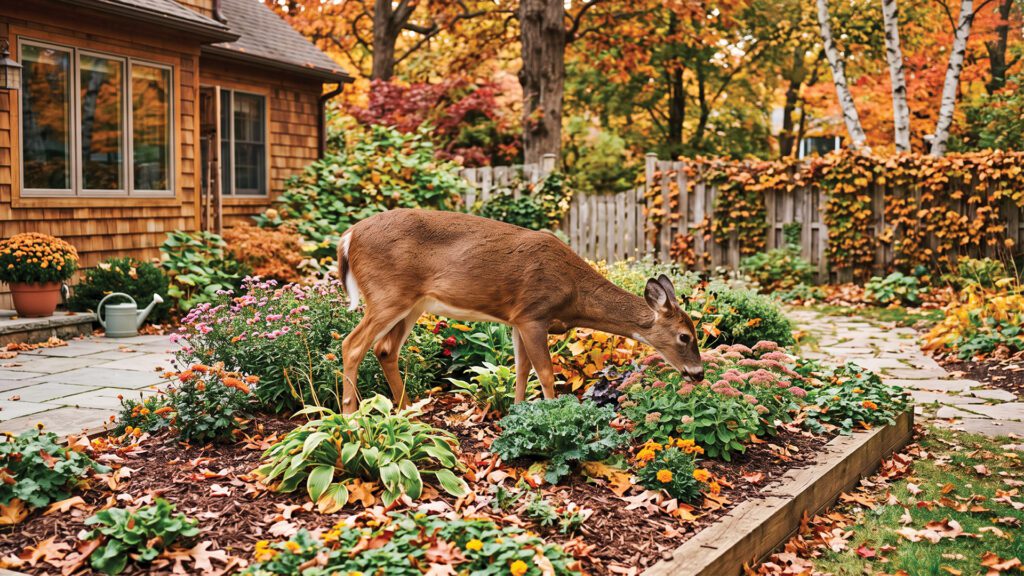
As summer fades into fall, deer feeding habits change dramatically. Cooler temperatures signal the start of the fall mating season, and deer begin eating heavily to build reserves for winter. Plants they ignored all summer may suddenly become appetizing. Taking preventive steps now can save your landscape from significant damage.
There is no such thing as a deer-proof plant, especially when food becomes scarce, but there are plants that are much less appealing. Deer generally avoid plants with fuzzy or hairy leaves, thick or leathery foliage, sharp spines, strong fragrances, or compounds that taste bitter or are mildly toxic. Planting these in front of your more vulnerable plants can stop deer from browsing.
FUZZY FOLIAGE & PRICKLY PLANTS
Plants with fuzzy foliage—such as lamb’s ear, lady’s mantle, yarrow, ageratum, and spirea—are often left alone. Thick or leathery leaves on iris, pachysandra, and peonies are also less attractive. Deer usually avoid prickly plants like barberry and globe thistle, while most ornamental grasses are ignored because their sharp edges make them difficult to eat.
NATURAL DEER DETERRENTS
Strongly scented plants are another excellent choice. Herbs such as lavender, sage, thyme, rosemary, and oregano naturally deter deer. Other aromatic plants include catmint, Russian sage, and boxwood. Deer also avoid daffodils, hellebores, ferns, false indigo, bleeding hearts, and poppies. Vegetables like onions, garlic, chives, leeks, squash, and cucumbers are also less attractive because of their strong odors or rough, hairy foliage.
Physical barriers can help. A tall fence, solid hedge, tall ornamental grasses, or a trellis covered with vines can hide prized plants from view. Deer are reluctant to jump over barriers if they cannot clearly see where they will land.
DEER REPELLENTS
Repellents are most effective when applied before browsing begins and reapplied according to label directions, especially after rain. Products such as Liquid Fence and Bonide Repels-All can be very effective. Rotating repellents throughout the season helps prevent deer from becoming accustomed to one scent or taste. Some gardeners swear by hanging bars of strongly scented soap, such as Irish Spring, around vulnerable plants for additional protection.
A combination of deer-resistant plants, physical barriers, and repellents offers the best defense. Starting now before heavy fall feeding begins is the key to keeping your landscape looking its best all season long.
Any content, resident submissions, guest columns, advertisements, and advertorials are not necessarily endorsed by or represent the views of Best Version Media LLC (BVM) or any municipality, homeowners associations, businesses, or organizations that this publication serves. BVM is not responsible for the reliability, suitability, or timeliness of any content submitted, inclusive of materials generated or composed through artificial intelligence (AI). All content submitted is done so at the sole discretion of the submitting party.