Think about the times in your life when you’ve given or received jewelry. More often than not, it’s in an emotional situation–jewelry reveals itself as one of the most emotionally loaded purchases a person will ever make.
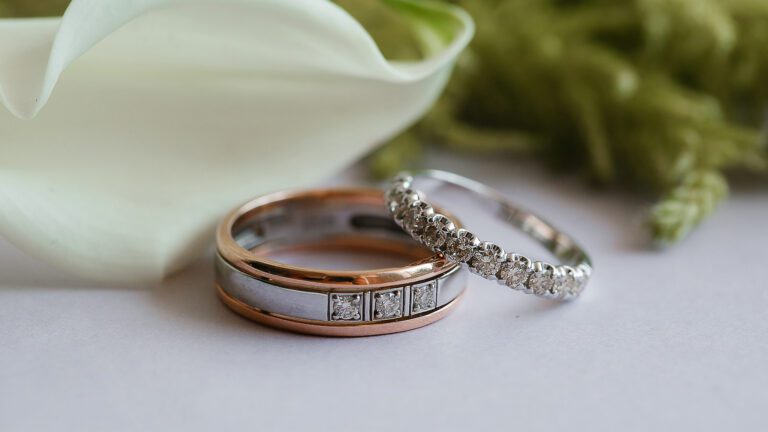
Nowhere is that emotion more concentrated than in the engagement ring. Decades of tradition have turned a single object into shorthand for commitment itself. The ring isn’t just jewelry; it’s a visible promise. That’s part of why the engagement ring purchase is such a huge one for buyers: they’re not simply choosing a design, they’re choosing how to represent a relationship to for years to come.
Unlike a new coat or a kitchen appliance, jewelry rarely gets bought out of pure necessity. It gets bought because something happened — or is about to. A proposal. A graduation. A fortieth birthday. People don’t just want to mark these moments; they want to wear the marking. A necklace becomes a wearable timestamp, a ring becomes a portable anniversary date, permanently on display.
That desire to show memories to the world is part of what makes jewelry purchases so different from ordinary shopping. When someone buys a watch because their old one broke, the decision is practical. When someone buys a watch to commemorate a retirement, the decision is symbolic, a purchase that tends to come loaded with sentiment. Shoppers agonize over the “right” piece not because they’re worried about quality control, but because they’re worried about getting the meaning right.
These sentiments don’t only run forward they also run backward, into grief and remembrance. One of the most powerful patterns in jewelry buying happens after loss. Families will take a deceased parent’s wedding band and have it resized for a child’s hand. A grandmother’s brooch gets reset into a pendant. A father’s watch gets converted into a bracelet. These aren’t fashion decisions. They’re acts of continuity — a way of keeping someone physically close after they’re gone, of transforming an ending into something that can still be touched, worn, and carried through an ordinary Tuesday.
Psychologists who study material possessions have long noted that objects can become extensions of identity and relationships, especially when they’re tied to significant people or life events. Jewelry is uniquely suited to this role because it’s worn on the body. Unlike a photograph on a shelf or a letter in a drawer, a ring or necklace travels with a person, brushing against skin, catching the light during a conversation, becoming part of how someone physically moves through the world.
None of this means jewelry buyers are immune to practical concerns like budget or craftsmanship. But it does explain why jewelry shopping so often defies purely rational analysis. People aren’t just asking, “Do I like how this looks?” They’re asking, “Does this capture what I’m trying to say?” Whether the occasion is a wedding, a graduation, or the quiet work of grief, jewelry gives people a way to answer a question that words alone can’t: how do you make a moment, or a person, impossible to forget?
Any content, resident submissions, guest columns, advertisements, and advertorials are not necessarily endorsed by or represent the views of Best Version Media LLC (BVM) or any municipality, homeowners associations, businesses, or organizations that this publication serves. BVM is not responsible for the reliability, suitability, or timeliness of any content submitted, inclusive of materials generated or composed through artificial intelligence (AI). All content submitted is done so at the sole discretion of the submitting party.