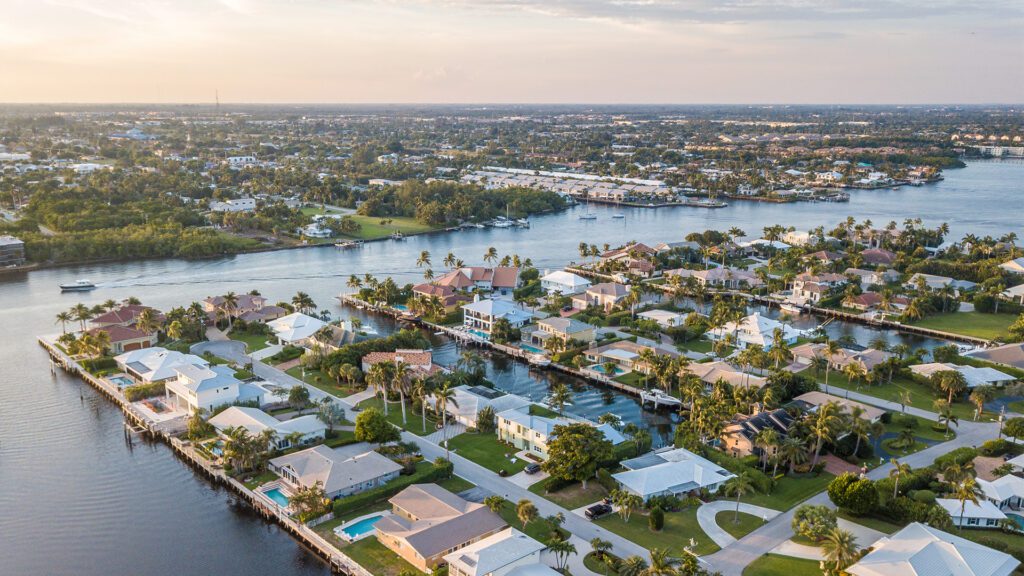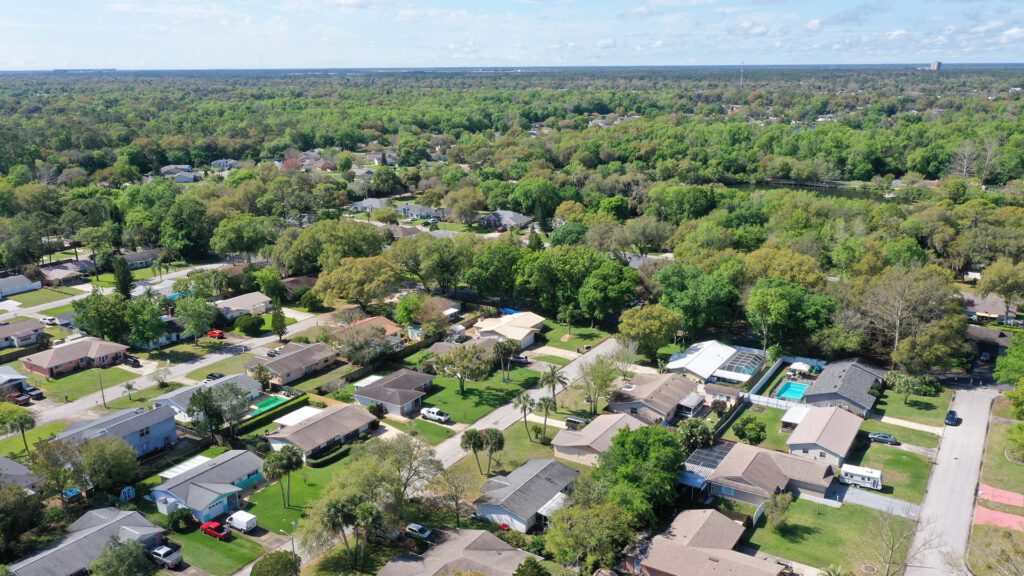
When shopping for a home in Florida—especially within our beautiful master-planned and golf course communities—it’s easy to get swept up in the granite countertops, resort-style pools, and perfectly manicured streets. But if you look closely at the MLS listing sheets, you will likely spot two sets of acronyms that can significantly impact your monthly bottom line: HOA and CDD.
While many buyers lump these together as just “neighborhood fees,” they are fundamentally different in how they are billed, what they pay for, and how they affect your purchasing power. Understanding this distinction is the secret to avoiding “sticker shock” after closing.
1. The Core Differences: Private Rules vs. Public Infrastructure
To keep it simple, think of these fees as covering two entirely different layers of your community. One manages the lifestyle and aesthetics, while the other funds the heavy-duty engineering that allowed the neighborhood to be built in the first place.
| Feature | Homeowners Association (HOA) | Community Development District (CDD) |
| Legal Status | Private, non-profit corporation | Local, special-purpose government entity |
| What it Covers | Rule enforcement, neighborhood aesthetics, gates, private amenities, and day-to-day lifestyle. | Major infrastructure: roads, master drainage/retention ponds, streetlights, main water/sewer lines. |
| How You Pay | Billed directly (Monthly, Quarterly, or Annually) | Included as a line item on your Annual Property Tax Bill. |
| Duration | Permanent (lasts for the life of the association). | The Bond portion ends (typically 20 to 30 years), though a small maintenance fee remains. |
| Governance | Board of directors elected privately by homeowners. | Board of supervisors elected via the public Supervisor of Elections. |
2. Deep Dive: What is an HOA Fee?
An HOA is a private entity. When you purchase a home inside an HOA, you agree to abide by their Covenants, Conditions, and Restrictions (CC&Rs).
Your HOA fees are primarily used to maintain the neighborhood’s “look and feel” and protect your property value. This includes hiring landscaping companies for common areas, maintaining neighborhood entry gates, running the local pool, and issuing violations if someone paints their house neon pink or parks a commercial boat in the driveway.
Because it is a private entity, the HOA bills you directly. If the neighborhood encounters an unexpected emergency—like a major clubhouse roof leak—and their reserve funds are low, the HOA board has the power to issue a “special assessment,” which is a surprise, one-time fee levied on all homeowners to cover the cost.
3. Deep Dive: What is a CDD Fee?
A Community Development District (CDD) is actually a localized unit of government established under Florida law. When a developer wants to build a massive, top-tier community, instead of paying tens of millions of dollars upfront for roads, underground utilities, and massive stormwater systems, they form a CDD.
The CDD issues tax-exempt municipal bonds to finance this major infrastructure. The master-planned neighborhood gets top-tier roads and utilities from day one, and that debt is passed along to the future homebuyers.
When you look at a CDD fee, it is actually split into two parts:
- The Bond Portion: This is your share of the principal and interest on the infrastructure debt. It is a fixed amount that typically runs for 20 to 30 years. Once that bond is paid off, this portion of the fee completely disappears from your tax bill.
- The Operations & Maintenance (O&M) Portion: This covers the ongoing upkeep of that public infrastructure (like maintaining public parks, retention pond water quality, and district landscaping). This part stays forever.
Because it is a government entity, the CDD operates under Florida’s Sunshine Law, meaning all their meetings and financial records are completely transparent and open to the public.
4. Why the Difference Matters to Buyers
For homebuyers navigating the market, ignoring the interplay between these two fees can lead to major financial miscalculations. Here is exactly why it matters to your wallet:
It Directly Impacts Your Mortgage Qualification
Lenders do not just look at your loan principal and interest; they look at your total housing expense (PITI + Fees). Because an HOA fee is paid separately, lenders calculate it as a monthly debt obligation. Because a CDD fee is attached to your property taxes, it increases your overall tax load, which your mortgage company will calculate and likely require you to escrow monthly. If a CDD fee adds $200 a month to your taxes, it directly lowers the maximum loan amount you can qualify for.
Comparing “Sticker Prices” Can Be Deceptive
A common trap is comparing two homes based purely on purchase price. For example, a $450,000 home in a master-planned community with a CDD might look like a better deal than a $480,000 home in an established, non-CDD neighborhood. However, if that CDD home carries $300 a month in infrastructure fees, that amounts to $3,600 a year—or $36,000 over ten years. In reality, the more expensive home with no CDD might actually be the cheaper property to own long-term.
The “Dual-Fee” Reality
Many of Florida’s newest and most popular communities feature both an HOA and a CDD. In these setups, the CDD does the heavy lifting (funding the roads and major clubhouse structures), which often keeps the regular monthly HOA fee surprisingly low. Always look at the total combined annual cost of ownership rather than just looking at a low monthly HOA fee.
The Buyer’s Due Diligence Checklist
Before you sign on the dotted line for a home in a managed community, protect yourself by checking the following information:
1. Get a Copy of the Tax Bill: Do not rely solely on the MLS printout. Look at the actual county tax bill to see the exact non-ad valorem line item for the CDD.
2. Ask About the Bond Lifespan: If the home has a CDD, find out what year the infrastructure bond was issued and how many years are left on the repayment schedule. Buying a home where the bond is set to expire in two years is a massive financial win.
3. Review the HOA Financials: Ask for the HOA’s current budget and reserve studies. If the neighborhood has low financial reserves and aging amenities, a special assessment could be right around the corner.
By understanding how these fees operate, you can accurately budget for your dream home and ensure that your Florida lifestyle comes with zero unwanted financial surprises.
For more info, reach out to Lisa Reeley at Oceans Luxury Realty: LisaReeleyRealtor@gmail.com or call 386-562-6749.
Any content, resident submissions, guest columns, advertisements, and advertorials are not necessarily endorsed by or represent the views of Best Version Media LLC (BVM) or any municipality, homeowners associations, businesses, or organizations that this publication serves. BVM is not responsible for the reliability, suitability, or timeliness of any content submitted, inclusive of materials generated or composed through artificial intelligence (AI). All content submitted is done so at the sole discretion of the submitting party.