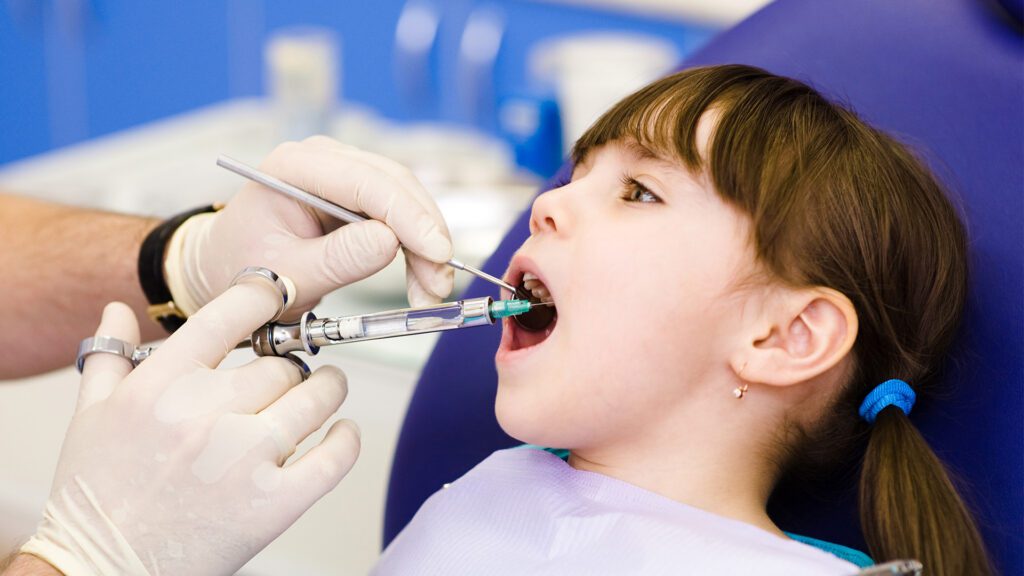
If your child has ever cried during a dental injection — or if you dread the shot yourself — you are not alone. The stinging and burning that comes with getting numb has been a source of dental fear for generations. But it does not have to be that way. A technique called buffering is changing how pediatric dentists deliver local anesthetic, and the difference for children can be remarkable: little to no burning, faster numbing, and a much calmer appointment all around.
Why Does the Numbing Shot Sting?
Standard dental numbing medication is quite acidic — much more so than the tissues in your child’s mouth. When that acidic solution is injected, the mismatch causes an immediate chemical irritation: that sharp, burning sting that many children (and adults) find so upsetting.
The acidity also slows things down. The numbing medication has to go through a chemical conversion inside the tissue before it can actually block pain signals. In acidic conditions, that process takes longer — which means more time sitting in the chair waiting to be numb, and sometimes incomplete numbness that requires a second injection.
What Is Buffering?
Buffering simply means adjusting the pH of the anesthetic to match the natural chemistry of your child’s body before it is injected. A small amount of sodium bicarbonate — the same compound as baking soda, in a pharmaceutical-grade form — is mixed into the numbing solution right before use. The result is a medication that is chemically compatible with your child’s tissue rather than in conflict with it.
It is a simple change with meaningful results.
What parents and patients notice with buffered anesthetic:
- Little or no burning sensation during the injection
- Numbing takes effect more quickly — often within a minute or two
- More complete, reliable anesthesia with fewer “re-dos”
- Less crying and distress during the appointment
- Children who felt anxious before often report the shot was “no big deal”
Why This Matters So Much for Children
Children are not simply small adults when it comes to dental fear. Young patients are still forming their feelings about the dentist, and early experiences leave a lasting impression. Research consistently shows that painful or frightening early dental visits can create anxiety that follows children into adulthood — leading to avoidance, delayed care, and worse oral health over time.
When a child’s first several experiences in the dental chair involve very little pain, something important happens: they learn that the dentist is a safe place. That lesson, built early, can shape a lifetime of healthy dental habits.
There is also a practical side. Children who are relaxed and comfortable are easier to treat safely. When a shot burns, a child may cry, move, or panic — which makes it harder for the dentist to work carefully and can extend the length of the appointment. Buffered anesthetic reduces the chance of that cascade, helping appointments go more smoothly for your child, for you, and for the dental team.
Is It Safe?
Yes. Buffering has been studied extensively and has a strong safety record. Sodium bicarbonate is already found naturally in the body and has long been used in medical settings. The buffering process does not change the medication itself — it simply adjusts the solution to be kinder to tissue. The technique is used in both pediatric and adult dental care, as well as in other areas of medicine where comfortable injections matter.
Questions to Ask Your Child’s Dentist
Not every dental practice has adopted buffering yet, but many pediatric dental offices now offer it routinely. If your child has had a difficult experience with numbing injections in the past — or if you would simply like their first experience to be as gentle as possible — it is absolutely worth asking:
“Do you use buffered anesthetic for children?”
“What other steps do you take to make injections more comfortable?”
“Is buffering an option for my child’s upcoming procedure?”
A dentist who prioritizes comfort will be happy to discuss their approach and walk you through exactly what to expect.
The goal of modern pediatric dentistry is not just healthy teeth — it is a child who feels safe, comfortable, and even confident in the dental chair. Buffered anesthetic is one meaningful step toward that goal. The shot doesn’t have to be the part they dread.
~Dr Richman, Dr Akabike and the Dino Kid’s Dentistry Team
This article is for general information only and is not medical or dental advice. Please seek medical and dental care with you or your child’s medical or dental provider for specific questions.
Any content, resident submissions, guest columns, advertisements, and advertorials are not necessarily endorsed by or represent the views of Best Version Media LLC (BVM) or any municipality, homeowners associations, businesses, or organizations that this publication serves. BVM is not responsible for the reliability, suitability, or timeliness of any content submitted, inclusive of materials generated or composed through artificial intelligence (AI). All content submitted is done so at the sole discretion of the submitting party.