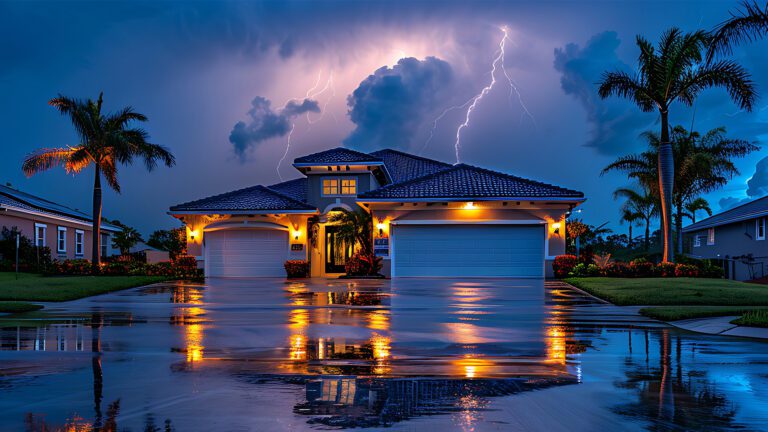
Florida summers are synonymous with intense heat, sudden downpours, and powerful afternoon storms. While these storms may seem routine, they are one of the leading causes of cumulative roof damage across the state. The challenge is that many forms of storm damage aren’t obvious from the ground — and by the time interior signs appear, the damage is often already extensive.
One of the most common issues caused by summer storms is wind-driven shingle damage.
Even moderate winds can loosen shingles, break their seal, or shift them just enough to expose the underlayment. This may not cause immediate leaks, but it creates vulnerabilities that worsen with each storm. Over time, repeated exposure leads to water infiltration and structural deterioration.
Heavy rainfall presents another threat. Florida roofs are designed to shed water efficiently, but clogged gutters, blocked downspouts, or improperly sloped areas can cause water to pool.
Standing water increases the risk of leaks, mold growth, and rot — especially around flashing and roof penetrations.
It’s important to understand that storm damage doesn’t always appear immediately. Small breaches may allow moisture to enter slowly, damaging insulation and wood decking long before a visible leak forms. This is why post-storm inspections are critical — especially after strong thunderstorms or tropical weather systems.
Insurance considerations also matter. Many Florida insurance policies have strict reporting timelines for storm-related damage. Delaying an inspection could jeopardize coverage or complicate claims. A professional roofing inspection provides documentation that protects homeowners and helps determine whether repairs or replacement are necessary.
Florida’s climate is unforgiving, but early detection makes a significant difference. Addressing minor storm damage promptly can extend the life of a roof by years and prevent costly interior repairs. Summer storms may be unavoidable, but severe roof damage often is — when homeowners know what to look for and act quickly.
Homeowners should watch for warning signs such as:
- Water stains on ceilings or walls
- Granules collecting in gutters or at downspouts
- Sagging roof lines
- Visible shingle displacement
- Mold or musty odors in the attic
Any content, resident submissions, guest columns, advertisements, and advertorials are not necessarily endorsed by or represent the views of Best Version Media LLC (BVM) or any municipality, homeowners associations, businesses, or organizations that this publication serves. BVM is not responsible for the reliability, suitability, or timeliness of any content submitted, inclusive of materials generated or composed through artificial intelligence (AI). All content submitted is done so at the sole discretion of the submitting party.