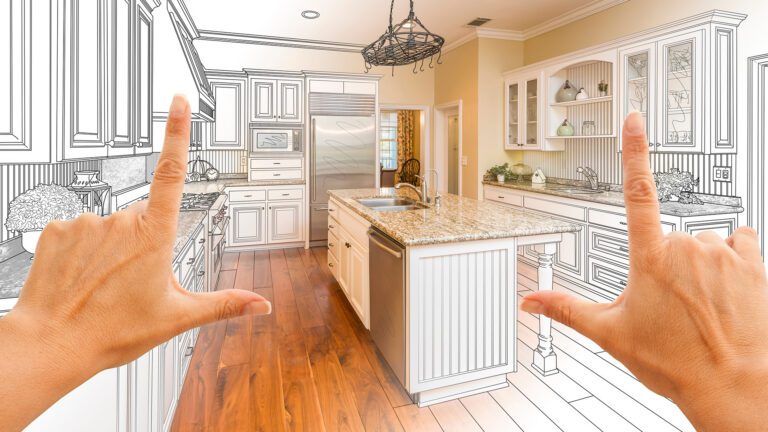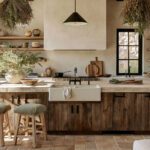

There is something undeniably inviting about a Tuscan kitchen. Warm, relaxed, and full of character, the Tuscan style draws inspiration from the countryside of Tuscany, Italy, where homes are designed around comfort, family, food, and gathering together.
Unlike some highly formal European kitchen styles, Tuscan kitchens have a sense of effortless charm. They embrace natural materials, warm colours, substantial cabinetry, and the beauty of things that feel handcrafted and lived-in. The result is a kitchen that feels welcoming rather than overly designed.
What Defines a Tuscan Kitchen?
Tuscan kitchens are characterized by a combination of warm colours, natural materials, architectural details, and traditional craftsmanship. The style is rooted in the rustic homes and villas of central Italy, but it can be adapted beautifully to both traditional and contemporary homes.
At the heart of the style is warmth. Creams, warm whites, taupes, earthy greens, terracotta, muted golds, and rich wood tones are commonly associated with Tuscan interiors. Rather than relying on stark contrasts, Tuscan kitchens often use layers of complementary colours and textures.
Cabinetry is often the most important element in establishing the character of a Tuscan kitchen. Traditional Tuscan cabinetry tends to feature five-piece doors with raised or recessed centre panels, often combined with decorative profiles and substantial rails and stiles. Painted cabinetry is particularly popular, especially in warm ivory, cream, beige, or muted green tones. Wood cabinetry can also create an authentic Tuscan feel.
Natural Materials
Tuscan design is strongly connected to the natural materials traditionally found throughout the Italian countryside.
Stone is one of the most important. Limestone, travertine, marble, and natural stone can be incorporated into countertops, backsplashes, flooring, and architectural features. Wood is equally important. Exposed beams, hardwood flooring, wooden furniture, and butcher-block accents introduce warmth and texture.
Architectural Details
Tuscan kitchens often feel more architectural than contemporary kitchens because of the attention given to cabinetry details and surrounding millwork.
Features such as decorative range hoods, corbels, furniture-style islands, columns, arches, mouldings, and ceiling beams all contribute to the style. However, restraint is important. Too many decorative elements can make a kitchen feel dated or overly themed. The most successful modern Tuscan kitchens borrow the style’s architectural language without reproducing every traditional detail.
Backsplashes, Lighting, and Hardware
Natural stone backsplashes, handmade-looking ceramic tile, and warm neutral mosaics all complement Tuscan design. Many homeowners now prefer larger-format stone slabs or simple handmade-style tiles, maintaining the warmth while giving the kitchen a cleaner, more current appearance.
Lighting should feel warm and inviting rather than stark or industrial. Wrought iron, aged bronze, antique brass, and other warm metal finishes are natural choices for light fixtures and cabinet hardware. Modern appliances can still be incorporated successfully, provided they complement the overall material and colour palette.
Modern Tuscan Kitchens
Tuscan style does not have to mean a dark, heavily decorated kitchen. One of today’s most appealing interpretations is the modern Tuscan kitchen, which retains the warmth and natural materials of traditional Tuscan design while simplifying the cabinetry and architectural details.
A more timeless approach is to select three or four key Tuscan elements and allow them to provide the character. Warm painted cabinetry, natural stone, aged brass hardware, and a substantial wood island may be enough to establish the style without turning the kitchen into a theme.
Why Tuscan Kitchens Remain Popular
The enduring appeal of the Tuscan kitchen comes down to one simple quality: it feels like home.
It is a style designed around gathering, cooking, entertaining, and spending time with family. Its warm colours and natural materials create an environment that feels comfortable and welcoming, while traditional cabinetry and architectural details give the space a sense of permanence.
Today’s interpretation is lighter, more refined, and more selective in its use of decorative details. At its best, Tuscan design combines the warmth of traditional Italian architecture with the functionality of a modern kitchen. Whether the goal is a richly detailed traditional space or a cleaner modern interpretation, the essential ingredients remain the same: warmth, natural materials, craftsmanship, and a welcoming atmosphere.
Any content, resident submissions, guest columns, advertisements, and advertorials are not necessarily endorsed by or represent the views of Best Version Media LLC (BVM) or any municipality, homeowners associations, businesses, or organizations that this publication serves. BVM is not responsible for the reliability, suitability, or timeliness of any content submitted, inclusive of materials generated or composed through artificial intelligence (AI). All content submitted is done so at the sole discretion of the submitting party.