In my 58 years of teaching swimming, this is an often-asked question.
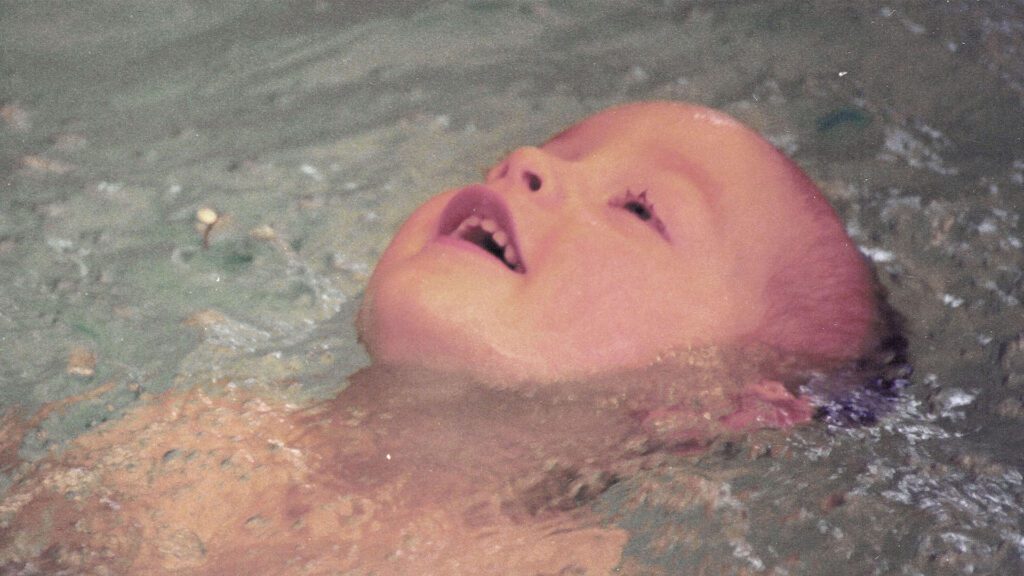
The main benefit of infant swim lessons is brain development. 90% of brain development takes place during the first 3-4 years of life. When infants are introduced to the water, a parallel brain development takes place. The child is learning to “live” on land and to be able to move independently while simultaneously learning to “live” and move independently in the water. This results in a tremendously enhanced brain development as they basically double their understanding and perceptions of their physical world.
The ability to swim–defined as the ability to propel oneself through the water while in control of equilibrium (body position}, breathe control and, in a confident state of emotion–is an objective that is generally believed to occur with school-aged children 4 – 5 years or older. However, if a child begins lessons as an infant, the objective can be accomplished much earlier.
Let’s compare two activities or learned skills: swimming and playing soccer. What foundational development is necessary for a child to run, dribble a ball, and kick the ball to a teammate or into a net? A child will not be able to master these skills until a foundation of balance or equilibrium control is learned which allows for the development of movement skills. An infant spends about 12 months learning to roll over, crawl, sit, stand, and then walk independently. They then spend the next six to 12 months toddling, running, climbing etc. This is the foundation for soccer and every land activity/skill we learn throughout life.
Now let’s get in the water. Before a child can swim, they need to have foundational control of their breath, balance, and movement. Sound familiar? The process is the same, only the natural forces and the environment are very different. On land we have weight and are completely under the influence of gravity. However, in the water, it all changes. Because our bodies are almost 70% water, any part of our body that is below the surface only weighs 10% of what it does above. When we completely submerge with air in our lungs, we become weightless. Infant swim lessons introduced with gentle, fun and confidence building reinforcement, allow the child to learn to hold their breath for submersions. This allows development of buoyancy balance through gradual releases and discovering how they can move through the water by pushing with their hands and kicking their feet. Once they can recover their breath independently by lifting their face in a forward movement or by rolling over, they are well on the way to learning to swim.
Griffith University in Queensland, Australia did a research study that found that children who were introduced to the water as infants scored higher in virtually every intelligence category measured.
“Great beginnings…lead to great finishes!”
Johnny Johnson
Blue Buoy Family Swim School
https://news.griffith.edu.au/2013/08/13/swimming-a-smart-move-for-children/
Any content, resident submissions, guest columns, advertisements, and advertorials are not necessarily endorsed by or represent the views of Best Version Media LLC (BVM) or any municipality, homeowners associations, businesses, or organizations that this publication serves. BVM is not responsible for the reliability, suitability, or timeliness of any content submitted, inclusive of materials generated or composed through artificial intelligence (AI). All content submitted is done so at the sole discretion of the submitting party.