The preschool years are filled with remarkable growth. Young children are learning how to communicate, build relationships, solve problems, express ideas, and make sense of the world around them. It is also an especially valuable time to introduce another language.
Learning a second language in early childhood is about much more than learning new words. When thoughtfully incorporated into a preschool environment, exposure to another language can support children’s communication, cognitive development, cultural awareness, confidence, and curiosity—skills that can benefit them well beyond the preschool years.
Young Children Are Natural Language Learners
Anyone who has watched a preschooler learn to speak knows how quickly young children absorb language. They listen, imitate sounds, notice patterns, experiment with words, and learn through repetition. Importantly, they do this without worrying about making mistakes.
These same qualities make early childhood an ideal time for exposure to a second language.
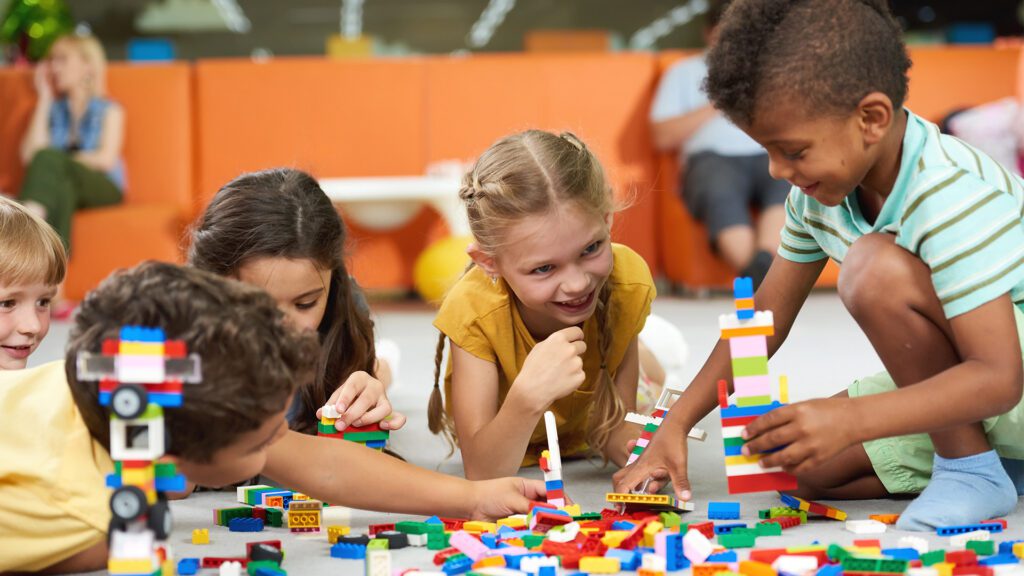
For preschoolers, language learning does not need to resemble a formal lesson. Meaningful learning happens naturally through songs, stories, movement, games, conversations, and familiar classroom routines. A child might count in Spanish during a game, recognize colors during an art activity, or use a simple greeting with a teacher or classmate.
These playful experiences allow children to associate a new language with connection, exploration, and enjoyment.
Building Flexible Thinkers
Learning that the same idea can be expressed in different ways is an important cognitive discovery. When children understand that dog and perro refer to the same animal, they begin to recognize that there can be more than one way to communicate an idea.
Exposure to another language encourages children to listen carefully, recognize patterns, remember new information, and shift between words and meanings. These experiences can support attention, memory, problem-solving, and flexible thinking while complementing the early literacy skills children are developing in English.
Confidence, Curiosity, and Connection
Learning another language also gives children the satisfaction of successful communication. A new greeting, number, color, or song can become a meaningful accomplishment. In a supportive preschool environment, children can experiment with language without the pressure of speaking perfectly.
The goal at this age is not fluency. It is building familiarity, confidence, curiosity, and a positive attitude toward learning.
Language also provides a window into the wider world. Through another language, children can discover different cultures, traditions, music, and ways of communicating. These experiences encourage children to approach differences with curiosity and respect.
A Foundation for the Future
Early language learning should not be measured simply by how many words a child remembers. The experience itself matters. Children begin to see unfamiliar words and sounds as something to explore—and to see themselves as capable language learners.
At ACES International Preschool and Childcare Center, Spanish is incorporated into developmentally appropriate preschool experiences. Early exposure to a second language can plant seeds for stronger communication, cultural understanding, confidence, and a love of learning—providing children with a foundation they can carry into school and beyond.
Any content, resident submissions, guest columns, advertisements, and advertorials are not necessarily endorsed by or represent the views of Best Version Media LLC (BVM) or any municipality, homeowners associations, businesses, or organizations that this publication serves. BVM is not responsible for the reliability, suitability, or timeliness of any content submitted, inclusive of materials generated or composed through artificial intelligence (AI). All content submitted is done so at the sole discretion of the submitting party.