
Have you ever driven past a construction site for weeks, wondering what everyone is actually doing in there?
From the outside, progress can seem slow. Then suddenly, the walls go up, the lights turn on and the finished building appears. What most people never see is the enormous amount of planning and coordination happening before those visible changes take place.
Low Electric is currently preparing to begin one of our largest commercial projects to date. Our electricians have not started installing anything yet, but behind the scenes, the project is already very much underway.
It begins with the drawings – and there can be hundreds of pages.
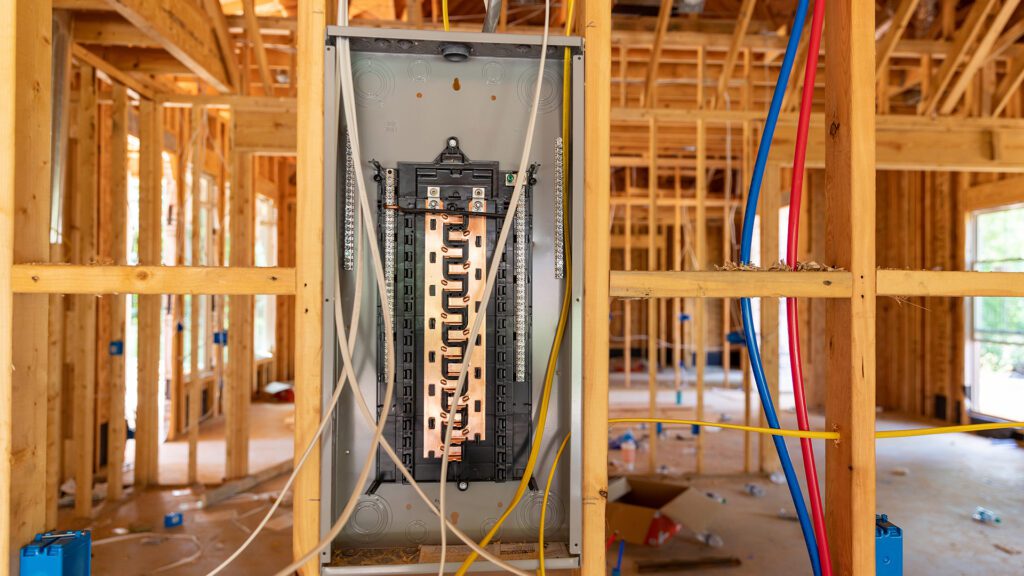
Every light fixture, receptacle, electrical panel, control and piece of equipment has a place. The electrical plans must also be reviewed alongside architectural, mechanical and structural drawings. Something that looks simple on one page may interfere with ductwork, plumbing or another feature shown somewhere else.
Finding those issues before construction begins can prevent much larger problems later.
Then there are the materials. A major project can require everything from everyday electrical supplies to specialized equipment that takes weeks or even months to arrive. Ordering too late can delay the work, but ordering everything at once can leave a job site crowded with materials that are not needed yet.
The crew must also be planned carefully. Different stages of the project require different numbers of electricians and different skills. Labour, deliveries, inspections and deadlines all need to align with the general contractor and the many other trades working in the same space.
In construction, timing is everything.
Electricians may need to install wiring before walls are closed, but only after another trade has completed its work. Light fixtures cannot go in until ceilings are ready. Equipment cannot be connected until it has arrived and been placed in its final location.
And despite all that planning, changes still happen.
A wall moves. Equipment changes. Something shown on paper does not quite work in the real building. When that happens, the team has to find a solution, document the change and keep the project moving.
Some of the most important electrical work will never be noticed once the building opens. Emergency lighting, exit signs, fire-alarm connections, controls and carefully organized circuits are designed to work quietly in the background.
That is one of the interesting things about electrical construction: when it is done properly, most people will never think about it at all. They will walk into the building, flip a switch and expect everything to work.
For the team at Low Electric, larger commercial and institutional projects involve much more than tools and wire. They require organization, communication, problem-solving and months of teamwork – all before the public ever walks through the doors.
So, the next time you pass a construction site and wonder what is happening inside, the answer may be: much more than you can see.
Any content, resident submissions, guest columns, advertisements, and advertorials are not necessarily endorsed by or represent the views of Best Version Media LLC (BVM) or any municipality, homeowners associations, businesses, or organizations that this publication serves. BVM is not responsible for the reliability, suitability, or timeliness of any content submitted, inclusive of materials generated or composed through artificial intelligence (AI). All content submitted is done so at the sole discretion of the submitting party.