When a child throws a toy, refuses to clean up or breaks something, many parents’ first thought is to choose a punishment that fits the behavior. Time-outs, loss of privileges or taking away a favorite toy are so common that they can feel like the only response.
But what if the question wasn’t “How do I punish this behavior?” but rather “How can my child learn from this experience?” This shift in thinking is at the heart of the Montessori philosophy.
Dr. Maria Montessori believed that true discipline comes from within. Rather than controlling behavior through punishment, Montessori environments help children develop self-discipline through respect, responsibility and meaningful experiences. In a Montessori classroom, children are trusted with real responsibilities. They care for their environment, solve problems and experience the natural results of their choices. Mistakes are not viewed as failures but rather as opportunities to learn.
This is one of the greatest differences between Montessori and traditional discipline. Punishment often imposes an unrelated penalty, such as taking away screen time because a child forgot to put away their toys. While it may stop a behavior temporarily, it rarely teaches the skill the child needs.
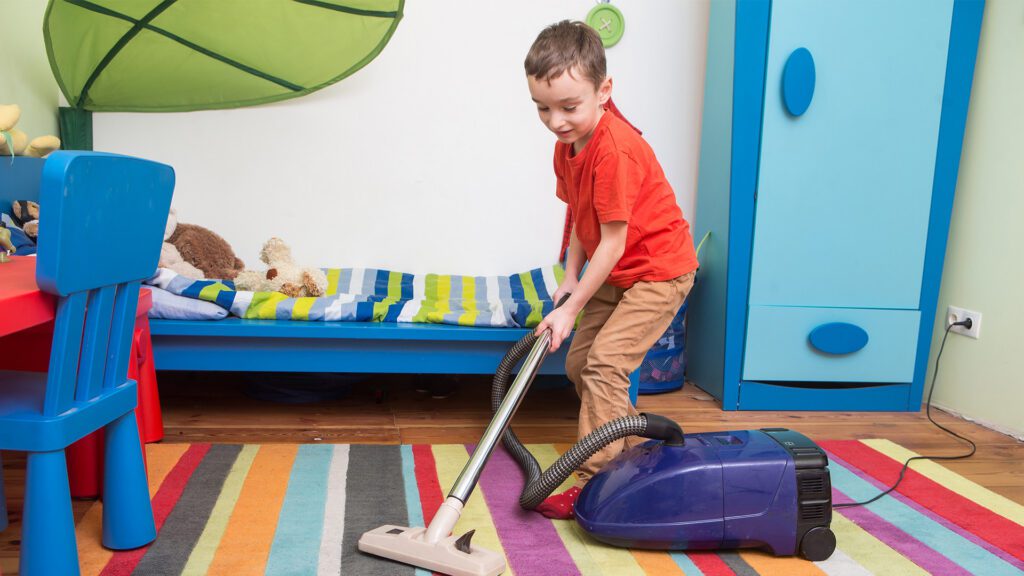
Montessori instead relies on natural and logical consequences. If a child spills a glass of milk, the response isn’t anger or punishment. Instead, a towel is provided so the spill can be cleaned up. The child then feels safe to make mistakes while learning how to resolve them. The lesson isn’t shame, it is responsibility. Punishment may stop a behavior in the moment, but teaching builds skills that last a lifetime.
At Montessori Development Center (MDC), these lessons happen every day. Children return materials to their shelves, push in their chairs, wipe tables after snack and help maintain an orderly environment. These Practical Life activities teach that every action has a consequence and that everyone contributes to the community. Responsibility becomes a daily habit, not something expected only after mistakes.
Modern child psychology supports this approach. Dr. Jane Nelsen, founder of Positive Discipline, asks, “Where did we ever get the crazy idea that in order to make children do better, first we have to make them feel worse?” Research consistently shows that children learn best when they feel emotionally safe enough to reflect, repair and try again.
Montessori also encourages adults to view behavior as communication rather than defiance. A child may be overwhelmed, frustrated, tired or still developing an important life skill. Clinical psychologist Dr. Becky Kennedy reminds parents that “behavior is a window into what’s going on inside a child, not a measure of who they are.” Instead of asking, “How do I stop this behavior?” Montessori teachers ask, “What is this child trying to tell me?” This perspective leads to guidance instead of punishment.
Pediatric psychotherapist Dr. Tina Payne Bryson explains that children develop the brain pathways needed for emotional regulation through relationships with calm, responsive adults. This means our response to children’s mistakes matters just as much as the mistake itself. Montessori educators intentionally model patience, respect and problem-solving because children learn by observing the adults around them. When adults remain calm, children borrow that calm. When adults model problem-solving, children gradually learn to do the same. Similarly, when trusted adults model anger, punishment or frustration, children learn those same behaviors, along with shame, embarrassment and reactivity.
At MDC, the goal is not simply obedience – it is independence, responsibility, empathy and self-discipline. Children are meant to make mistakes. Our role is not to make those mistakes painful enough to prevent them from happening again, but meaningful enough that children learn from them.
The next time your child makes a mistake or a poor choice, pause before responding with punishment. Instead, ask: What consequence is naturally connected to this behavior? How can this mistake become a learning opportunity? What is my child learning from my response? These questions transform discipline into guidance rather than a power struggle, natural consequence rather than punishment.
After all, the root of the word discipline is disciple, meaning learner or student. Montessori reminds us that every moment of discipline is really a moment of education. So, what will you choose to teach your child in that moment?
Any content, resident submissions, guest columns, advertisements, and advertorials are not necessarily endorsed by or represent the views of Best Version Media LLC (BVM) or any municipality, homeowners associations, businesses, or organizations that this publication serves. BVM is not responsible for the reliability, suitability, or timeliness of any content submitted, inclusive of materials generated or composed through artificial intelligence (AI). All content submitted is done so at the sole discretion of the submitting party.