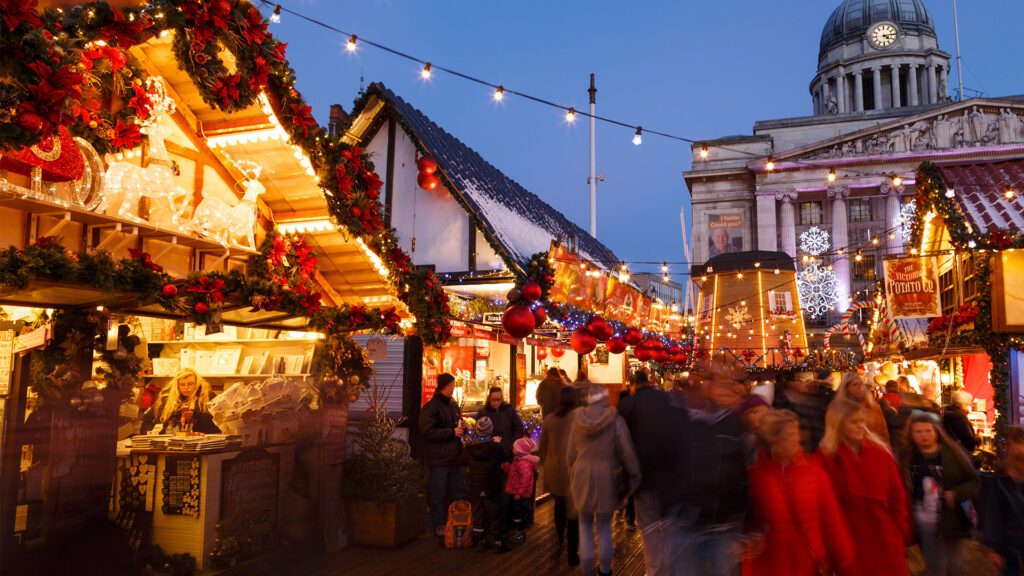
Imagine strolling along cobblestone streets beneath a canopy of twinkling lights, a warm cup of mulled wine in hand as the aromas of roasted chestnuts, gingerbread, and holiday spices fill the crisp winter air. In Vienna, elegant boulevards and magnificent palaces provide a storybook backdrop for festive markets filled with handcrafted ornaments, Austrian delicacies, and classical music. Farther north, Nuremberg’s renowned Christkindlesmarkt welcomes visitors with its iconic red-and-white stalls, traditional lebkuchen gingerbread, and centuries-old holiday customs. Throughout Europe, historic town squares come alive during the Advent season, offering travelers an enchanting combination of local culture, cherished traditions, and Christmas magic.
Some of Europe’s most memorable Christmas markets can be found in Germany, Austria, France, Switzerland, and the Czech Republic—each offering its own distinctive experience. Germany is celebrated for its deeply rooted holiday traditions, handcrafted wooden decorations, gingerbread, and lively medieval town squares. Austria pairs its elegant markets with imperial architecture, classical music, and cozy Alpine charm. In France, particularly the Alsace region, French and German influences come together in beautifully decorated villages known for gourmet specialties and excellent regional wines. Switzerland offers intimate markets surrounded by snowcapped mountains, along with Swiss chocolate, cheese, and picturesque lakeside settings. The Czech Republic brings an Old World atmosphere to the season, with Prague’s Gothic spires and historic squares creating a dramatic setting for traditional pastries, local crafts, and festive entertainment.
River Cruise or Land-Based Vacation?
One of the first decisions travelers should make is how they would like to experience Europe’s Christmas markets. A river cruise provides a wonderfully convenient way to visit several destinations while unpacking only once. Many Christmas market itineraries travel along the Danube, Rhine, or Main rivers, stopping in celebrated cities and smaller riverside communities. Transportation, accommodations, onboard meals, and often guided sightseeing are brought together in one seamless vacation. After an evening of exploring, travelers return to the warmth and comfort of their ship rather than packing for the next destination. If you have read enough of my previous articles, you know I’m a fan of river cruising!
A land-based journey offers greater flexibility and the opportunity to spend several nights in a favorite city. It can be an excellent choice for travelers who want more time to explore museums, attend holiday concerts, dine at local restaurants, or visit markets after dark. Train travel can connect many European cities efficiently, although changing hotels and managing luggage may require more planning.
Some travelers may enjoy combining the two experiences. Adding a few nights in Vienna, Prague, Munich, or another European city before or after a river cruise creates additional time to explore at a more relaxed pace.
When Is the Best Time to Visit?
Most European Christmas markets begin opening in mid-to-late November and continue through December, although exact dates vary by destination. Early December is often an ideal time to visit because nearly all the markets are open, decorations are complete, and the holiday spirit is in full swing.
Traveling earlier in the season may bring somewhat lighter crowds, while the weeks closest to Christmas tend to be the busiest. Weekdays and daytime visits are generally less crowded than evenings and weekends. Markets become especially beautiful after sunset, however, so it is worthwhile to experience at least one evening surrounded by illuminated stalls and festive city streets.
Travelers should always verify the operating dates of the markets they most want to see. Some close just before Christmas, while others remain open through the end of December or transition into New Year’s celebrations.
Weather, Crowds, and Mobility
December weather in Central Europe is typically cold and may include rain, snow, or a damp chill—nothing a Minnesotan can’t handle. Dressing in layers is essential. A warm coat, hat, gloves, scarf, and comfortable waterproof footwear can make a tremendous difference. Hand warmers and a compact umbrella can also be valuable additions to a day bag.
Christmas markets are usually located in historic city centers, where visitors should expect cobblestones, uneven surfaces, and periods of standing. Larger markets can become quite crowded, particularly during evenings and weekends. Travelers with mobility concerns may benefit from visiting earlier in the day, allowing additional time between activities, and choosing accommodations close to the markets or public transportation.
River cruise travelers should also be aware that ships may occasionally dock side by side, requiring guests to cross through another vessel. Water levels and docking locations can affect the distance to city centers. Discussing mobility needs with a knowledgeable travel advisor before booking can help identify the itinerary, ship, stateroom, and excursions best suited to each traveler.
Seasonal Flavors and Meaningful Gifts
Food and drink are an essential part of the Christmas market experience. Germany is known for grilled sausages, roasted nuts, potato pancakes, stollen, and lebkuchen. Austrian markets may feature apple strudel, pastries, dumplings, and kaiserschmarrn, a warm shredded pancake served with fruit. Visitors to France’s Alsace region can sample regional wines, pastries, cheeses, and flammekueche, a thin flatbread traditionally topped with cream, onions, and bacon. Prague offers chimney-style pastries, sausages, and hearty Czech specialties, while Switzerland tempts visitors with raclette, fondue, and exceptional chocolate.
Warm beverages are equally important. Depending on the destination, travelers may encounter glühwein, vin chaud, hot cider, spiced punch, or rich hot chocolate. Drinks are often served in decorative souvenir mugs. Visitors typically pay a small deposit and may either return the mug or keep it as an inexpensive and useful memento.
Christmas markets are also wonderful places to shop for gifts with a genuine connection to the destination. Look for hand-carved wooden ornaments, nutcrackers, candles, ceramics, glasswork, textiles, Alpine crafts, and locally made foods. Choosing items produced by regional artisans provides a more meaningful keepsake than a mass-produced souvenir. Travelers planning to shop should leave extra space in their luggage and consider packing a lightweight foldable bag and protective material for fragile purchases.
Why Planning Early Matters
European Christmas market vacations have grown increasingly popular, and the travel season is relatively short. River cruises offer a limited number of holiday departures, while centrally located hotels and convenient train schedules can fill quickly. Travelers who begin planning early will generally have the best selection of itineraries, staterooms, hotel locations, and airfare options.
Early planning is particularly important for families, groups, travelers who require accessible accommodations, and anyone wishing to add special experiences such as holiday concerts, guided culinary tours, or pre- and post-cruise stays. Ideally, travelers should begin exploring their options many months in advance—and sometimes more than a year ahead for popular river cruises or larger groups.
A European Christmas market vacation is more than a seasonal shopping trip. It is an opportunity to experience historic cities at their most beautiful, taste generations-old recipes, meet local artisans, and participate in traditions that have brought communities together for centuries. Whether traveling by river cruise, rail, or a customized land itinerary, thoughtful planning can transform this festive journey into a holiday memory that lasts long after the decorations have been packed away.
The Value of Working With a Knowledgeable Travel Advisor
With so many destinations, market dates, river cruise itineraries, and transportation options to consider, planning a European Christmas market vacation can quickly become overwhelming. A travel advisor who understands these destinations can help identify the markets and style of travel that best match your interests, budget, pace, and mobility needs. From selecting a centrally located hotel or the right river cruise itinerary to coordinating flights, rail travel, transfers, excursions, and travel protection, an experienced advisor brings all the details together into one thoughtfully planned journey. That professional guidance can save valuable time, help avoid common planning mistakes, and allow you to focus on enjoying the magic of Europe during its most festive season.
If experiencing Europe’s Christmas markets has been on your travel wish list, I would love for you to join me on my hosted European Christmas Markets River Cruise in December 2027! Together, we’ll experience the festive traditions, beautiful destinations, and holiday magic that make this journey so memorable. Space is limited, so message me for additional details and begin planning your Christmas market adventure!
Any content, resident submissions, guest columns, advertisements, and advertorials are not necessarily endorsed by or represent the views of Best Version Media LLC (BVM) or any municipality, homeowners associations, businesses, or organizations that this publication serves. BVM is not responsible for the reliability, suitability, or timeliness of any content submitted, inclusive of materials generated or composed through artificial intelligence (AI). All content submitted is done so at the sole discretion of the submitting party.