The Truth About Breast Cancer and Screening
Chances are you already know someone this touches. A mother, a sister, a coworker, or a friend from church. Maybe it’s you. Breast cancer has a way of finding its way into nearly every family’s story, and behind each of those stories is a set of numbers that can feel overwhelming, but that also hold real reason for hope.
A Diagnosis That Reaches Nearly Everyone
Here’s a sentence worth sitting with: 1 in 8 women will be diagnosed with breast cancer at some point in her lifetime. This is not a distant statistic. It’s the woman sitting two pews over, or the friend you grab coffee with every Sunday. Breast cancer is the most common cancer diagnosed in women, making up 30% of all new cancer diagnoses in females and 15.5% across both sexes combined. In 2025 alone, doctors diagnosed an estimated 316,950 new invasive cases. This number doesn’t even include ductal carcinoma in situ (DCIS), an early, non-invasive form of the disease that’s often caught before it has the chance to spread.
It’s Not Just an “Older Woman’s Disease”
Most diagnoses happen in women between 70 and 79, and it’s easy to assume this is something to worry about “later.” But between 2015 and 2019, something shifted: diagnoses among women in their 40s rose drastically. That’s a whole generation of women who are juggling careers, raising kids, and caring for aging parents. They are being told this diagnosis isn’t just their mother’s concern anymore; it’s theirs too. The weight of this disease is also not carried equally. Breast cancer remains the leading cause of cancer death among women, and Non-Hispanic Black women face a 40% higher mortality rate than Caucasian women. Behind that statistic are real gaps in access to care and to timely follow-up. It’s a disparity worth talking about honestly, not just quietly noting.
The Screening That Can Change the Whole Story
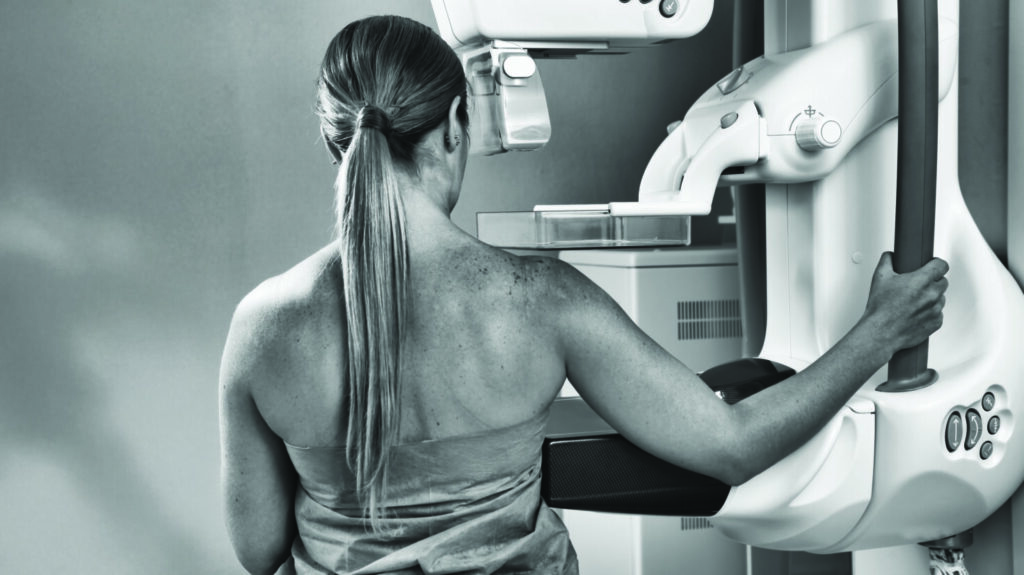
If there’s a piece of this article worth reading twice, it’s this one: early detection changes almost everything about how this disease plays out. Screening mammograms catch an average of 5.1 cancers per 1,000 women screened, with a sensitivity between 77% and 95%. Cancers found through screening — before there’s a lump you can feel, before anything feels wrong — are far more likely to be caught early. Screening detects Stage 0 cancers 77% of the time and Stage 1 cancers 79% of the time. Catching it that early often means a woman can avoid a total mastectomy or chemotherapy altogether, treatments that reshape not just a body, but a life, a family’s routine, and a sense of self. Even how often someone receives screening matters. Women who get annual mammograms have a mortality reduction of 40%. Women who receive screening every other year only see a 23% mortality reduction. That’s not a small difference; it could be the difference between catching something in time and not.
Why This Is Worth Talking About
It’s easy to let statistics like these wash over us as numbers on a page, disconnected from the people they describe. But every percentage in this article represents someone’s mother, someone’s daughter, someone’s Tuesday afternoon that started ordinary and ended with a phone call that changed everything. The good news tucked inside all of this data is that we have more power here than it might feel like. A mammogram, scheduled and kept, is one of the simplest and most protective things a woman can do for herself. If you’ve been putting yours off, or if you know someone who has, let this be the nudge.
Talk to your doctor about a screening schedule that’s right for you.
Any content, resident submissions, guest columns, advertisements, and advertorials are not necessarily endorsed by or represent the views of Best Version Media LLC (BVM) or any municipality, homeowners associations, businesses, or organizations that this publication serves. BVM is not responsible for the reliability, suitability, or timeliness of any content submitted, inclusive of materials generated or composed through artificial intelligence (AI). All content submitted is done so at the sole discretion of the submitting party.