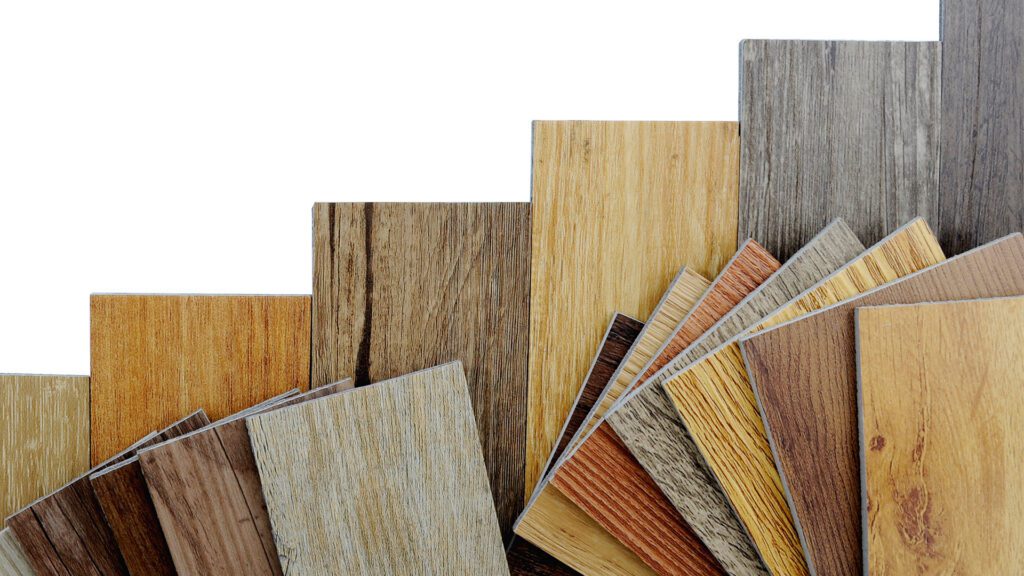
What Is Hardwood?
Solid hardwood is made from a single piece of natural wood. Popular species include oak, maple, hickory, cherry, and walnut. Every board has its own grain, color, and character, giving hardwood its traditional and natural appearance.
One of the biggest advantages of solid hardwood is its ability to be sanded and refinished multiple times. With proper care, a quality hardwood floor can last for decades and potentially for generations. However, solid hardwood naturally expands and contracts with changes in temperature and humidity, so the installation environment is important.
What Is Engineered Wood?
Engineered wood is also real wood, but it is constructed from multiple layers. A genuine hardwood veneer forms the visible surface, while layers beneath it are arranged to provide greater stability. This layered construction helps engineered wood resist movement caused by changes in temperature and humidity. Depending on the product, engineered flooring can be nailed, stapled, glued, or installed as a floating floor. This makes it particularly useful for remodeling projects and certain subfloor conditions.
Appearance and Durability
A common misconception is that engineered wood is not real wood. Quality engineered flooring has a genuine hardwood surface and can look virtually identical to solid hardwood once installed. Both types can be highly durable. Solid hardwood has the advantage of being wood throughout its entire thickness, allowing it to be refinished many times. Engineered flooring can also sometimes be refinished, depending on the thickness of its hardwood wear layer. When choosing engineered flooring, the thickness and quality of that top layer are important considerations.
Moisture and Installation
Engineered wood generally offers greater dimensional stability than solid hardwood, making it a good option where humidity changes may be significant or where installation over concrete is desired. However, engineered wood should not automatically be considered waterproof. Excessive moisture can damage either type of wood flooring unless the specific product is designed and warranted for those conditions. Solid hardwood traditionally requires a suitable wood subfloor and is commonly nailed or stapled. Engineered wood provides more installation flexibility, which can be a significant advantage in renovation work.
Which Should You Choose?
The right choice depends on the home, the subfloor, the environment, the expected traffic, and the homeowner’s goals.
Solid hardwood may be preferable for someone who wants traditional construction and maximum long-term refinishing potential. Engineered wood may be preferable when dimensional stability, installation flexibility, or concrete subfloors are important.
The bottom line is that neither product is automatically better. Product quality, proper installation, moisture control, and regular maintenance are critical to the performance and longevity of either floor. By considering the specific conditions of the project rather than simply comparing price, homeowners can choose a wood floor that provides beauty, durability, and value for many years.
Any content, resident submissions, guest columns, advertisements, and advertorials are not necessarily endorsed by or represent the views of Best Version Media LLC (BVM) or any municipality, homeowners associations, businesses, or organizations that this publication serves. BVM is not responsible for the reliability, suitability, or timeliness of any content submitted, inclusive of materials generated or composed through artificial intelligence (AI). All content submitted is done so at the sole discretion of the submitting party.