Fall has arrived with crisper weather, changing leaves, and many wildlife species beginning to migrate back to valley and residential areas. One of the most spotted and beloved returning species is the mule deer.
Rocky Mountain mule deer (Odocoileus hemionus hemionus) are found throughout Utah, including the mountains and neighborhoods in the Wasatch Back. This subspecies is the largest species of mule deer. Utah’s Division of Wildlife Resources estimates that Utah is currently home to more than 300,000 mule deer, making them one of the state’s most recognizable large mammals.
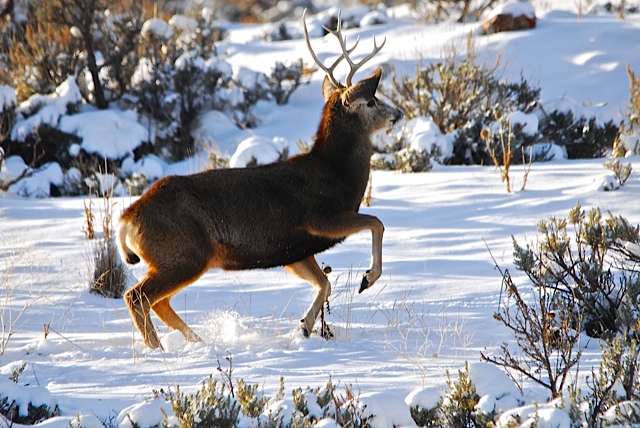
Mule deer are remarkably well adapted to Utah’s varied landscapes. Their large ears provide excellent hearing and help them detect approaching predators. Their distinctive pogo stick-like gait, called stotting, where all four legs simultaneously leave the ground, helps them navigate uneven and mountainous terrain efficiently. They can cover between nine and seventeen feet in a single bound, at a speed of up to 25 miles per hour. Mule deer are also crepuscular, meaning they are primarily active around dawn and dusk—times when residents and visitors may be most likely to spot them.
Credit: Michael Flaherty
Their seasonal behaviors are equally important to their survival. As temperatures drop and snow begins to accumulate at higher elevations, mule deer move toward lower-elevation winter ranges where food is more accessible. In the Wasatch Back, this seasonal movement can bring deer into yards, open spaces, roadsides, and other developed areas. While seeing a deer outside a window or along a neighborhood trail can be exciting, it is important to remember that these animals are wild and should be given plenty of space. Follow the tips below to respectfully coexist with mule deer!
Observe Responsibly: If you encounter mule deer, observe them from a safe distance and avoid approaching, following, or surrounding them. Give deer plenty of room to move away and keep dogs leashed. A deer that appears alert, nervous, or begins moving away is telling you that you are too close. Binoculars or a camera with a zoom lens are great ways to enjoy wildlife without disturbing it.
Don’t Feed: Feeding can cause deer to lose their natural wariness of people and congregate in residential areas, where they face increased risks from vehicles, pets, disease, and other conflicts. Human-provided foods can also be unhealthy for deer. Mule deer forage on about 800 different plant species, and the microbes in their digestive systems slowly change throughout the year to help breakdown what is seasonally available. Allowing deer to find their own food helps keep them healthy and wild.
Protect Your Yard: For homeowners, protecting yards can also reduce conflicts. Deer are attracted to many ornamental plants, gardens, and shrubs, so residents can choose deer-resistant landscaping and use appropriate fencing or other barriers to protect vulnerable plants. Keeping attractants out of yards helps discourage deer from becoming dependent on residential spaces for food.
Share the Road: Finally, slow down and watch for deer on the road, especially around dawn and dusk and during seasonal movements. If you see one deer, be alert for others nearby, as mule deer often travel in groups. Use extra caution on roads near wildlife habitat, avoid swerving if a deer enters the roadway, and be prepared for sudden movement.
The best way to coexist with Utah’s mule deer is to give them space, protect our yards without feeding them, and share the roads carefully. By respecting their natural behaviors and habitat, we can enjoy these remarkable animals while helping them remain healthy and wild.
Any content, resident submissions, guest columns, advertisements, and advertorials are not necessarily endorsed by or represent the views of Best Version Media LLC (BVM) or any municipality, homeowners associations, businesses, or organizations that this publication serves. BVM is not responsible for the reliability, suitability, or timeliness of any content submitted, inclusive of materials generated or composed through artificial intelligence (AI). All content submitted is done so at the sole discretion of the submitting party.