Many parents assume that if their baby seems to see well, their eyes must be healthy. However, some vision problems can exist without obvious signs or symptoms. An infant’s eyesight develops rapidly during the first year of life, making early eye care an important part of a child’s overall health.
An infant eye examination can identify potential vision problems before they interfere with learning, development and quality of life.
Why Early Eye Exams Matter
During the first months of life, a baby’s eyes and brain work together to develop the visual skills needed for recognizing faces, tracking movement, crawling, walking, reading and learning. If a vision problem is present and goes undetected, normal visual development may be affected. Many eye conditions are easier to treat when they are discovered early.
An infant eye exam can detect conditions such as:
- Lazy eye (amblyopia)
- Crossed or misaligned eyes (strabismus)
- Significant nearsightedness, farsightedness or astigmatism
- Eye focusing problems
- Congenital cataracts
- Glaucoma
- Retinal abnormalities
- Eye health conditions that may be associated with other medical concerns
When Should an Infant Have an Eye Exam?
The American Optometric Association recommends that infants receive their first comprehensive eye examination between six and 12 months of age. Additional examinations are typically recommended:
- At least once between ages three and five
- Before starting school
- Every year thereafter, or as recommended by your eye care professional
Children who are born prematurely, have developmental delays, have a family history of eye disease or those who have other medical concerns may need earlier or more frequent examinations.
What Happens During an Infant Eye Exam?
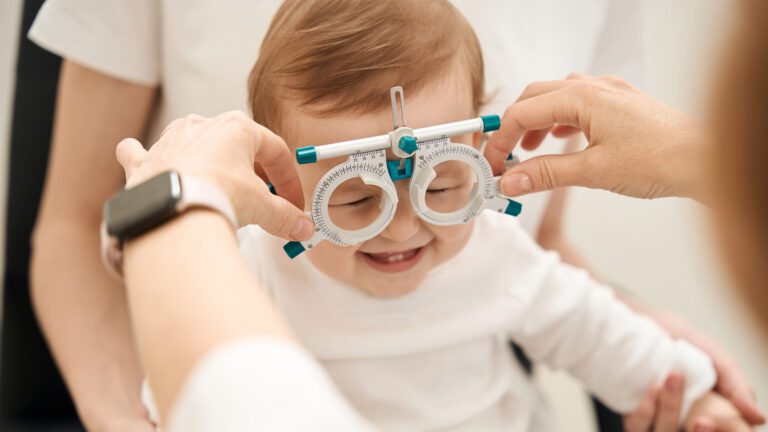
Parents are often surprised to learn that infants do not need to know letters or numbers to have a complete eye examination. Using specialized techniques and instruments, the doctor evaluates:
- Eye health
- Visual development
- Eye alignment and movement
- Focusing ability
- Prescription needs
- Overall visual function
The examination is gentle, comfortable and designed specifically for babies and young children.
Signs Parents Should Watch For
While many eye problems have no obvious symptoms, parents should contact an eye care professional if they notice:
- Eyes that consistently turn inward or outward
- Excessive tearing
- Persistent redness
- White or cloudy pupils
- Extreme sensitivity to light
- Poor eye contact after several months of age
- Difficulty following objects
- Frequent eye rubbing without signs of tiredness
Giving Your Child the Best Start
Clear vision plays a vital role in a child’s physical, social and educational development. Early detection and treatment of vision problems can help children reach important developmental milestones and support lifelong healthy vision.
A healthy start includes healthy vision. Scheduling an infant eye exam provides peace of mind for parents and the best opportunity for a lifetime of clear, comfortable sight. Contact Drs. Sehy & Jones Community Eye Care by calling (217) 342-2672 or online at www.communityeyecare.com to make a lasting difference in your child’s future.
Any content, resident submissions, guest columns, advertisements, and advertorials are not necessarily endorsed by or represent the views of Best Version Media LLC (BVM) or any municipality, homeowners associations, businesses, or organizations that this publication serves. BVM is not responsible for the reliability, suitability, or timeliness of any content submitted, inclusive of materials generated or composed through artificial intelligence (AI). All content submitted is done so at the sole discretion of the submitting party.