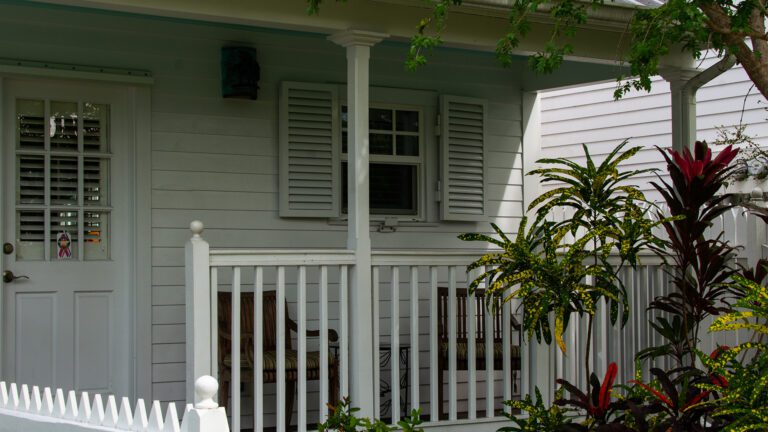
In Savannah, a porch often becomes one of the most used spaces in the home. It provides shade and room to gather outdoors. Coastal conditions demand careful construction. Humidity, strong sun, wind driven rain, insects, and salt air can quickly expose poor planning. These seven details help create a porch that looks right and lasts.
1. Make It Belong to the House
A porch addition should look original to the house. Match the roof pitch, shingles, fascia, soffit, trim, columns, and ceiling details. Plan furniture and traffic flow so doors, steps, and walkways do not consume seating areas.
2. Build From the Ground Up
Finishes cannot compensate for a weak structure. Footings, framing, and roof connections must work as one system. Requirements depend on the design, soil, exposure, and local codes. Careful planning protects every finish.
3. Give Water a Way Out
Plan flashing, gutters, drainage, deck board spacing, and house connections together. Water needs a clear path away from the roof and foundation. Screens block insects, but materials still need to withstand rain and dry properly.
4. Choose Materials for Coastal Conditions
Select framing, siding, trim, decking, finishes, fasteners, and connectors for their exposure. Coastal porches need materials that resist moisture and corrosion. Homeowners should also understand the cleaning, sealing, painting, and inspections each choice requires.
5. Plan Comfort Before Construction
Roof height, shade, airflow, screens, and afternoon sun determine how often the porch gets used. Plan ceiling fans, electrical boxes, receptacles, and lighting before closing the ceiling. Overhead, step, and accent lighting improve comfort and safety after dark.
6. Design for Daily Life
Decide whether the porch will support quiet seating, dining, entertaining, or several uses. Leave walking paths, check screen door swings, and place steps where people naturally enter the yard. Cooking equipment also needs safe clearances and proper ventilation.
7. Make Maintenance Simple
Build with future care in mind. Screens should be repairable, gutters accessible, drainage clear, and finishes easy to renew. Check fasteners, sealant, wood movement, and corrosion each year. Catching small issues early reduces the chance of expensive repairs. A well planned porch feels like a natural extension of the home. When structure, moisture control, materials, comfort, and maintenance are addressed together, the space can serve the family for years.
Any content, resident submissions, guest columns, advertisements, and advertorials are not necessarily endorsed by or represent the views of Best Version Media LLC (BVM) or any municipality, homeowners associations, businesses, or organizations that this publication serves. BVM is not responsible for the reliability, suitability, or timeliness of any content submitted, inclusive of materials generated or composed through artificial intelligence (AI). All content submitted is done so at the sole discretion of the submitting party.