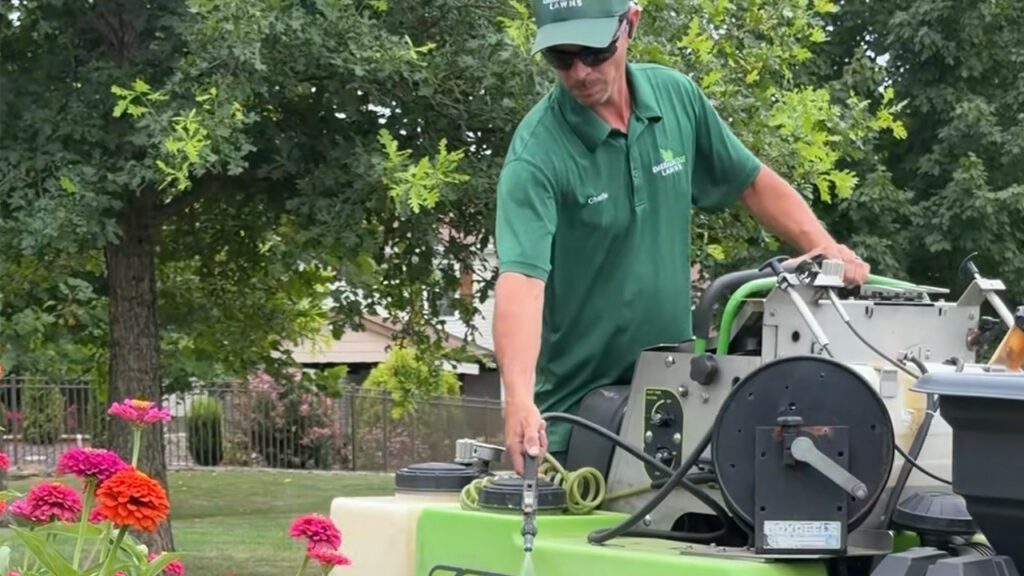
One of the biggest misconceptions in lawn care is that you should treat weeds only when you can see them.
In reality, the healthiest lawns are managed a season ahead.
Many of the weeds that frustrate homeowners every spring—including dandelions, clover, chickweed, henbit, and wild violet—are actually cool-season plants. Like tall fescue and Kentucky bluegrass, they begin their life cycle during the cooler temperatures of fall, not spring.
While most people think lawn season is winding down, these weeds are quietly germinating, establishing roots, and preparing for rapid growth the following year.
By the time they bloom in April, they’ve already had months to develop.
That’s why late fall is often the most effective time to control them.
Smaller Weeds, Better Results
Young weeds are much easier to control than mature ones.
During the fall, weeds are actively moving sugars and nutrients from their leaves down into their root systems to prepare for winter. When a properly selected herbicide is applied during this period, the plant naturally carries the herbicide along with that downward movement throughout its entire system—including the roots.
By comparison, in the spring, weeds are pushing energy upward to produce new leaves, stems, and flowers. At that point, they’re larger, more established, and generally more difficult to control.
Treating weeds in the fall takes advantage of the plant’s own biology, making it one of the most effective times of the year for long-term control.
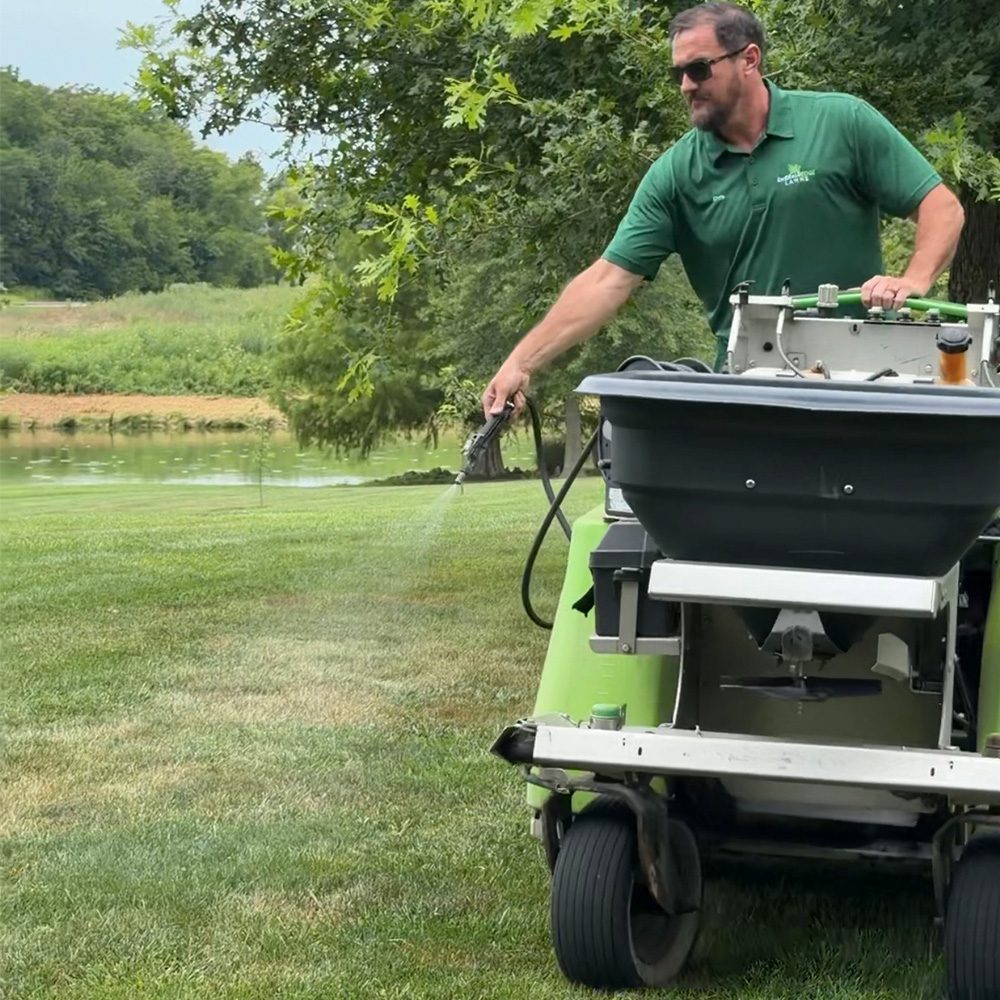
Cooler Weather Requires a Different Approach
Late-season weed control isn’t simply another spring application.
As temperatures cool, many herbicides that perform well during the growing season become less effective. Successful fall weed control often requires products specifically designed to work under cooler conditions.
Using the right product at the right time is just as important as applying it at the right stage of the weed’s life cycle.
Don’t Forget Wild Violet
Wild violet is one of the most stubborn weeds found in Midwestern lawns.
Throughout much of the year, its mature leaves develop a waxy coating that makes herbicides less effective. In the fall, however, the plant begins producing fresh, tender leaves that are far more receptive to treatment.
While wild violet often requires persistence, fall provides one of the best opportunities to begin gaining the upper hand.
Thinking One Season Ahead
Great lawns aren’t created by reacting to problems after they appear. They’re built by understanding what comes next.
Fall is when cool-season grasses strengthen their roots, when overseeding produces the best results, and when many troublesome weeds are at their most vulnerable.
Managing your lawn a season ahead means making decisions today that pay dividends next spring. It’s a simple shift in thinking that can lead to a healthier, thicker lawn—and far fewer weeds when warmer weather returns.
Chris Hilmes is the owner of Emerald Edge Lawns and enjoys helping homeowners throughout Clinton County and the Metro East better understand the science behind a healthy lawn. October is the time to get ahead of next spring’s weeds. Contact Emerald Edge Lawns today to schedule your fall weed-control application before the seasonal window closes. To learn more or schedule service, call 618-322-1370 or visit emeraldedgelawns.com.
Any content, resident submissions, guest columns, advertisements, and advertorials are not necessarily endorsed by or represent the views of Best Version Media LLC (BVM) or any municipality, homeowners associations, businesses, or organizations that this publication serves. BVM is not responsible for the reliability, suitability, or timeliness of any content submitted, inclusive of materials generated or composed through artificial intelligence (AI). All content submitted is done so at the sole discretion of the submitting party.