You catch your reflection and wonder why you look exhausted, even after a full night’s sleep. Often the culprit is not fatigue at all, but the eyelids. Surgery to lift heavy, hooded upper lids, called blepharoplasty, is one of the most frequently performed cosmetic operations on the planet: worldwide, about 15.8 million cosmetic surgeries are done each year, and eyelid surgery ranks third among all of them—behind only liposuction and breast augmentation—a position it has held for 14 years running.
Why has this one operation become so beloved? Five reasons stand out.
Hooded lids are common and an early sign of aging
Drooping upper eyelid skin (doctors call it dermatochalasis) is remarkably widespread. In one population study, more than half of adults had hooded eyelids by age 40 and more than two thirds by age 60. Because eyelid skin is the thinnest on the body, it tends to show aging first, which is why tired-looking eyes often appear well before other changes.
The procedure is genuinely straightforward
Upper blepharoplasty is a comparatively minor operation, often simply the removal of a precise strip of excess skin. In experienced hands it takes only about 15–20 minutes per eyelid, is done under local anesthesia (the eye area is simply numbed), and requires no general anesthesia. Nationally, the trend has moved decisively toward shorter operations in the office setting. Many patients drive themselves home afterward.
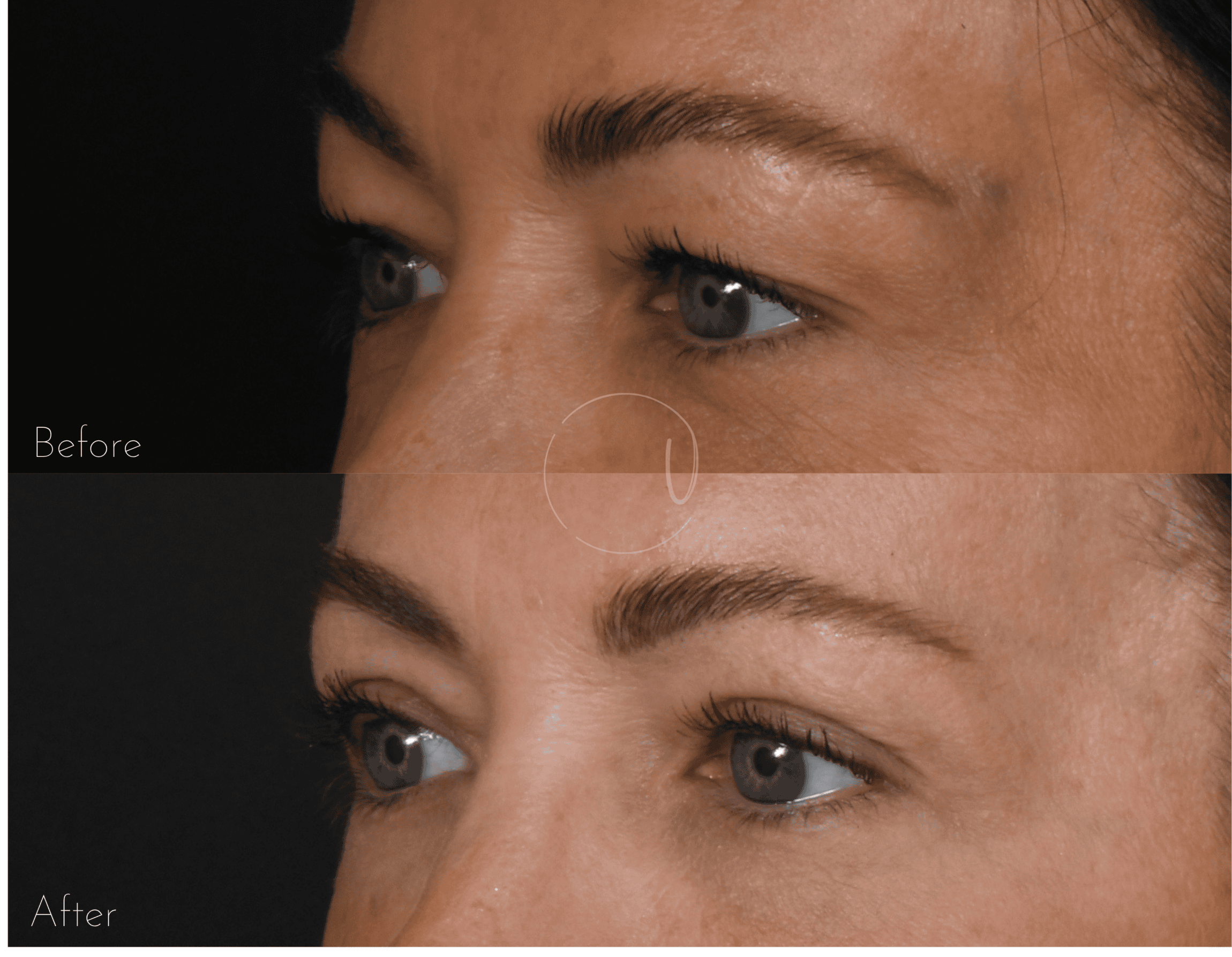
Before and After. (Submitted photo)
Recovery is quick
Most people have some bruising and swelling that fades within about 4–7 days. Pain is typically minimal; many patients take nothing stronger than acetaminophen for a day or two, if anything at all.
High cost-benefit ratio
Many patients have this procedure covered by their medical insurance. For those who pay out of pocket our current cosmetic fee for upper eyelids is roughly $5,500, including all associated operating room costs. Economists who have studied blepharoplasty rate the operation highly cost-effective for its quality-of-life benefit. The per dollar improvement in quality of life rates significantly higher than other common elective procedures such as nose job (rhinoplasty) and knee replacement (arthroplasty).
The results are excellent and lasting
Satisfaction is among the highest in all of cosmetic surgery. In a recent study of 970 patients, 96.9% were satisfied with their appearance in the mirror, 94.7% reported greater social confidence, and 96.8% said they would recommend the procedure. Results are permanent, though you keep aging naturally, so some people choose to repeat the procedure, typically 7–10 years later.
Looking rested again, it turns out, is simpler than most people imagine.
Disclaimer: This article does not constitute medical advice and no doctor-patient relationship is formed by reading it. Prior results do not guarantee a similar outcome. Additional facts or future developments may affect subjects contained within this article. Before acting or relying upon any information within this article, seek the advice of a medical doctor.
Dr. Matthew Urban is a fellowship-trained facial plastic surgeon practicing in Chester, NJ. He specializes in cosmetic injections, lasers and peels, rhinoplasty, facelift, neck lift, eyelid lift, blepharoplasty, and hair transplantation.
Any content, resident submissions, guest columns, advertisements, and advertorials are not necessarily endorsed by or represent the views of Best Version Media LLC (BVM) or any municipality, homeowners associations, businesses, or organizations that this publication serves. BVM is not responsible for the reliability, suitability, or timeliness of any content submitted, inclusive of materials generated or composed through artificial intelligence (AI). All content submitted is done so at the sole discretion of the submitting party.