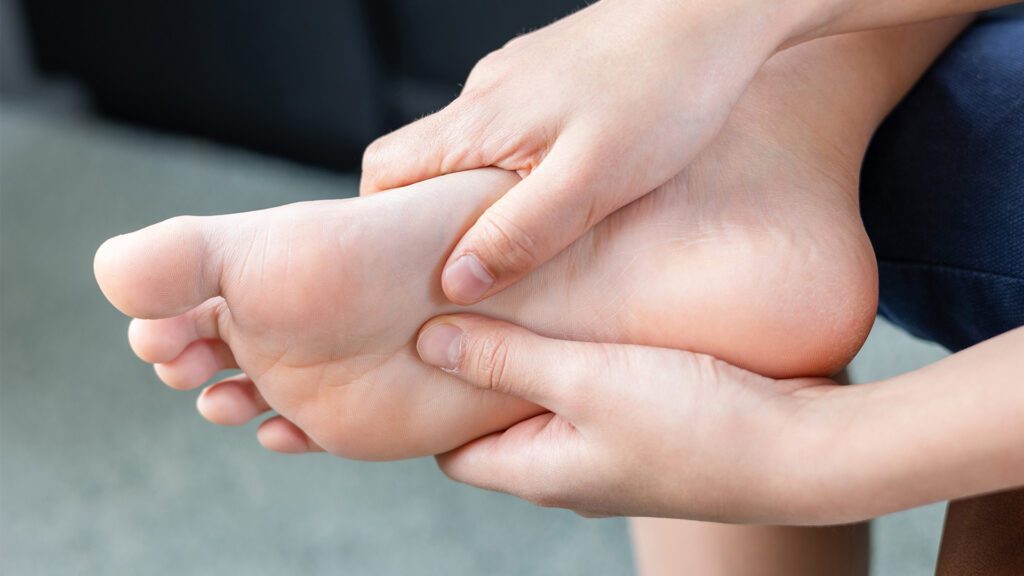
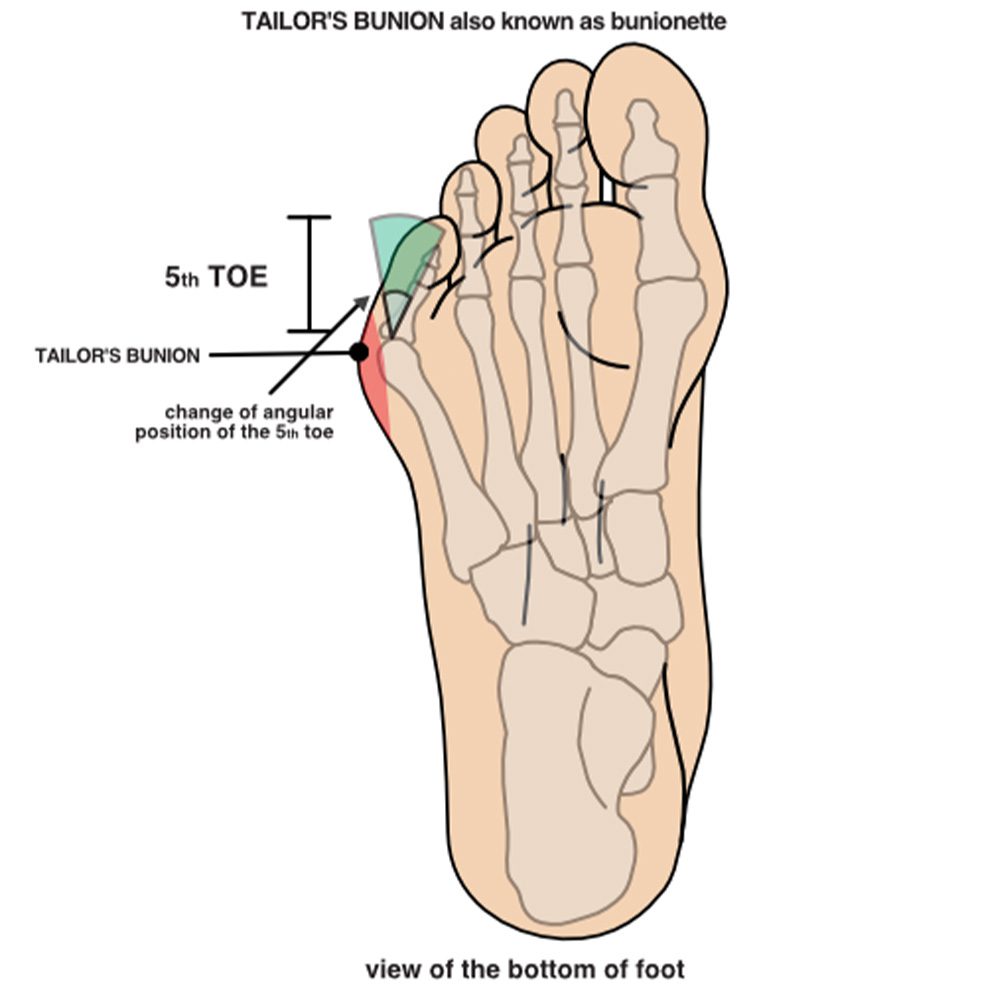
A tailor’s bunion, also called a bunionette, is a bony prominence that develops on the outside of the foot at the base of the little toe. Anatomically, it is the fifth metatarsal head that pushes against the skin, causing pain. While traditional bunions affect the big toe joint, tailor’s bunions involve the fifth metatarsophalangeal (MTP) joint. The name comes from the traditional image of tailors sitting cross-legged while working, with the outside of the foot pressing against the floor.
What Causes a Tailor’s Bunion?
Tailor’s bunions usually develop because of prolonged pressure. Multiple factors can lead to this condition. Tight and narrow shoes, along with foot structure and walking mechanics, lead to increased tension and pressure through this area. There is a genetic component to tailor’s bunions, as people are more susceptible to getting them if family members have them. Previous injuries can contribute to this, along with systemic inflammatory conditions like rheumatoid arthritis. Occupations that involve prolonged standing or walking also increase the likelihood of a tailor’s bunion occurring.
Symptoms
The most noticeable sign is a bump on the outside of the foot near the base of the little toe. Some people have a visible bump without significant discomfort. The most common symptoms are pain, redness, swelling, irritation, callus formation, and difficulty walking. Symptoms can become more noticeable when shoes repeatedly rub against the prominence.
How Is a Tailor’s Bunion Diagnosed?
At Sunshine Ankle and Foot Experts, we focus on conditions of the foot, ankle, and lower leg. Along with our diagnostic skills, we have on-site X-ray machines to accurately diagnose this condition. We will examine the alignment of your toes and assess your walking pattern.
Nonsurgical Treatments
Many people with tailor’s bunions can reduce or eliminate symptoms without surgery. Treatment generally begins by reducing pressure on the affected area.
- Choose Better-Fitting Shoes: Switch to footwear with a wide, deep toe box. Shoes should allow the toes to spread naturally without pressing against the bunionette. Avoid shoes that squeeze the little toe or have narrow, pointed fronts.
- Use Padding: Bunion pads can cushion the bump and reduce friction between the foot and the shoe. Some people may also benefit from taping or toe spacers.
- Consider Orthotics: Shoe inserts help redistribute pressure across the foot. Depending on your foot structure, over-the-counter or custom orthotics may be appropriate.
- Reduce Pain and Inflammation: Ice and oral anti-inflammatories can help with discomfort and swelling according to medical guidance.
Can a Tailor’s Bunion Be Removed Without Surgery?
No. Conservative treatment can reduce pain and irritation, but it does not physically remove the bony prominence. That does not mean everyone with a bunionette needs surgery. Surgery is generally considered only when symptoms persist despite non-surgical care.
Surgical Treatment
If surgery is necessary, we assess your bone alignment, the severity of the deformity, and joint condition. Surgical correction may involve removing part of the bony prominence or realigning the metatarsal bone. Recovery varies according to the procedure.
Preventing Tailor’s Bunions
Not every bunionette can be prevented, particularly when inherited foot structure plays a role. However, reducing unnecessary pressure on the little toe helps.
When to See a Healthcare Professional
A painful bump on the outside of the foot isn’t necessarily a tailor’s bunion, so an examination is useful for confirming the diagnosis and ruling out other causes. We offer same-day appointments across three convenient locations.
Bottom Line
Tailor’s bunions are common deformities involving the joint at the base of the little toe. Properly fitting shoes, pressure relief, padding, orthotics, and symptom management can often make them much more comfortable. Surgery is reserved for cases in which symptoms remain significant or affect daily activities.
Any content, resident submissions, guest columns, advertisements, and advertorials are not necessarily endorsed by or represent the views of Best Version Media LLC (BVM) or any municipality, homeowners associations, businesses, or organizations that this publication serves. BVM is not responsible for the reliability, suitability, or timeliness of any content submitted, inclusive of materials generated or composed through artificial intelligence (AI). All content submitted is done so at the sole discretion of the submitting party.