
After a difficult August of local wildfires, September rain has been welcome across our region. Growing up in Australia, I saw how dry conditions test communities and how people recover by supporting one another. The same is true of financial well-being. Clarity matters, but so does context.
Beginning in early 2027, Canadians will see enhanced Total Cost Reporting for the 2026 calendar year. Annual reports will show, in dollars, the embedded expenses of many mutual funds and exchange-traded funds alongside other reported charges. These are existing costs presented more clearly.
That transparency is positive. Our practice already reviews advisory fees in dollars with clients. Still, cost is only part of the conversation. A better question is: what are you receiving after costs, and is your strategy appropriate for your goals and comfort with risk?
Credit: Chris Hodgkinson and Sattu Mahapatra
A lower-cost investment is not automatically better, just as a higher cost does not guarantee better results. Consider net returns after fees, diversification, risk and consistency over suitable periods.
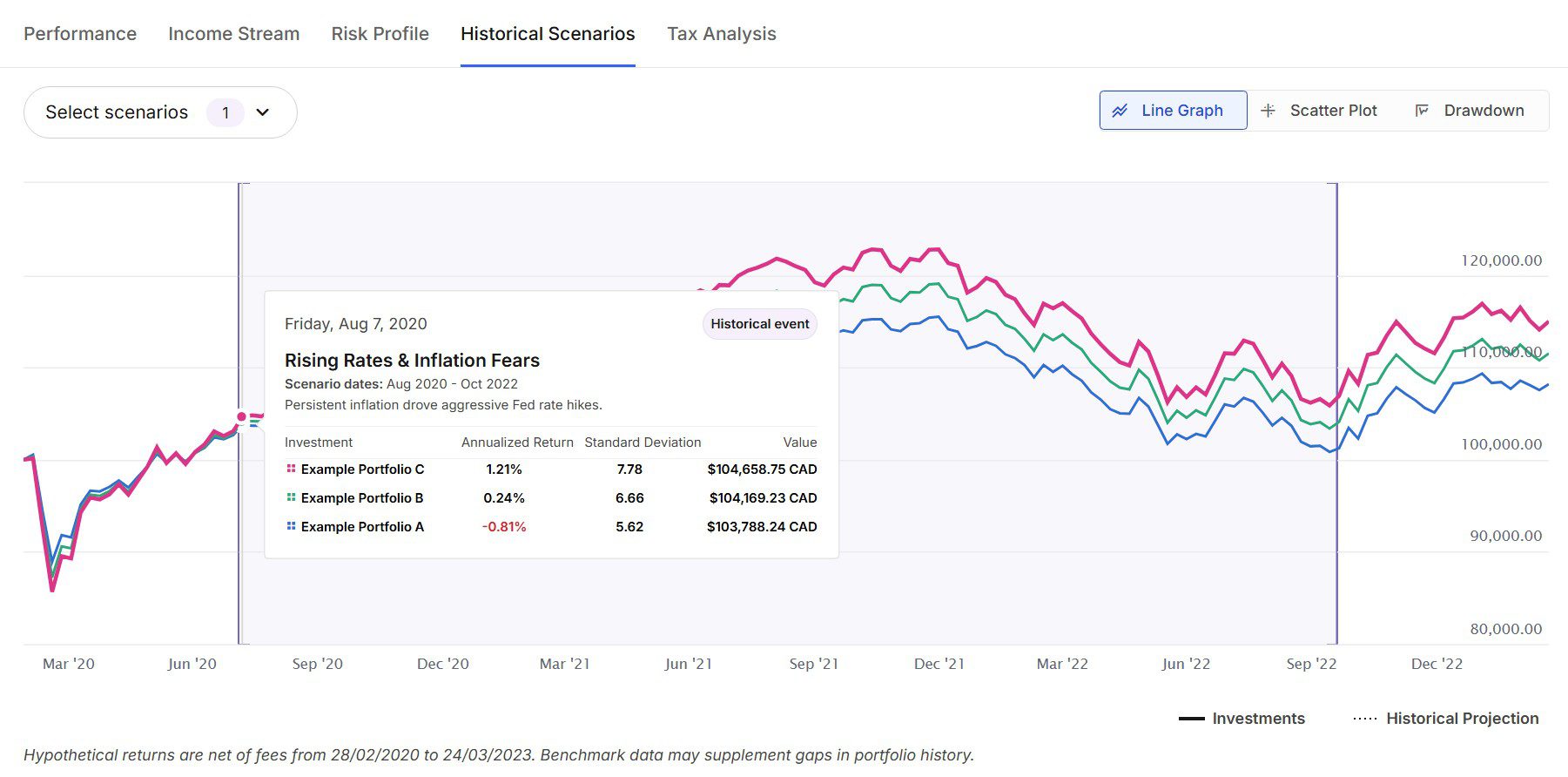
Software should be used to compare stocks, mutual funds and ETFs and illustrate portfolio characteristics and historical scenarios. Figure 1 shows how investments can be compared after costs and how a portfolio might have behaved during a previous market scenario. It cannot predict the future, but it can help answer a practical question: if markets became uncomfortable, would you still be comfortable with your portfolio?
That conversation should continue over time. “Set and forget” may describe how investments are held, but it should not describe the advice around them. Recommendations should be explained in plain language and connected to your objectives. Ask questions until you understand what is being recommended and why.
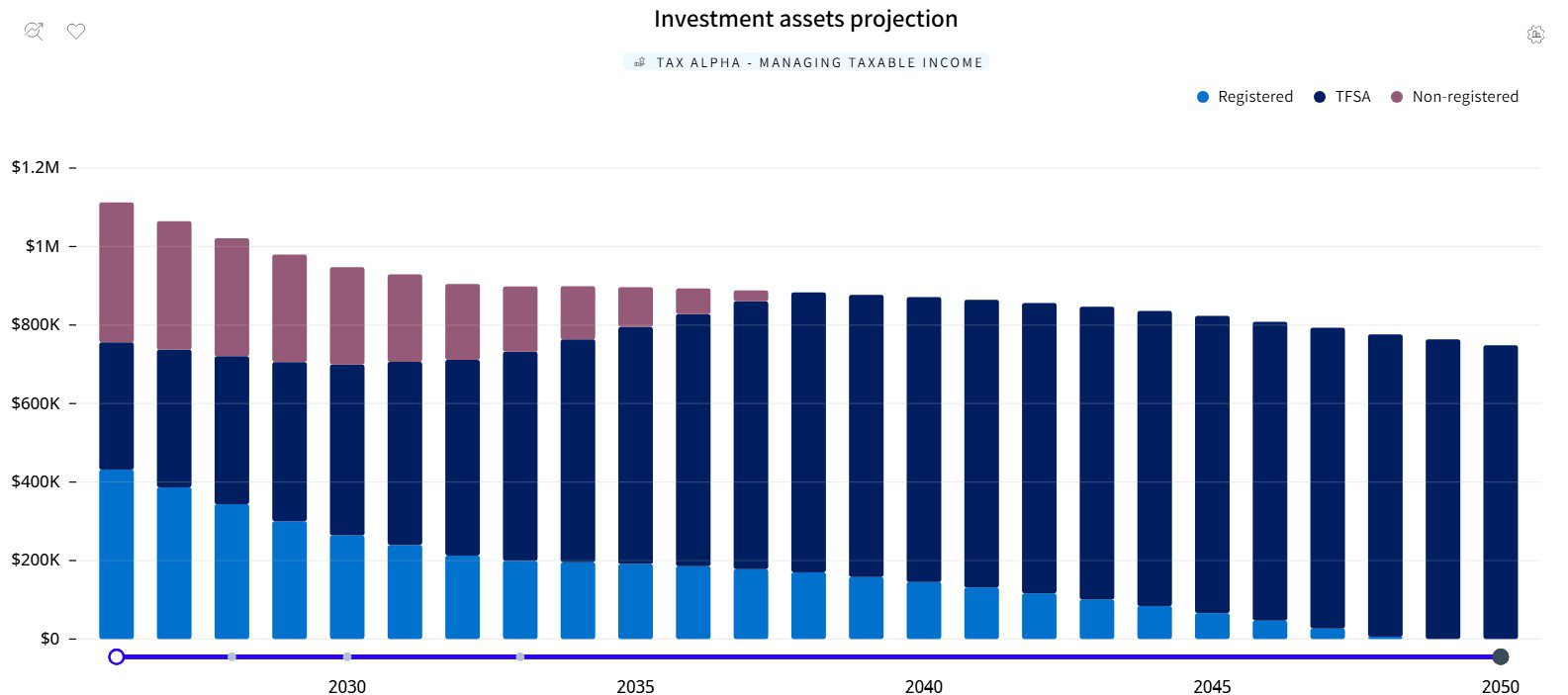
The second measure is the value of planning. Figure 2 shows a couple entering retirement, a time when financial decisions often become more connected. Investments, retirement income, taxes, spending and estate wishes all need to work together.
Credit: Chris Hodgkinson and Sattu Mahapatra
A useful financial plan belongs to the client, not the advisor. My engineering background taught me to optimize every detail. But a mathematically perfect plan is not useful if it does not reflect the life you want and your legacy.
Your plan should explore what-ifs such as higher inflation, earlier retirement or changing business income. It should coordinate investment, tax and estate planning and prompt conversations about wills, powers of attorney, trusted contact information and beneficiary designations. For business owners, it may also address corporate cash flow, share ownership, valuation and succession planning.
When your annual report arrives, do not stop at “What did I pay?” Also ask, “What did I receive after costs, and how is it helping me make informed decisions?”
Figures are illustrative only. Historical performance may not be repeated. Actual results will vary. This article is for general information only and is not investment, tax or legal advice, or a solicitation to buy or sell investments. Each situation is unique. Mutual funds and ETFs may involve fees and expenses. Their values and returns can change, and past performance may not be repeated.
Any content, resident submissions, guest columns, advertisements, and advertorials are not necessarily endorsed by or represent the views of Best Version Media LLC (BVM) or any municipality, homeowners associations, businesses, or organizations that this publication serves. BVM is not responsible for the reliability, suitability, or timeliness of any content submitted, inclusive of materials generated or composed through artificial intelligence (AI). All content submitted is done so at the sole discretion of the submitting party.