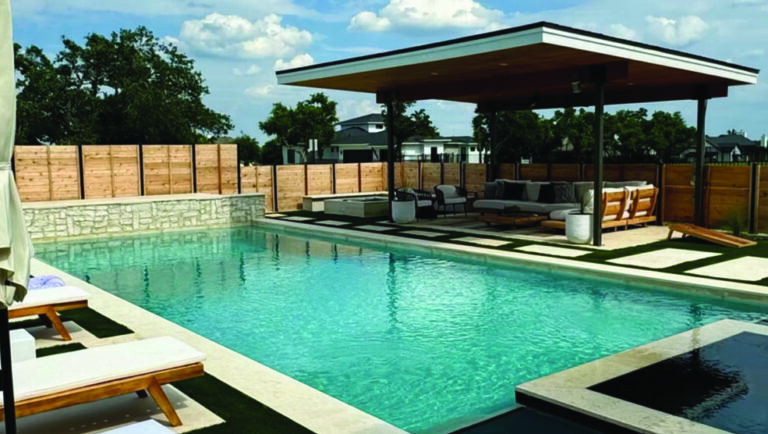
Building a swimming pool in Dripping Springs isn’t quite the same as building one in other parts of Texas. Between our limestone, sloping lots, water concerns and unique Hill Country properties, there are several things homeowners should consider before they ever break ground.
- Start with the property, not the pool.
One of the biggest mistakes I see is choosing a pool design before considering how it fits the property. A good design should work with the home’s architecture, elevation, views and the way the family plans to use the backyard.
Sometimes the simplest pool is the best pool. A clean rectangular design with the right decking, landscaping and placement can have a much bigger impact than adding features simply for the sake of adding features.
- Understand what’s underneath your yard.
If you’ve lived in Dripping Springs very long, you already know: we have rock.
Excavation conditions can vary considerably from one property to another. That’s why it’s important to understand how your builder handles rock excavation and whether unexpected excavation costs could become a large change order after construction begins.
Structural engineering is equally important. Pools should be designed for the soil, elevation and site conditions of the individual property – not built using a one-size-fits-all approach.
- Think about long-term maintenance.
When homeowners are designing a pool, they’re naturally focused on how it will look. I encourage them to also think about what it will be like to own five or ten years from now.
Equipment placement, plumbing design, automation, circulation and accessibility all matter. Quality equipment and a well-designed hydraulic system may not be the most exciting parts of a new pool, but they can make a tremendous difference in reliability and maintenance.
- Don’t overlook water conservation.
Water is an especially important consideration in the Hill Country.
Homeowners should understand their water provider’s current requirements before filling or significantly adding water to a pool. They should also consider features that reduce unnecessary water loss and develop good maintenance habits that help avoid draining and refilling a pool.
A properly maintained pool should be viewed as water that is continuously treated and reused – not water that is routinely replaced.
- Ask your builder about the construction process before signing a contract.
Homeowners tend to ask about price, finishes and completion dates. Those are important, but there are other questions I think are just as important:
Who will communicate with me during construction? How often will someone be on my project? Who handles inspections? What happens if there’s a problem? What does the warranty actually cover? And what costs could potentially change after I sign?
A good builder should be comfortable answering those questions before construction begins.
The Bottom Line
A swimming pool is one of the largest improvements most homeowners will ever make to their property.
When it’s designed and built correctly, it should feel like it was always supposed to be there.
My advice is simple: don’t choose a pool based solely on a rendering or the lowest price. Choose a design that fits your property, understand exactly what you’re buying, and work with a builder who knows the unique challenges of building in the Texas Hill Country.
Any content, resident submissions, guest columns, advertisements, and advertorials are not necessarily endorsed by or represent the views of Best Version Media LLC (BVM) or any municipality, homeowners associations, businesses, or organizations that this publication serves. BVM is not responsible for the reliability, suitability, or timeliness of any content submitted, inclusive of materials generated or composed through artificial intelligence (AI). All content submitted is done so at the sole discretion of the submitting party.