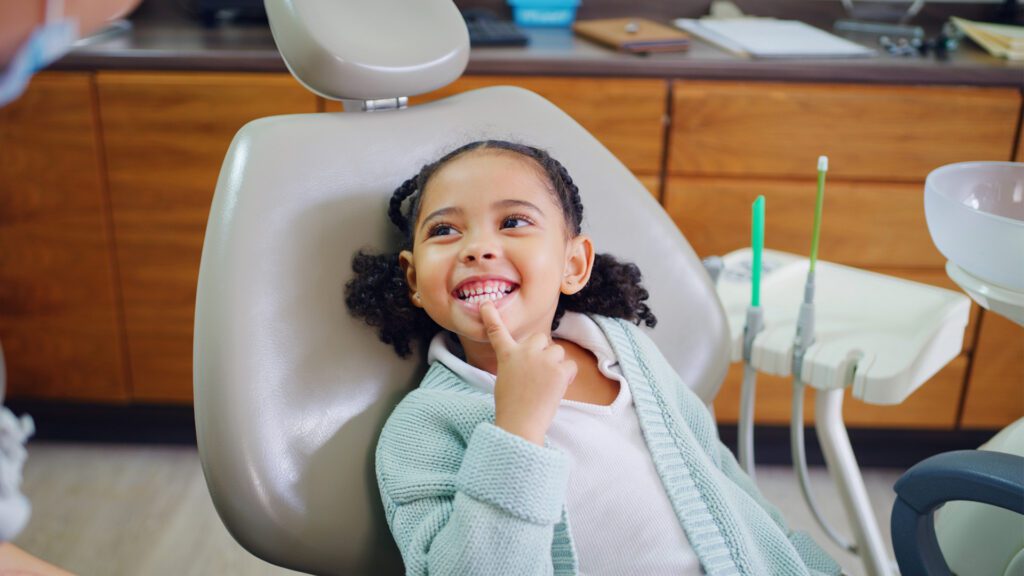
Most parents imagine braces as a rite of passage for teenagers. However, the American Association of Orthodontists recommends a first check-up much earlier—by age 7. Why the change?
The Value of Timing
Starting treatment too early can be counterproductive. If adult teeth haven’t surfaced, changes made to baby teeth might not last. This is why many first visits result in a “watch and wait” approach rather than immediate braces. However, for some children, early intervention is vital. A generation ago, the standard fix for crowding was pulling permanent teeth. Today, we focus on expansion. By guiding jaw growth while the palate is still flexible, we can create enough room for every adult tooth to fit naturally.
When is “Phase 1” Treatment Necessary?
Early (Phase 1) treatment can prevent invasive procedures later and make future treatment shorter. Common indicators include:
- A narrow upper jaw or significant crowding
- A crossbite (upper teeth fitting inside the lower teeth)
- Narrow jaws that may be affecting a child’s breathing
- Protruding front teeth that risk injury during a fall
- Social self-consciousness caused by crooked teeth
A Baseline for the Future
The age-7 visit creates a roadmap. Many practices, including ours, offer these observation visits for free to monitor development. For most kids, we simply check back in 6 months to a year. For a few, it’s the perfect moment to act.
When choosing an orthodontist, look for this standard of care:
- Evaluation around age 7 with photos and x-rays to establish a baseline
- Treatment recommendations only when the timing is right
- Clear explanations for why treatment is needed now vs. later
- A transparent monitoring plan if immediate action isn’t required
Any content, resident submissions, guest columns, advertisements, and advertorials are not necessarily endorsed by or represent the views of Best Version Media LLC (BVM) or any municipality, homeowners associations, businesses, or organizations that this publication serves. BVM is not responsible for the reliability, suitability, or timeliness of any content submitted, inclusive of materials generated or composed through artificial intelligence (AI). All content submitted is done so at the sole discretion of the submitting party.