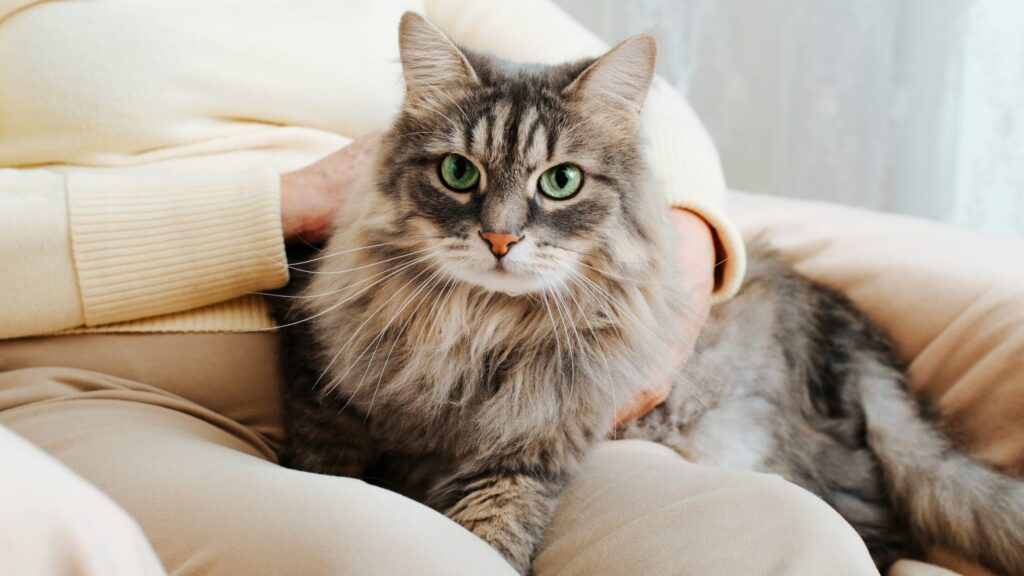
One of the more common questions we get from cat owners is why their indoor-only cat needs a stool sample. This is a completely reasonable question. If the cat never goes outside, never meets other cats, and spends most of the day rotating between the couch, the sunny window, and judging everyone from the stairs, where exactly are these parasites supposed to be coming from?
Unfortunately, “indoor-only” does not always mean “parasite-proof.” Over the last several years, as stool testing has become more sensitive, we are finding intestinal parasites in cats whose owners are absolutely correct that they do not go outside. These cats are not sneaking out at night with a fake ID and meeting raccoons behind the shed. The exposures are often happening inside the home, or the parasites have been quietly present since kittenhood.
The first place to look is the very small wildlife ecosystem that can exist inside a house, whether we like to admit it or not. Cockroaches and other insects can carry parasite larvae or serve as intermediate hosts for certain parasites, and many cats view any bug in the house as both entertainment and a snack. A cat hunting and eating a cockroach is not thinking about parasite prevention. They are thinking they have just performed a valuable household service and deserve praise.
Potting soil can also be a source of exposure. Soil can contain parasite eggs or other infectious stages, and cats are very good at walking through, digging in, or sampling things we would prefer they leave alone. Then there are mice. Even if owners never see a mouse, cats may find evidence long before we do. Newer stool testing can show DNA from parasites associated with rodents or other small animals. That does not mean the parasite is actively infecting the cat, but it can tell us that the cat has been exposed to something in the house that the humans did not know was there. In other words, the stool sample may occasionally double as a tiny, disgusting home inspection report.
The other issue is that many cats may have been carrying parasites since they were kittens. Kittens commonly come from environments where parasites spread easily, and even if stool testing was done early in life, no test is perfect. Traditional stool tests usually look for parasite eggs, cysts, or oocysts under a microscope. If the parasite is not shedding those stages on the day the sample is checked, the test may be negative even though the parasite is still present.
Some parasites also have a prepatent period, which is the time between infection and when they start producing eggs or other stages we can detect. That means a cat can test negative at one visit and positive later without any dramatic new exposure. It is not that the first test was useless. It just means parasites are rude enough not to follow our appointment schedule.
Finding these parasites early matters. Some are easy to treat, but others can be frustrating once they are established in a home. Certain parasites can survive in the environment for long periods, and cleaning them up may involve repeated treatments, litter box management, disinfecting, laundering, and, in some cases, a level of household decontamination that makes everyone regret ever asking why the stool sample mattered.
This is especially important in multi-cat homes, homes with young children, or homes with immunocompromised family members. The goal is not to accuse your indoor cat of living a secret outdoor lifestyle. The goal is to recognize that parasites are very good at finding loopholes.
If your veterinarian recommends a stool sample, especially with newer testing options available, it is worth discussing which type of test makes the most sense for your cat. Indoor cats may live safer lives than outdoor cats, but they still live in the real world. And apparently, the real world sometimes includes bugs, potting soil, mice, and a stool sample cup.
Any content, resident submissions, guest columns, advertisements, and advertorials are not necessarily endorsed by or represent the views of Best Version Media LLC (BVM) or any municipality, homeowners associations, businesses, or organizations that this publication serves. BVM is not responsible for the reliability, suitability, or timeliness of any content submitted, inclusive of materials generated or composed through artificial intelligence (AI). All content submitted is done so at the sole discretion of the submitting party.