You’ve probably gotten out your winter coat and mittens – now it’s time to winterize your home too. Chilly mornings and potential precipitation also may equal rising gas and electric bills. No matter if you’re combating sub-zero temps or just cool mornings and nights, small changes can help lower the high cost of staying warm and cozy. Read on for strategies to help.
How to save heat energy
- Adjust your ceiling fan. Hot air gets trapped at the ceiling, but your ceiling fan can help push it downward, which in turn helps your rooms remain warmer. Change the controls so the fan rotates clockwise at a low setting.
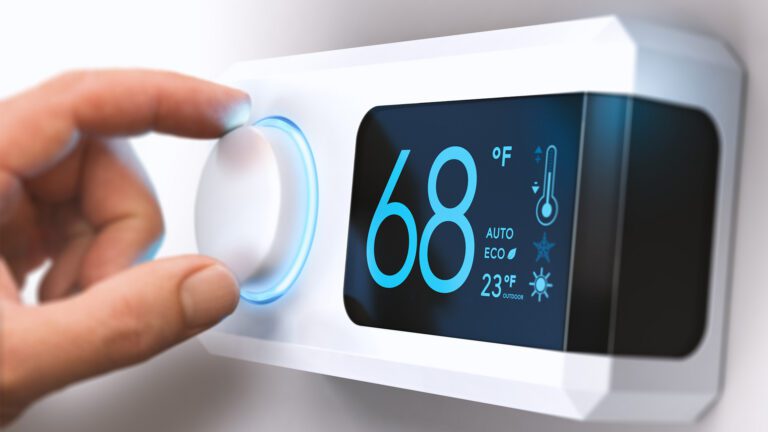
- Lower your thermostat. The good thing about winter home savings strategies is that you can take incremental steps to cut as much as you want. Take the setting on your thermostat and:
- Lower it at night by 10 degrees, and you might save up to 10% on your heating costs. But if that’s too cold for you, lower it by just 1 degree over an 8-hour period, and you may save yourself 1% on your home’s heating bill.
- Set the built-in capabilities to program the thermostat to adjust temperatures during the day, when no one is at home, and at night, when you’re covered up by blankets and asleep. ENERGY STAR reports that this could save you up to $180 annually.
- During extreme cold it is recommended to leave the thermostat on a consistent temperature so the furnace does not strain to catch up.
- Consider a smart thermostat. Energy saving thermostats can pick up on your family’s behaviors, can be accessed from a remote location via a smart phone, and may adjust temperatures based on the conditions of the environment like levels of humidity. As a result, a smart thermostat may save you some money
- Lower the temperature on your water heater. Turn down the highest setting on your water heater to 120 degrees Fahrenheit to trim even more from your utility bills.
- Close off unused rooms. Don’t spend a lot of time in a guest room or finished attic? Close the vents and the door, too, to reduce the square feet you have to heat.
Tips for indoor comfort
- Run a humidifier. Part of the reason we feel cold in our homes during wintertime is because of the air around us. Less humidity equals a cooler, dry feeling. A humidifier, even a small one that runs in your main living spaces, can add welcome moisture to the air, increasing your overall comfort level.
- Seal your windows and doors. Cold air seeping into your home equals more work by your HVAC system to keep the interior of your home warm. Take a good look at existing doors and windows and replace or add weather stripping to doors and fresh caulk to gaps in windows to help deter those drafts and reduce your utility gas and electric bill. Windows and doors account for as much as 25% to 30% of a home’s heat loss.
- Seal air ducts. According to ENERGY STAR, 20% to 30% of the air moving through your duct system is lost due to leaks, holes and poorly connected ducts. Use mastic or foil tape to seal your system.
Winterize your furnace
- Your HVAC system doesn’t need a weekly cleaning like the rest of your home, but it does need a HVAC tune-up at least twice a year – especially as it transitions into heavy use times such as winter and summer.
- Set up a service call so a technician can make sure all parts and pieces are in good working order. Regular inspections can help ensure that your furnace will run efficiently, and can potentially reduce home heating costs.
- Change filters monthly. Your HVAC filter traps dust and pollutants to get them out of the air in your home, but those same dirt particles can impede the furnace’s ability to do its job well.
Any content, resident submissions, guest columns, advertisements, and advertorials are not necessarily endorsed by or represent the views of Best Version Media LLC (BVM) or any municipality, homeowners associations, businesses, or organizations that this publication serves. BVM is not responsible for the reliability, suitability, or timeliness of any content submitted, inclusive of materials generated or composed through artificial intelligence (AI). All content submitted is done so at the sole discretion of the submitting party.