Lung cancer is the leading cause of cancer death worldwide, yet many people who could benefit from screening never schedule one. Often, misconceptions stand in the way. As we observe Lung Cancer Awareness Month this November, here’s the truth behind five common myths of lung cancer screening.
Myth 1: I don’t smoke, so I’m fine.
Smoking is the No. 1 risk factor for lung cancer, but it’s not the only one. Exposure to asbestos, airborne toxins, and secondhand smoke all raise your risk. Another risk deserves attention: radon. Williamson County is classified as EPA Radon Zone 1, the highest level. An odorless, colorless gas that can enter homes from the ground, radon is the second leading cause of lung cancer overall. Family history and a personal history of lung disease can also play a role.
Myth 2: If they find something, it’s already too late.
The opposite is true. Low-dose CT screening is designed to detect lung cancer before symptoms appear, when it may be easier to treat. According to the CDC, nearly half of lung cancer cases diagnosed from 2018 to 2022 were found at later stages, when treatment options are more limited. Screening can identify small lung nodules early. While most nodules are benign, early detection can make a critical difference.
Myth 3: I can’t afford it.
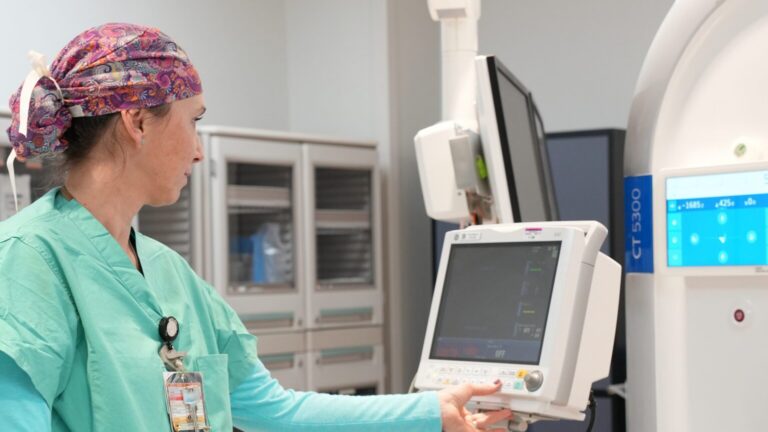
Williamson Health’s annual Lung Cancer Screening Event, held each November, offers low-dose CT scans for $150 as a self-pay option. The exam takes only minutes, requires no injection or invasive prep, and the Williamson Health radiology team reviews the results. Because it is self-pay, the screening isn’t submitted to insurance, which streamlines the process.

Submitted photo
You may also qualify for annual insurance-covered screening if you are age 50 to 80, have a 20-pack-year or greater smoking history, and currently smoke or you quit within the past 15 years. If you’re unsure whether you qualify, talk to your primary care physician or just come and take advantage of the screening opportunity.
Myth 4: The test will be painful or uncomfortable.
The low-dose CT screening itself is quick and painless. You simply lie still for a few minutes while the CT scanner captures detailed images of your lungs. If screening reveals a suspicious nodule, Williamson Health also offers advanced navigation technology to help physicians reach and biopsy it with precision. In many cases, this allows us to diagnose and determine the stage of cancer in a single procedure, potentially reducing the need for more invasive surgical approaches and helping patients move more quickly toward treatment.
Myth 5: I haven’t noticed anything, so there’s no need.
That’s exactly why screening matters. By the time lung cancer causes symptoms such as a persistent cough, chest pain, or unexplained weight loss, the disease may already be advanced. Screening looks for potential problems before warning signs appear and when cancer is more easily treated.
You’re not alone in this.
The idea of lung cancer can feel overwhelming. Williamson Health’s Lung Cancer Navigator can guide patients from the first phone call through scheduling, results, and any needed follow-up care, answering questions and helping ensure no one falls through the cracks.
Williamson Health’s annual Lung Cancer Screening Event runs throughout November. To schedule your $150 low-dose CT scan, call 615-435-5361 for an appointment between November 1 and November 30. Scanning is available at the Outpatient Imaging Center, 4601 Carothers Parkway, and the Bone and Joint Institute of Tennessee Main Campus, 3000 Edward Curd Lane, in Franklin.
This screening is an early-detection tool and does not replace regular clinical care. Review your results with your physician to determine the right next steps.
Learn more about Williamson Health’s annual Lung Cancer Screening Event, lung cancer risk factors and more at williamsonhealth.org/lung-cancer-awareness.
Any content, resident submissions, guest columns, advertisements, and advertorials are not necessarily endorsed by or represent the views of Best Version Media LLC (BVM) or any municipality, homeowners associations, businesses, or organizations that this publication serves. BVM is not responsible for the reliability, suitability, or timeliness of any content submitted, inclusive of materials generated or composed through artificial intelligence (AI). All content submitted is done so at the sole discretion of the submitting party.