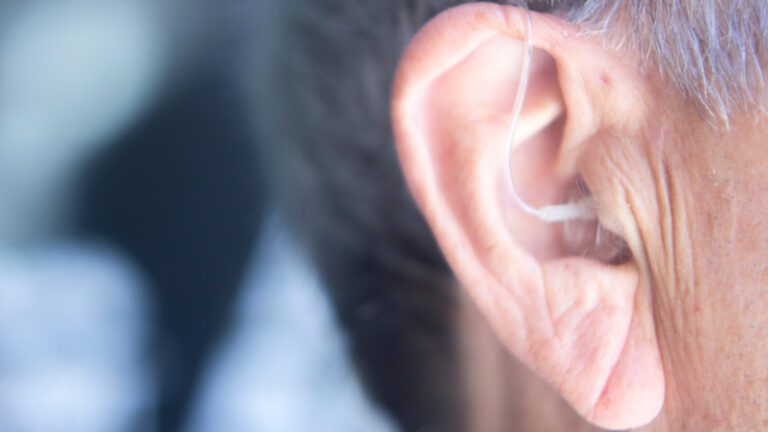
Hearing loss is often gradual. You may notice that conversations seem less clear, television volume slowly creeps higher, or understanding speech in restaurants and other noisy places becomes more difficult. Because these changes can happen slowly, many people wait years before having their hearing evaluated.
However, hearing is closely connected to our overall health and quality of life. Research has found associations between untreated hearing loss and several important areas of healthy aging – including balance and falls, emotional well-being, cognitive health, and our ability to stay connected with the people we love.
Hearing loss and falls
Hearing helps us remain aware of what is happening around us. Research published in Archives of Internal Medicine found that hearing loss was independently associated with an increased risk of falls among adults ages 40 to 69. Researchers have suggested several possible explanations, including reduced environmental awareness and the additional attention the brain may need to devote to listening.
Emotional well-being
When conversations become difficult, people may begin avoiding restaurants, family gatherings, social events, or other situations they once enjoyed. Over time, this reduced social engagement can contribute to loneliness and isolation.
A large U.S. study found that adults reporting hearing difficulties were more likely to experience depressive symptoms. Encouragingly, research has also found improvements in depressive symptoms following hearing treatment in some older adults.
Hearing and cognitive health
Hearing loss has also received considerable attention as a potentially modifiable risk factor related to cognitive health. The ACHIEVE randomized clinical trial found that, among older adults at increased risk for cognitive decline, a hearing intervention reduced the rate of cognitive decline over three years compared with a health-education intervention.
This does not mean that hearing loss automatically causes dementia or that hearing aids prevent dementia. Rather, it reinforces the importance of hearing as one part of maintaining healthy aging and staying engaged with the world around us.
Staying connected to the people who matter
Perhaps the most noticeable consequence of hearing loss happens every day: communication becomes harder. Repeating questions, misunderstanding words, missing jokes, or struggling to follow family conversations can frustrate everyone involved.
The good news is that hearing loss is treatable. Modern hearing technology and individualized hearing care can make communication easier, reduce listening effort, and help people remain active and connected.
A hearing evaluation – a simple first step
Even if you’re unsure whether you have hearing loss, establishing a baseline allows you and your audiologist to better understand your hearing and determine whether treatment may be beneficial.
Better hearing isn’t simply about hearing more sounds – it’s about staying safe, engaged, independent, and connected to the people and experiences that matter most.
Any content, resident submissions, guest columns, advertisements, and advertorials are not necessarily endorsed by or represent the views of Best Version Media LLC (BVM) or any municipality, homeowners associations, businesses, or organizations that this publication serves. BVM is not responsible for the reliability, suitability, or timeliness of any content submitted, inclusive of materials generated or composed through artificial intelligence (AI). All content submitted is done so at the sole discretion of the submitting party.