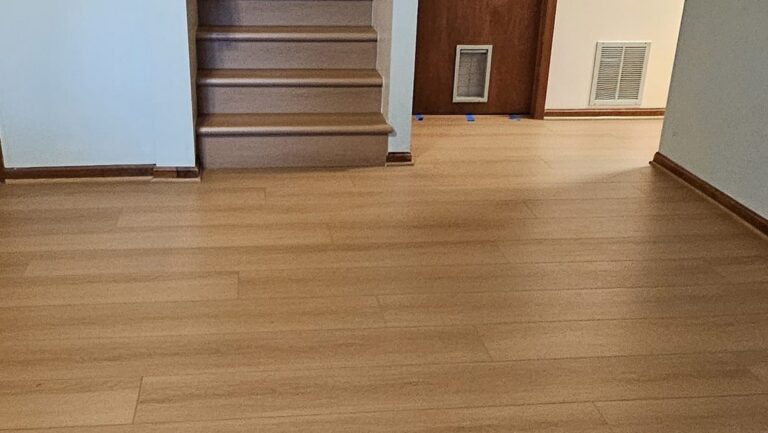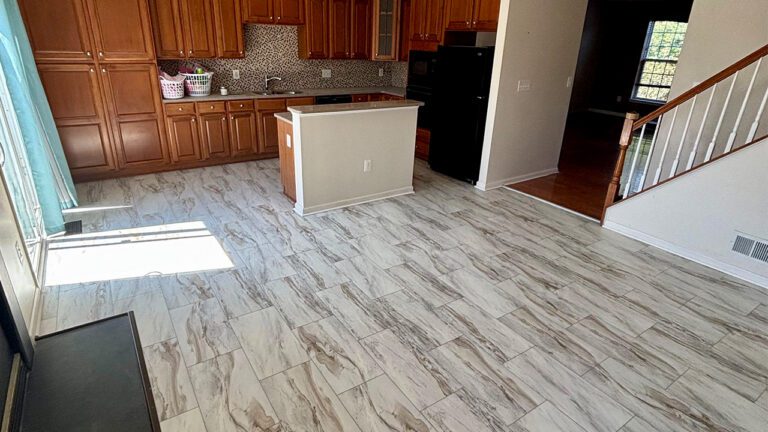
Floors don’t fail overnight. They show clues for months, sometimes years, and it’s easy to miss. Some problems you can fix with a refinish or plank replacement. Others may suggest the floor is no longer functional. Here are five signs to look at more closely.
Warping, cupping, or buckling. Run your hand across the floor. If the edges of the boards curl up and the centers sit lower, that’s cupping. If entire sections lift off the subfloor, that is buckling, and moisture usually causes it. This occurs from prolonged moisture exposure, either from moisture in the air (humidity) or large spills and damp environments. The only way to correct this is replacing the flooring.
Gaps that keep growing. Hardwood expands and contracts with the seasons, so thin gaps in dry winter months are normal. What isn’t normal is gaps wide enough to fit a coin in, or gaps that stay open year-round. The cause could be aging adhesive, a shifting subfloor, or boards that have shrunk permanently. Wide gaps also trap dirt and make the floor harder to keep clean.
Squeaks and soft spots. An occasional squeak near a doorway is usually just a loose nail. A floor that creaks across the whole room, or feels springy or spongy underfoot, tells a different story. The subfloor underneath may be rotting, loose, or water-damaged. Surface repairs won’t help if the layer beneath is failing, so it’s best to have someone pull up a section and look.
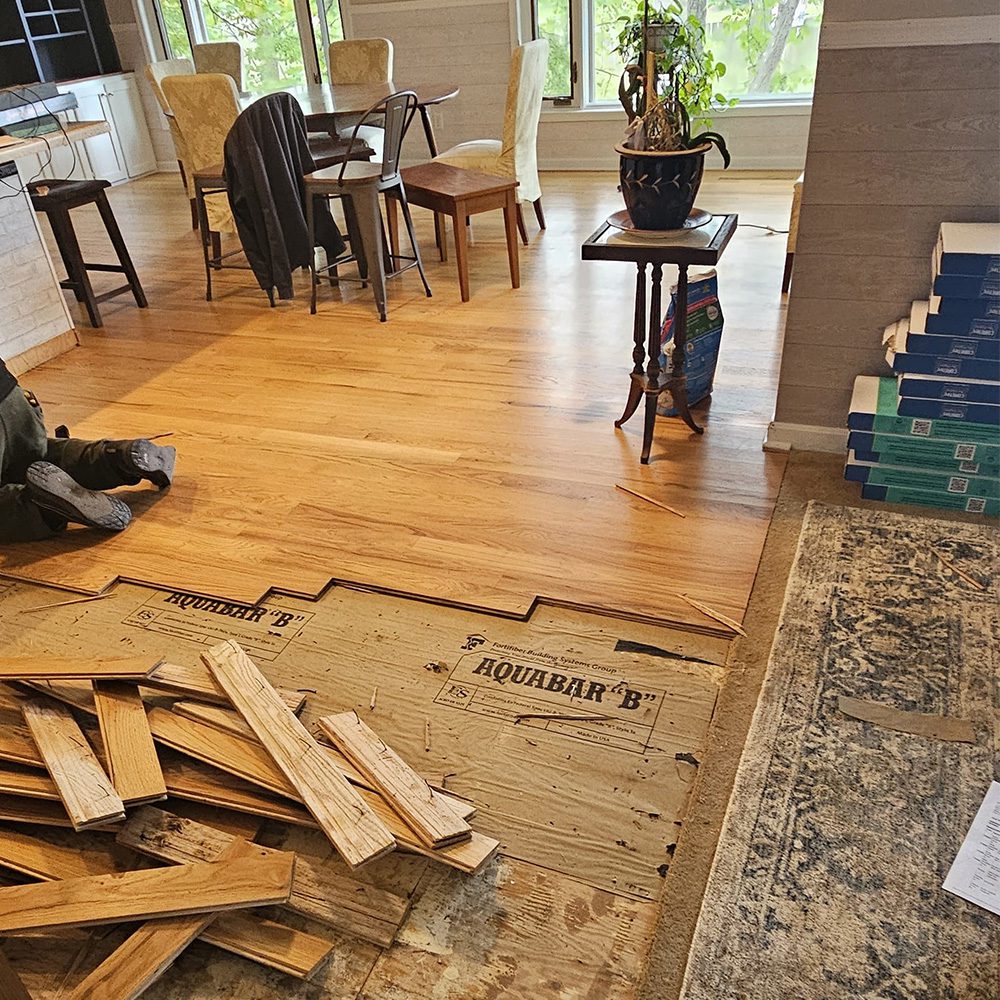
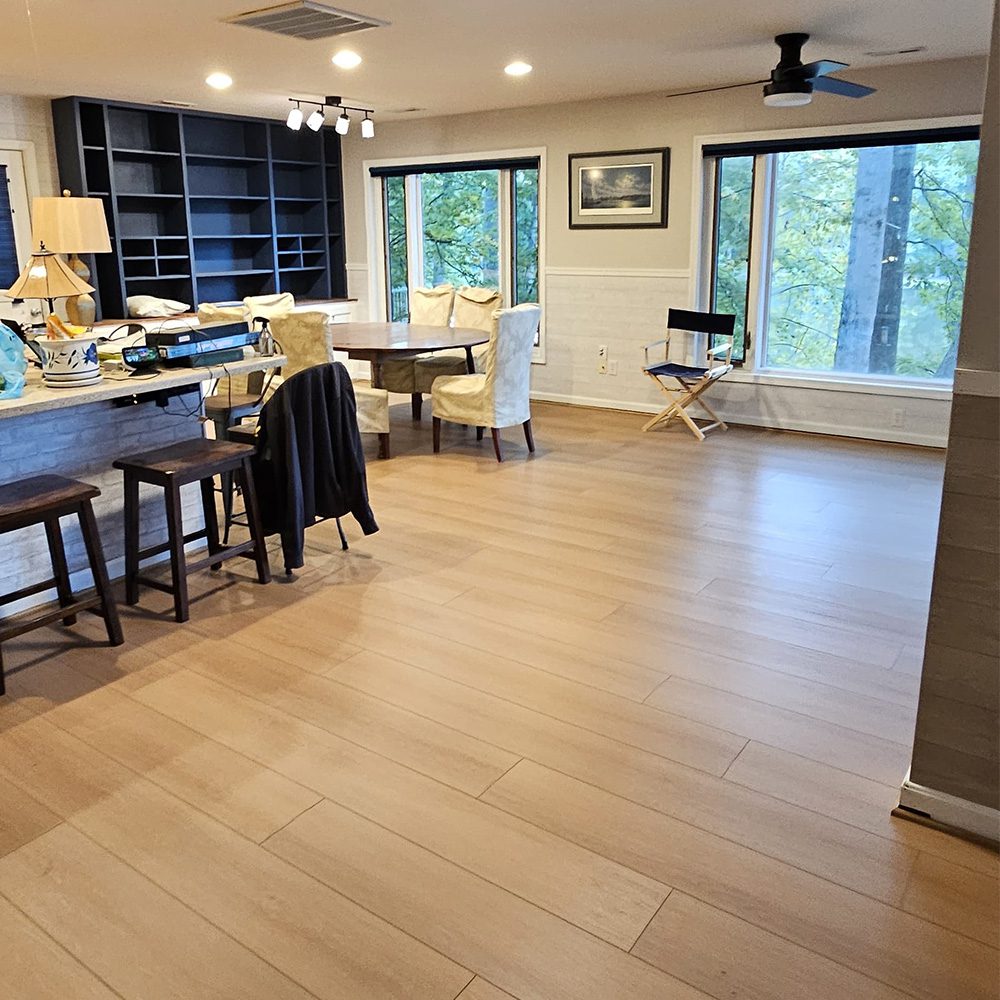
Stains, odors, or mold. Dark spots that don’t sand out, especially around dishwashers, sinks, and exterior doors, suggest water has soaked deep into the wood. A musty smell is an even bigger warning, because it often means moisture is trapped beneath the surface. If you see mold or smell mildew, don’t wait to inspect. Mold can spread to the subfloor and affect indoor air quality, and the longer it sits, the more expensive the fix.
Wear that cleaning and refinishing can’t fix. Every floor has a wear layer. Solid hardwood can be refinished several times, but only until the sanding reaches the tongue-and-groove joints. Engineered hardwood, luxury vinyl plank, and luxury vinyl tile have much thinner layers. If you see deep scratches, a worn-through finish, peeling edges, or discoloration in the high-traffic path from your front door to the kitchen, you may need to replace the floor.
Litmus Test: If the damage is limited to the surface or a small area, repair it. If the problem runs deeper, such as moisture, a failing subfloor, or a worn-out layer, or if it affects more than a third of the room, replacing the floor is more economical. Have a certified flooring professional provide a consultation and written assessment to determine the next steps.
Any content, resident submissions, guest columns, advertisements, and advertorials are not necessarily endorsed by or represent the views of Best Version Media LLC (BVM) or any municipality, homeowners associations, businesses, or organizations that this publication serves. BVM is not responsible for the reliability, suitability, or timeliness of any content submitted, inclusive of materials generated or composed through artificial intelligence (AI). All content submitted is done so at the sole discretion of the submitting party.