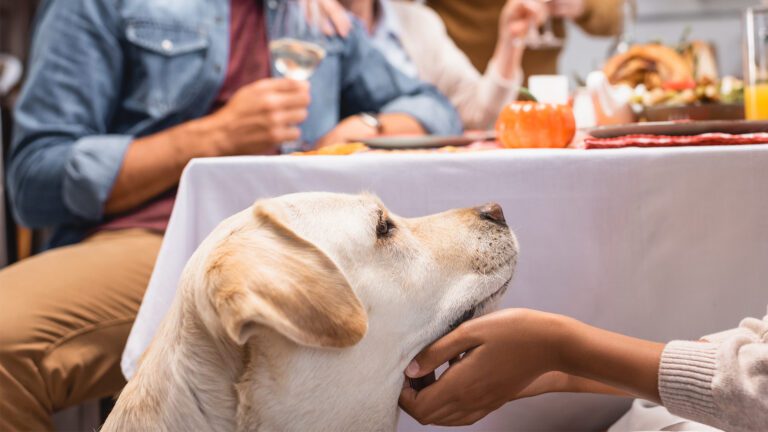
Thanksgiving is a time for family, friends, and delicious food—but it can also bring hidden hazards for your pets. With tempting smells, bustling guests, and festive decorations, it’s important to take steps to keep your furry family members safe and stress-free.
Watch What They Eat
Overindulging is unhealthy for people and even worse for pets. Fatty foods like gravy and turkey skin are difficult for animals to digest and can trigger pancreatitis, a painful and potentially life-threatening condition. Poultry bones can splinter and cause choking or intestinal blockages.
Some human foods are downright toxic to pets—such as onions, garlic, grapes, raisins, and chocolate. If you want your pet to share in the festivities, stick to small amounts of plain, boneless, skinless turkey, or better yet, give them a treat made specifically for pets.
Skip the Desserts
Pumpkin pie might be a holiday favorite, but it’s not safe for pets. Ingredients like nutmeg, sugar, and dairy can upset their stomach—or worse. Chocolate is especially dangerous and can cause serious illness or even death in dogs. Another hidden hazard is xylitol, a sweetener found in sugar-free desserts and gum, which is highly toxic to dogs and cats.
Uncooked bread dough is also a risk. When ingested, it can expand in a pet’s stomach and produce alcohol as it ferments, leading to bloating and poisoning.
Secure the Trash
Turkey carcasses, bones, and other scraps smell irresistible to pets. Unfortunately, these items can cause serious digestive issues or obstructions. Dispose of leftovers in a tightly sealed bag and place it in a secure, pet-proof trash bin.
Be Careful With Decorations
Seasonal flowers and plants like amaryllis, baby’s breath, and hydrangeas can be toxic to dogs and cats. Table decorations—such as corn cobs, pine cones, or gourds—pose choking and blockage risks if chewed or swallowed. To be safe, keep pets away from plants and centerpieces.
Manage Stress and Guests
Guests can be overwhelming for some pets. If your pet gets anxious, consider creating a quiet space with their bed, toys, and water. This reduces stress and prevents accidents. Always watch doors during arrivals and departures to prevent escape attempts.
Make sure your pet is wearing proper identification, and check that their microchip information is up to date. This simple precaution greatly increases the chances of a safe return if your pet slips outside.
Travel and Boarding Tips
If traveling, plan ahead. Your pet may need a health certificate if crossing state lines. Always restrain pets safely in the car using a harness or carrier. For air travel, consult your veterinarian—especially if your pet is a brachycephalic breed like a Pug or Persian cat.
If boarding your pet, ensure vaccines are up to date and ask your veterinarian about additional protection against contagious diseases.
This Thanksgiving, a little preparation goes a long way toward keeping your pets safe and happy. If you have questions or need assistance, call us at Pacific Paws Animal Hospital—we’re here to help!
Pacific Paws Animal Hospital is located at 710 N Brea Blvd, Ste E, in Brea. For more information, visit pacificpaws.com or call 714.930.7297.
Any content, resident submissions, guest columns, advertisements, and advertorials are not necessarily endorsed by or represent the views of Best Version Media LLC (BVM) or any municipality, homeowners associations, businesses, or organizations that this publication serves. BVM is not responsible for the reliability, suitability, or timeliness of any content submitted, inclusive of materials generated or composed through artificial intelligence (AI). All content submitted is done so at the sole discretion of the submitting party.