When homeowners look at weathered, historic wood windows from the 1800s, they are often told by modern contractors that they aren’t worth saving. Many builders refuse to touch these vintage structures, advising complete replacement with vinyl. However, historic wood windows possess a character, density, and craftsmanship that modern replacements simply cannot duplicate. Restoring them is not just about aesthetics; it is an art of understanding how traditional materials behave.
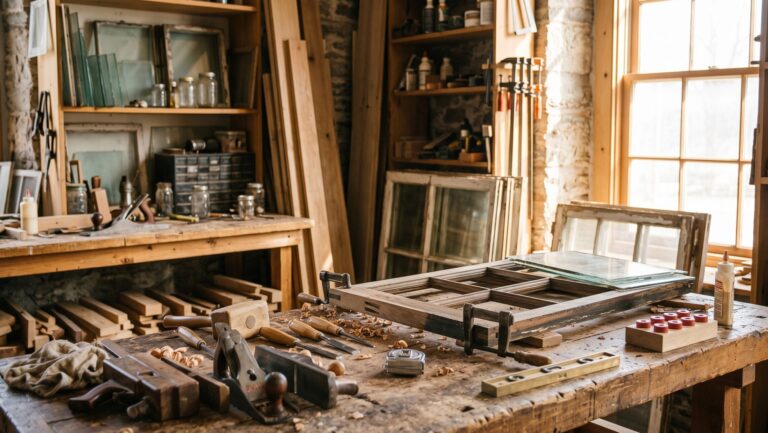
The first secret to successful window restoration lies in material selection. When replacing decayed portions of a historic frame, using standard modern lumber will inevitably lead to warping. For areas exposed to heavy sun and moisture, aged white oak is the gold standard. Although expensive, aged white oak is incredibly stable and resists warping under harsh environmental conditions, ensuring the restored frame will last for another century.
The second and most critical challenge is managing wood movement. Wood is a dynamic material that constantly expands and contracts with changes in humidity and temperature. Over many decades, historic wood has settled and “molded” with the natural shifts of the house. Slapping a rigid glass pane tightly into an old wooden frame is a recipe for disaster; as the wood expands, it exerts immense pressure on the glass, causing it to crack or “snap.”
To solve this, master craftsmen utilize a technique of “floating” the glass. Instead of mounting the pane rigidly, we place small rubber spacers—resembling tiny airsoft balls—inside the frame. The glass rests gently on these flexible spacers, which act as shock absorbers. When we apply the wooden stops, the glass is securely held in place, yet the wood frame is free to expand and contract around it without putting stress on the pane.
True restoration also requires traditional joinery. Instead of using nails, which can split aged wood and invite rust, joints should be meticulously finger-jointed, glued, and clamped. This ensures seamless strength and water-tight integrity.
While window restoration is a tedious process that requires precise measurements down to the 32nd of an inch, preserving these historic features is always worth the effort. It respects the original architecture and ensures that the home’s historic soul remains intact.
Any content, resident submissions, guest columns, advertisements, and advertorials are not necessarily endorsed by or represent the views of Best Version Media LLC (BVM) or any municipality, homeowners associations, businesses, or organizations that this publication serves. BVM is not responsible for the reliability, suitability, or timeliness of any content submitted, inclusive of materials generated or composed through artificial intelligence (AI). All content submitted is done so at the sole discretion of the submitting party.