When people talk about a home’s “value,” they’re often referring to different numbers that answer different questions. Three common ways to measure value are: (1) the tax assessment value, (2) the marketability value (what a home could realistically sell for), and (3) the replacement cost value (what it would cost to rebuild the home today). Understanding the differences helps homeowners make informed decisions—and it underscores why getting replacement cost right is so important.
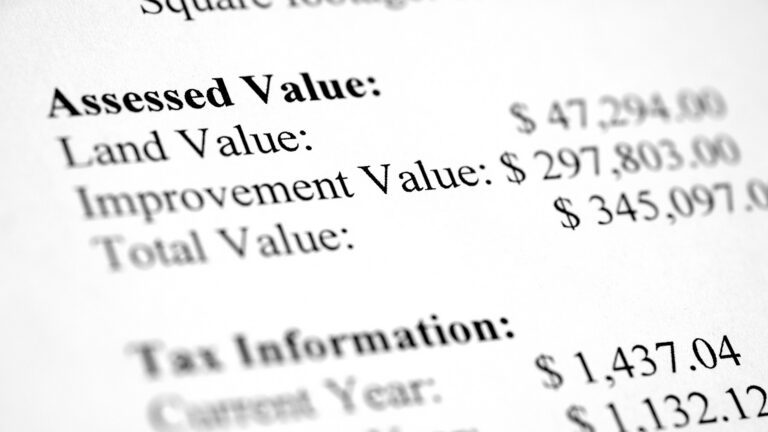
1) Tax assessment value:
Your tax assessment value is used by local government to calculate property taxes. It’s based on assessment methods and schedules, and it may not reflect current market pricing. It can be useful for taxes, but it’s not designed to predict what you could buy or sell your home for today.
2) Marketability value (buy/sell):
Marketability value is what buyers are likely to pay, and sellers are likely to receive in the current market. It’s influenced by comparable sales, neighborhood demand, interest rates, condition, and upgrades. Because it’s tied to actual buyer behavior, it tends to be more “current,” but it can change as market conditions shift.
3) Replacement cost value:
Replacement cost value estimates what it would cost to rebuild your home with similar materials and quality, using today’s labor and construction prices. This is especially important for insurance coverage. If replacement cost is too low, you may be underinsured and face out-of-pocket expenses after a loss. If it’s too high, you may pay more than necessary. Either way, accuracy matters because replacement cost is the foundation for how well your policy protects you.
That’s why it’s vital to connect with your insurance agent periodically. It’s easy to get busy with life, and improvements that feel “incremental” can still meaningfully increase the cost to rebuild. Updates such as finishing a basement or adding living space, building a pool, deck, or extra garage, installing new fences, completing major remodels, or adding an updated kitchen or new bathrooms can all change the replacement cost of the home. Even renovations you’ve already paid for can raise rebuild estimates due to materials, finishes, and labor costs.
In summary, tax assessment tells you about taxes, marketability tells you about sale price potential, and replacement cost tells you about insurance protection. And because homes change over time, your replacement cost coverage should change too—through an occasional check-in with your agent to make sure it reflects your actual improvements.
If you’d like help reviewing your replacement cost coverage, please reach out to our team. Randall Chewning State Farm Insurance. Email: randall@randallchewning.com, Phone: 859-887-1243, Address: 609 N Main, Nicholasville, KY.
Any content, resident submissions, guest columns, advertisements, and advertorials are not necessarily endorsed by or represent the views of Best Version Media LLC (BVM) or any municipality, homeowners associations, businesses, or organizations that this publication serves. BVM is not responsible for the reliability, suitability, or timeliness of any content submitted, inclusive of materials generated or composed through artificial intelligence (AI). All content submitted is done so at the sole discretion of the submitting party.