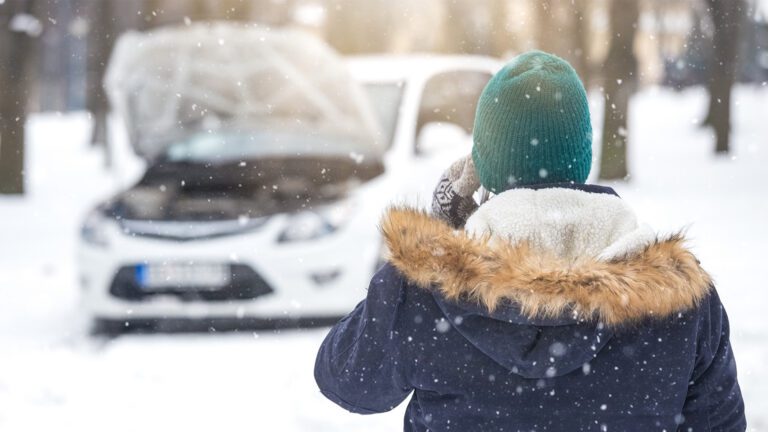
Wisconsin winters place extra demands on every part of a vehicle. Cold temperatures, snow, ice, road salt, and reduced visibility can turn a minor maintenance issue into a breakdown or serious safety concern. Preparing a vehicle before winter helps improve reliability, protect important components, and reduce the risk of unexpected repairs.
The battery is one of the most important items to check. Cold weather slows the chemical reaction inside a battery, reducing the power available to start the engine. A battery that worked properly throughout the summer may struggle once temperatures fall below freezing. Testing its condition and inspecting the terminals for corrosion can reveal potential problems early.
Tires also play a major role in winter safety. Adequate tread depth helps maintain traction on snowy, wet, and icy roads. Tire pressure should be checked regularly because it decreases as the outside temperature drops. Underinflated tires may affect handling, fuel economy, tire wear, and braking performance.
A complete winter maintenance check should include the brakes, steering, suspension, engine oil, coolant, belts, hoses, exterior lights, windshield wipers, and washer fluid. Coolant must be in good condition and properly mixed to prevent freezing and protect the engine. Worn wiper blades should be replaced, and winter-rated washer fluid should be used to prevent freezing. Properly working headlights, brake lights, and turn signals are especially important during shorter days and winter storms.
Drivers should also keep an emergency kit in the vehicle. Helpful items include a blanket, flashlight, phone charger, ice scraper, small shovel, jumper cables, bottled water, and basic first-aid supplies. Keeping the fuel tank at least half full can also be beneficial during extremely cold weather or unexpected travel delays.
Preventive maintenance cannot eliminate every winter driving risk, but it can reduce the chance of a roadside emergency. A well-maintained vehicle is better equipped to handle freezing temperatures and difficult road conditions, providing greater safety, reliability, and peace of mind throughout the winter season.
Any content, resident submissions, guest columns, advertisements, and advertorials are not necessarily endorsed by or represent the views of Best Version Media LLC (BVM) or any municipality, homeowners associations, businesses, or organizations that this publication serves. BVM is not responsible for the reliability, suitability, or timeliness of any content submitted, inclusive of materials generated or composed through artificial intelligence (AI). All content submitted is done so at the sole discretion of the submitting party.