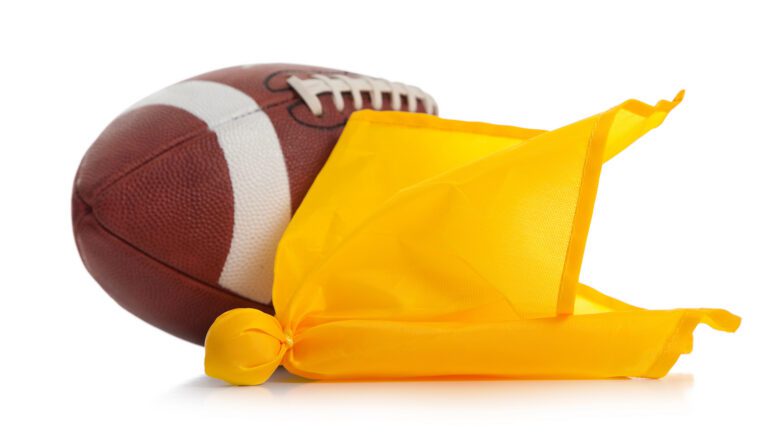
Football is a fast, physical sport that requires strength, speed, coordination, and quick changes in direction. These demands make injuries possible at every level of play, from youth leagues to high school, college, and professional football. Although not every injury can be prevented, proper conditioning, good technique, well-fitting equipment, and early medical attention can help athletes stay safer throughout the season. Here are five common football injuries, along with the symptoms players and families should know.
1. ACL Tears
The anterior cruciate ligament, commonly called the ACL, helps stabilize the knee. An ACL injury may occur when an athlete suddenly changes direction, lands awkwardly, or takes a direct hit to the knee. An athlete may hear or feel a “pop” at the time of injury, followed by swelling, pain, and difficulty putting weight on the leg. The knee may also feel unstable or as though it could give out.
Prevention tips:
Strengthen the muscles surrounding the knees, hips, and core. Practice proper jumping, landing, and cutting techniques.Include balance and agility exercises in regular training.
Warm up before practices and games.
Avoid playing through knee instability or significant pain.
2. Ankle Sprains
Ankle sprains are common when a player lands unevenly, changes direction quickly, or has the ankle rolled during contact. A sprain occurs when the ligaments supporting the ankle are stretched or torn. Symptoms may include pain, swelling, bruising, tenderness, and difficulty walking. While some ankle sprains are mild, returning too soon can contribute to continued weakness or repeated injuries.
Prevention tips:
Perform exercises that strengthen the ankle and lower leg. Add balance exercises to conditioning programs. Wear properly fitted cleats that are appropriate for the playing surface. Consider taping or bracing if recommended by a medical professional. Allow previous ankle injuries to heal fully before returning to play.
3. Shoulder Dislocations
Football players frequently use their shoulders to block, tackle, throw, and absorb contact. A shoulder dislocation occurs when the upper arm bone is forced out of the shoulder socket, often after a hard collision or fall. A dislocated shoulder may appear visibly out of place and can cause severe pain, swelling, weakness, or numbness. It should be treated as an urgent injury. Players, coaches, and family members should not attempt to force the shoulder back into position themselves.
Prevention tips:
Strengthen the shoulder, upper back, and surrounding muscles. Practice safe tackling and blocking techniques. Wear properly fitted shoulder pads. Improve shoulder flexibility without overstretching the joint. Complete the full rehabilitation process after a previous dislocation.
4. Meniscus Injuries
The meniscus is a piece of cartilage that helps cushion and stabilize the knee. It can be injured when a player twists or pivots while the foot remains planted, especially during contact. Symptoms may include pain, swelling, stiffness, catching, locking, or difficulty fully straightening the knee. Some athletes can still walk after a meniscus injury, but that does not mean the injury should be ignored.
Prevention tips:
Strengthen the muscles around the knees and hips. Improve flexibility and overall lower-body mobility. Practice controlled cutting and pivoting movements. Avoid sudden increases in training intensity. Seek an evaluation for continued swelling, locking, or restricted movement.
5. Concussions
A concussion is a type of brain injury caused by a hit or forceful movement to the head or body. An athlete does not have to lose consciousness to have a concussion. Possible symptoms include headache, dizziness, confusion, nausea, balance problems, sensitivity to light or noise, memory problems, or changes in mood or behavior. Symptoms may not always appear immediately. Any athlete with a suspected concussion should be removed from play and evaluated by an appropriate healthcare professional. The athlete should not return to play on the same day or until medically cleared. The CDC advises that returning to sports should be a gradual process supervised by a healthcare provider.
Prevention tips:
Teach and reinforce safe tackling techniques. Enforce rules against dangerous contact. Make sure helmets fit correctly and are properly maintained. Encourage athletes to report symptoms immediately. Never allow an athlete to continue playing with a suspected concussion.
Building a Safer Football Season
Preventing football injuries requires a team effort. Athletes should participate in preseason conditioning, warm up properly, use appropriate equipment, stay hydrated, and speak up when something hurts. Coaches and parents should create an environment in which reporting pain or symptoms is viewed as responsible—not as letting the team down. When an injury does occur, early orthopedic evaluation can help determine its severity and establish the right treatment plan. Depending on the injury, care may include activity modification, bracing, physical therapy, medication, or surgery. The goal is not simply to get an athlete back on the field as quickly as possible. The goal is to help that athlete return safely, confidently, and with the strength and function needed to stay in the game. Persistent pain, significant swelling, joint instability, numbness, inability to bear weight, or symptoms following a blow to the head should never be ignored. When in doubt, take the athlete out of play and seek medical guidance.
Any content, resident submissions, guest columns, advertisements, and advertorials are not necessarily endorsed by or represent the views of Best Version Media LLC (BVM) or any municipality, homeowners associations, businesses, or organizations that this publication serves. BVM is not responsible for the reliability, suitability, or timeliness of any content submitted, inclusive of materials generated or composed through artificial intelligence (AI). All content submitted is done so at the sole discretion of the submitting party.