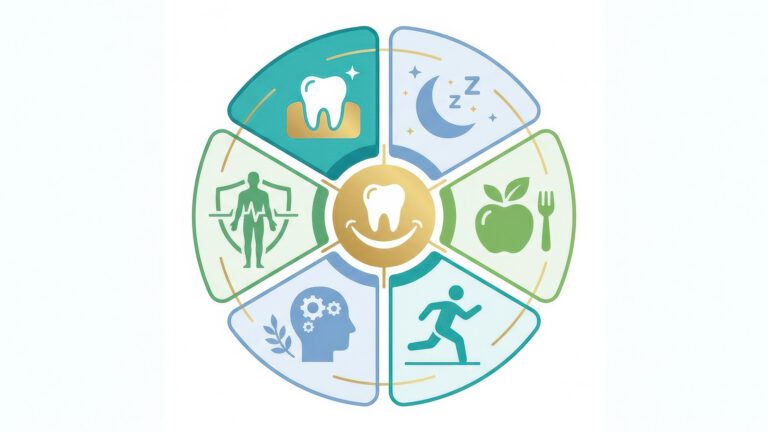
Every time a patient sits in my chair, one of the first things I do is go through their medical history. Diabetes, heart problems, medications, sleep habits, family history—I want to know all of it, before I even look in their mouth. Patients are often surprised by how many questions I ask. But the mouth doesn’t stay in its own lane. What happens there tends to show up elsewhere in the body too.
Let’s start with something simple: bleeding gums. Many people think it’s normal, especially when brushing or flossing. It’s not. We wouldn’t ignore bleeding anywhere else on our body, and we shouldn’t ignore it here. Bleeding gums tell you that inflammation and infection are happening right now. Untreated inflammation doesn’t stay put. It progresses into periodontal disease; and at that point, your mouth becomes a steady source of infection feeding directly into your bloodstream, day after day. That kind of constant, low-grade inflammation is tied to some of the biggest health problems that we treat as a healthcare system.
Heart disease is a good example. The same bacteria found in unhealthy gums have also been found inside clogged arteries. Gum disease probably doesn’t cause heart attacks on its own, but it appears to add fuel to a fire that’s already burning. Diabetes works the same way, only in both directions. High blood sugar makes gum disease worse, and gum disease makes blood sugar harder to control. I’ve had diabetic patients see real improvement in their blood sugar control, once we treat their gum disease.
The connection doesn’t stop there. Your mouth is the front door to your digestive system. Everything you swallow passes through your mouth, including bacteria. An unhealthy mouth means more harmful bacteria heading straight to your gut, where they can throw off the balance that your body relies on for digestion and immune function. Researchers have also found gum disease bacteria in the brain tissue of Alzheimer’s patients. The research is still developing; but it’s compelling enough that I bring it up with any patient who has a family history of dementia. There’s a respiratory link as well: Bacteria from an infected mouth can be inhaled into the lungs. This has been tied to a higher risk of pneumonia and worse outcomes in patients with existing lung conditions, like chronic obstructive pulmonary disease (COPD).
I ask about your health not to be nosy, but because your medical history and your mouth tell two halves of the same story. Bleeding gums, chronic bad breath and swollen tissue aren’t just dental issues; they’re signals worth listening to.
So don’t ignore bleeding gums, and don’t think of your mouth as separate from the rest of you. It’s connected to your heart, your gut, your lungs and possibly your brain. Taking care of it is one of the simplest, most effective things you can do for your whole body.
Make the most important connection at Seva Dental: sevadental.com or 937-310-2555.
Any content, resident submissions, guest columns, advertisements, and advertorials are not necessarily endorsed by or represent the views of Best Version Media LLC (BVM) or any municipality, homeowners associations, businesses, or organizations that this publication serves. BVM is not responsible for the reliability, suitability, or timeliness of any content submitted, inclusive of materials generated or composed through artificial intelligence (AI). All content submitted is done so at the sole discretion of the submitting party.