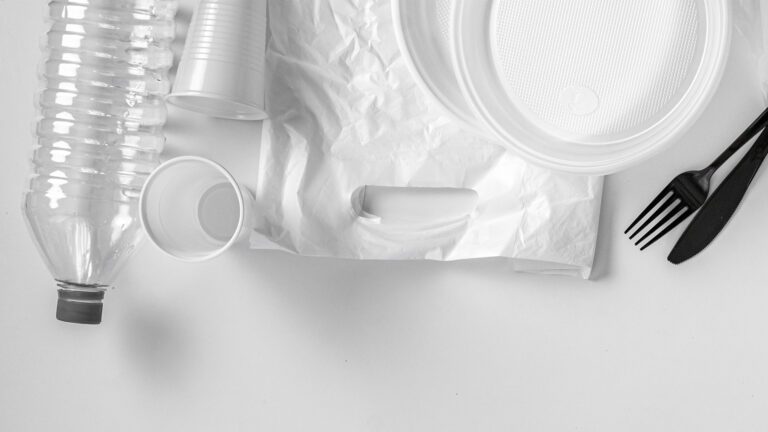
For most of my life, I never thought much about plastic. It was simply part of everyday life: the water bottle in my car, leftover containers, workout clothes, cutting boards and the coffee cup I picked up on the way to work.
When I first heard people talking about reducing plastic exposure, I wasn’t sure what to make of it. Plastic was everywhere. Surely if it were really a problem, wouldn’t we all know?
Then I started reading the research.
Scientists are finding tiny particles known as microplastics and nanoplastics in human blood and tissues. Researchers have also studied chemicals used in certain plastics, including phthalates and bisphenols, because some can interfere with the body’s hormone signaling.
There is still a great deal we don’t know, and finding microplastics in the body doesn’t automatically tell us what effect they will have. But the research changed the question for me.
It was no longer, How do I avoid plastic?
It became, Where am I using plastic unnecessarily when there is an easy alternative?
Start With Heat
Heat caught my attention because it can increase the release of particles and chemicals from some plastics.
Think about hot coffee poured into a seemingly paper cup that may have a thin plastic lining, topped with a plastic lid. At home, I now store and reheat leftovers in glass. If bringing a stainless-steel coffee cup is easy, I bring one. If I’m staying to drink my coffee, I prefer ceramic.
Then I noticed the plastic mesh pouf hanging in my shower. Every morning I stood under hot water and scrubbed my skin with plastic. When it needed replacing, I bought a natural sea sponge instead. I love it.
Plastic in Unexpected Places
Clothing surprised me too. Polyester and nylon are synthetic polymers, essentially forms of plastic. These fabrics can shed microscopic fibers during wear and washing.
That doesn’t mean I’m throwing away my leggings. But when buying pajamas, shirts or bedding that will spend hours against my skin, I look more often at cotton, linen, wool and other natural fibers.
The kitchen offers similar opportunities. Plastic cutting boards can shed particles as knives cut into them. Storage containers become scratched and worn. Disposable water bottles may sit for hours in hot cars or warehouses.
Wood, glass and stainless steel are practical alternatives, so I’ve gradually started choosing them when something needs replacing.
Small Swaps, Not a Complete Overhaul
Plastic is nearly impossible to avoid. It’s in our homes, cars, clothes, food packaging, electronics and medical supplies. Trying to create a completely plastic-free life isn’t realistic, and I don’t think we need another thing to be afraid of.
Instead, I’ve adopted a much simpler approach: make smart swaps as life gives you the opportunity.
Use the containers you already own. When they wear out, consider glass. When your cutting board needs replacing, consider wood. Choose stainless steel for your next water bottle. When the shower pouf falls apart, maybe the next one comes from the sea instead of a factory.
For the next week, don’t change anything. Just notice.
Where does hot food meet plastic? What spends hours against your skin? Which plastic items are scratched or worn?
Then ask one simple question: Is there another material that would work just as well?
We don’t have all the answers yet. But we know enough to make a few thoughtful choices.
Sometimes taking better care of ourselves isn’t about changing everything. It’s simply changing the things that are easy to change.
Any content, resident submissions, guest columns, advertisements, and advertorials are not necessarily endorsed by or represent the views of Best Version Media LLC (BVM) or any municipality, homeowners associations, businesses, or organizations that this publication serves. BVM is not responsible for the reliability, suitability, or timeliness of any content submitted, inclusive of materials generated or composed through artificial intelligence (AI). All content submitted is done so at the sole discretion of the submitting party.