Have you noticed driving at night isn’t quite as comfortable as it used to be? Maybe the headlights from oncoming cars seem unusually bright, road signs are harder to read, or you find yourself squinting more frequently? If so, you’re not alone.
We are experiencing some of the darkest days of the year, and most of us are driving home from work in darkness. During these evening commutes, people begin noticing changes in their vision they hadn’t previously considered.
The good news is that many of these difficulties have identifiable causes, and some relatively simple solutions.
Why Does Night Driving Become More Challenging?
Our eyes are remarkable instruments, constantly adjusting to changing light conditions. During daylight hours, there’s plenty of light available to help us distinguish objects, recognize colors, and judge distances. At night, our visual system has to work harder with considerably less information.
As we age, our pupils tend to become smaller and the natural lenses inside our eyes gradually become less transparent. These changes can reduce the amount of light reaching the retina, making it more difficult to see clearly in low-light conditions.
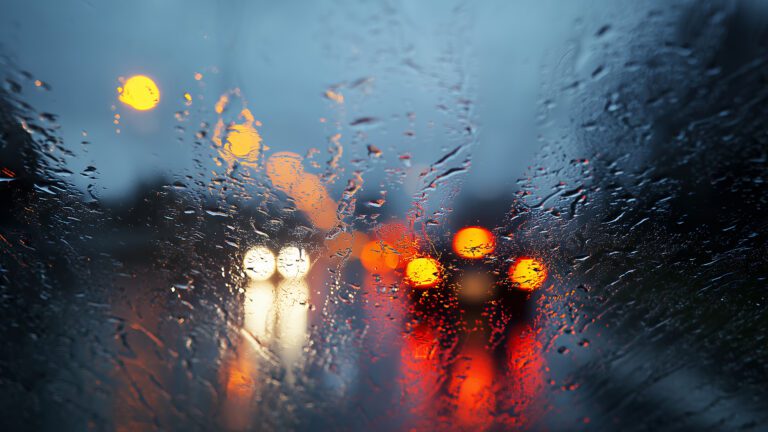
Another common complaint involves glare. Bright headlights, illuminated signs, and reflections from wet pavement can become increasingly distracting, particularly when our eyes aren’t processing light as efficiently as they once did.
Could Your Eyes Be Trying to Tell You Something?
Sometimes, difficulty driving at night is simply a sign that your eyeglass prescription needs updating. Even relatively minor changes in nearsightedness or astigmatism can become more noticeable when lighting is poor.
Other times, there’s an underlying condition worth investigating.
Cataracts, for example, develop when the eye’s natural lens becomes cloudy. In their early stages, cataracts may produce few noticeable symptoms during the day but create significant glare, halos around headlights, or reduced contrast at night.
Dry eye can also contribute to fluctuating vision and increased glare. Because a healthy tear film helps maintain a smooth optical surface, dryness can make lights appear scattered or blurry.
These symptoms don’t automatically mean something serious is happening, but they shouldn’t be dismissed as an unavoidable part of getting older.
Five Ways to Make Night Driving More Comfortable
1. Keep your prescription current. A comprehensive eye examination can identify subtle vision changes that become especially noticeable after dark.
2. Clean your windshield and glasses. Smudges, streaks, and residue scatter light and can significantly increase glare from approaching vehicles. Don’t forget the inside of your windshield!
3. Adjust your dashboard lighting. Excessively bright displays can make it more difficult for your eyes to adapt to the darkness outside.
4. Be cautious about yellow-tinted night-driving glasses. Despite their popularity, these lenses haven’t demonstrated consistent benefits and may actually reduce the amount of light reaching your eyes.
5. Give yourself additional time. Reduce your speed when visibility is limited, increase following distances, and avoid staring directly into approaching headlights.
Don’t Ignore the Changes
One of the most important things I tell patients is that good vision involves much more than reading the letters on an eye chart. Contrast sensitivity, glare tolerance, and the ability to function comfortably in different lighting conditions all play important roles in everyday activities.
If nighttime driving has become stressful or uncomfortable, a comprehensive eye examination can help determine why. And if your vision has changed significantly, it’s important to address the problem rather than simply adapting to it.
November may bring shorter days, but that doesn’t mean you should have to accept a less confident experience behind the wheel. With the right attention to your eye health, you can keep your focus where it belongs: safely on the road ahead.
Any content, resident submissions, guest columns, advertisements, and advertorials are not necessarily endorsed by or represent the views of Best Version Media LLC (BVM) or any municipality, homeowners associations, businesses, or organizations that this publication serves. BVM is not responsible for the reliability, suitability, or timeliness of any content submitted, inclusive of materials generated or composed through artificial intelligence (AI). All content submitted is done so at the sole discretion of the submitting party.