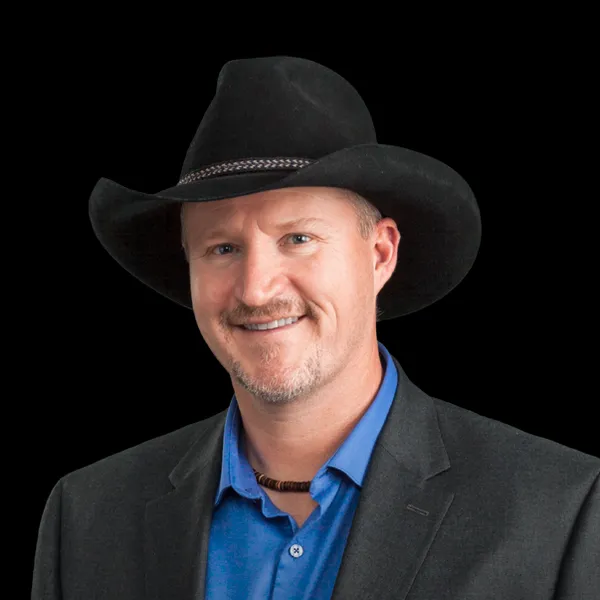
Hi. I’m Jared. I’m the theatre guy. I operate the Orpheum Theatre, and we won’t be talking about the Orpheum. It’ll be something heavier; something closer to home, I think.
There are days when the world feels unbearably ugly…not ugly in the abstract; not the distant ugliness we have learned to consume through headlines before putting our phones back in our pockets. I mean the kind that happens close enough to home that the places we recognize suddenly look different – in the worst kind of way.
Recently, violence came to a brand-new restaurant in our community. In-N-Out Burger had barely become part of the landscape of Twin Falls before a horrific tragedy made it the subject of an entirely different kind of conversation – one that none of us who lived here never thought we would have to have with our families, especially our children.
There is something particularly unsettling when violence happens somewhere so ordinary: A restaurant. A parking lot. A place where families go for dinner, teenagers meet their friends, and somebody complains that the drive-through line is too long.
And then, suddenly, it becomes a place where something terrible happened.
We live in a world where we are increasingly accustomed to these things. Violence. Anger. Division. Cruelty. We carry these little windows in our pockets capable of delivering every terrible thing happening anywhere on Earth directly into our hands, twenty-four hours a day, seven days a week.
It would be easy to become cynical. It would be understandable to ask what place something as seemingly frivolous as “art” has in a world like this.
I would argue that this is precisely the kind of world in which we need it most.
Art does not stop weaponized projectiles. It isn’t a shield. And I certainly am not saying that “art would have kept this from happening.” That is ridiculous. A song cannot undo violence. A painting cannot bring someone home. A play cannot repair every injustice. A dance cannot make grief disappear. And we should never pretend otherwise.
But human beings require more than survival. We require reasons to survive.
For thousands of years, wherever human beings have gathered, we have made things that served no obvious practical purpose. We painted pictures on cave walls. We carved figures from stone. We sang. We danced. We told stories around fires.
Long before there were concert halls, museums or theatres, there was art.
Because there has always been something inside us that needed to say: This happened. I was here. I loved someone. I lost someone. I was frightened. I was joyful. Look at what I saw. Listen to what I felt.
Art is one of the ways we prove to one another that we are not alone.
That matters. Especially now. The world has to move on, yes, but for a lot of us there’s still some element of whiplash. I certainly feel that way.
When a community experiences something frightening, our first instincts are appropriately practical. We ask what happened. We ask whether people are safe. We ask what can be done to prevent it from happening again. We ask what could have been different. Those questions matter enormously.
But eventually another question emerges: What kind of community do we want to be?
I want to live somewhere people make beautiful things.
I want children to grow up singing songs and painting pictures and discovering books that completely rearrange the furniture inside their heads.
I want teenagers to find a stage, a band room, a dance studio, a pottery wheel, a camera, a notebook, a computer screen with development tools—somewhere they can discover that the enormous emotions of being young can be turned into something instead of simply endured.
I want adults to remember that imagination was not something they were supposed to surrender when they got their first mortgage.
I want elderly people to continue creating and performing and telling stories, because a lifetime of experiences should never simply disappear when someone is gone.
I want us to gather.
That may be one of the most important things art still asks us to do.
Come into a room together.
Sit beside someone you don’t know.
Listen.
Laugh at the same joke.
Hold your breath at the same moment.
Cry over the pain of someone who never actually existed.
Stand in front of a painting and wonder what another human being was trying to say.
Hear a piece of music written centuries before you were born and somehow recognize yourself inside it.
For a little while, become an audience instead of a collection of strangers.
There is something quietly radical about that.
Because so much of modern life encourages us to divide ourselves. Into political camps. Generations. Religions. Classes. Algorithms. Demographics. People like us and people unlike us.
Art constantly commits the inconvenient act of reminding us that underneath all of those categories are people. Human beings.
Complicated, frightened, ridiculous, beautiful human beings.
The arts will not solve everything that is wrong with our world.
They were never supposed to.
They remind us why the world is worth fixing.
So when the news is terrible, make something.
Sing.
Write.
Paint badly.
Dance embarrassingly.
Take your children to a concert.
Read them a story.
See a play.
Listen to a new style of music.
Support the kid who wants to play the trumpet even though, for the first six months, that trumpet will sound like a severely injured goose.
Make room in your life for beauty.
Not because ugliness doesn’t exist.
Because it does.
Make room for beauty in your life because ugliness does not deserve to have the final word.
Live for it in the face of evil.
I’ll leave you with a quote from the Dead Poet Society. John Keating, played by the late Robin Williams, put this so eloquently – and even though his particular statement was in direct relation to poetry, you can apply it to all manner of art:
“…we are members of the human race. And the human race is filled with passion. And medicine, law, business, engineering, these are noble pursuits and necessary to sustain life. But poetry, beauty, romance, love, these are what we stay alive for.”
Any content, resident submissions, guest columns, advertisements, and advertorials are not necessarily endorsed by or represent the views of Best Version Media LLC (BVM) or any municipality, homeowners associations, businesses, or organizations that this publication serves. BVM is not responsible for the reliability, suitability, or timeliness of any content submitted, inclusive of materials generated or composed through artificial intelligence (AI). All content submitted is done so at the sole discretion of the submitting party.