There is a retired couple in my neighborhood who often sit together on their screened-in front porch. The screen is dark, so when I pass their house, I can’t always see them clearly.
But I know they’re there. Then I hear a soft “hello” coming from behind the mesh, and I immediately recognize their voices. It’s such a small thing, but I’ve grown accustomed to it. I would miss that hello. When we talk about what makes a town a desirable place to live, we usually focus on the metrics.
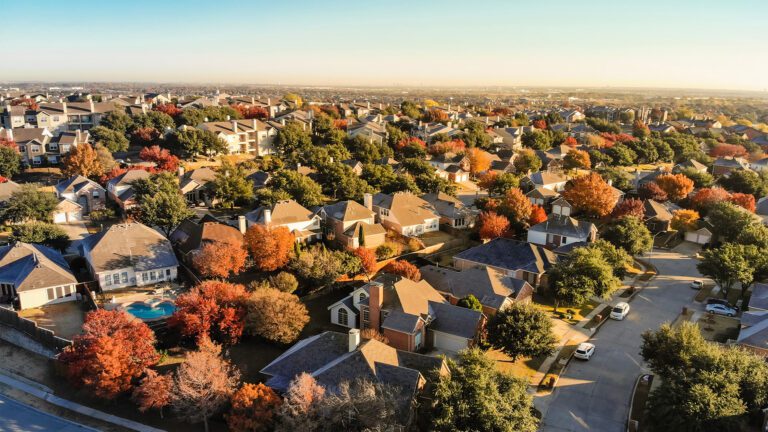
We talk about the schools, parks, restaurants, commutes, property values, and, of course, the houses themselves. Those things matter and they are pretty easy to find. Pull up Google Maps and you can locate every park, restaurant, and school in seconds.
But there’s no digital icon for the neighbor who holds your spare key. There’s no pin marking the house where your child knows they can go if they ever need help. There definitely isn’t a searchable category for the guy down the street who owns every tool ever invented. Some of the best things about living in a community are the things you cannot look up.
Community happens quietly. I think about the neighbor who always visits a child’s lemonade stand—leaving a tip generous enough to make that young entrepreneur believe business is booming. I remember the resident who moves his car so the neighborhood kids have more room to use the driveway basketball hoop. It’s the person who pulls in your garbage cans when you’re away or the one whose door you knock on when you’re halfway through making breakfast and realize you’re out of eggs.
None of these acts is extraordinary. That’s exactly what I like about them.
Throughout Bergen County, volunteers give their time every day to keep our towns running. Crossing guards greet children in the morning, coaches spend countless hours on our fields, and volunteer firefighters leave their own dinners when an alarm sounds. Residents organize food drives, plant flowers, and give up Saturday mornings just because something needs to get done—and they are willing to make it happen.
But community also happens when nobody is officially volunteering. It’s a package sitting outside being nudged out of the rain. It’s a loose dog bringing three different neighbors out to help find its home. It’s a text from across the street: “Your garage door is open.”
After living somewhere for a while, you begin to recognize people you may not actually know very well. You recognize the person who walks the same dog every morning or the kids at the bus stop prepared for their day.
Then there’s the neighbor who waves every single time you drive past. At this point, you’ve been waving to each other for so many years that neither of you could stop without making it awkward.
There is an undeniable comfort in this quiet visibility. A neighbor asks how your mother is doing. Someone remembers that your child just started college. An unfamiliar car in your driveway is noticed, but so is the fact that it belongs there.
We don’t usually include any of this when we talk about what makes a town a good place to live, because you can’t easily measure it. You can’t calculate the value of a neighbor who watched your children grow up or a teacher who still asks about them years later.
That kind of connection takes time. It grows through borrowed ladders, small favors, conversations at the mailbox, and years of waving to the same familiar faces.
Little by little, those ordinary moments build a life. Maybe that’s what belonging really is—knowing the people around you and knowing that, in some small way, they know you too.
The schools, the parks, and the houses certainly matter. But when I think about what makes a town feel like home, I think about the people.
Sometimes, I think about a simple “hello” coming from behind a screened-in porch.
Any content, resident submissions, guest columns, advertisements, and advertorials are not necessarily endorsed by or represent the views of Best Version Media LLC (BVM) or any municipality, homeowners associations, businesses, or organizations that this publication serves. BVM is not responsible for the reliability, suitability, or timeliness of any content submitted, inclusive of materials generated or composed through artificial intelligence (AI). All content submitted is done so at the sole discretion of the submitting party.