For some students, moving forward does not necessarily mean moving farther away. Sometimes it means recognizing that the right opportunities—and the right college experience—may be closer than they imagined.
Emily Morra ’26 and Rebecca Calderon ‘29 arrived at that realization by different paths.
Emily grew up in Mahwah, just minutes from Ramapo College of New Jersey. Like many Bergen County students, she knew the College was there. But when it came time to choose a college, she decided to go elsewhere.
Going away can be an important part of growing up. It gives students an opportunity to experience a new place, meet new people and discover who they are beyond the communities where they were raised. For Emily, however, that experience also helped her recognize something important: It was OK to change direction.
After one semester, she realized that her first college was not the right fit. She returned home, began taking classes at Ramapo as a visiting student and transferred in Fall 2023.
Rebecca initially resisted the idea of attending Ramapo for a different reason. The Wyckoff resident worried that a college so close to home would not feel like going away.
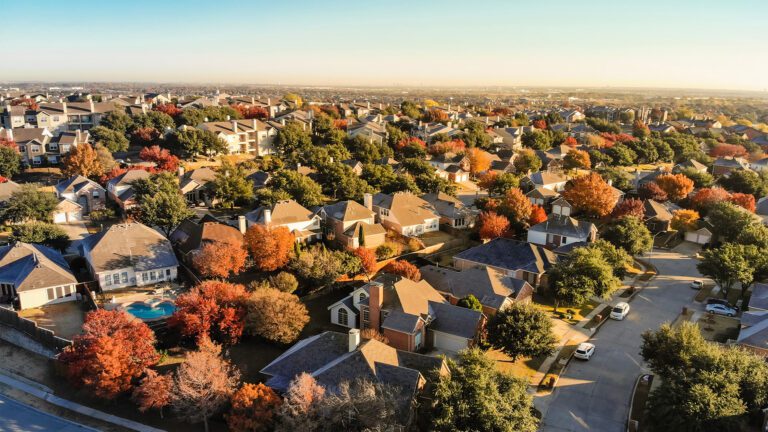
It is a familiar perception in Bergen County, where students often hear that having a “real” college experience means leaving the area. A nearby college can seem less transformative simply because its name, campus and surroundings are familiar—even when living there offers the same independence, relationships and opportunities students seek farther from home.
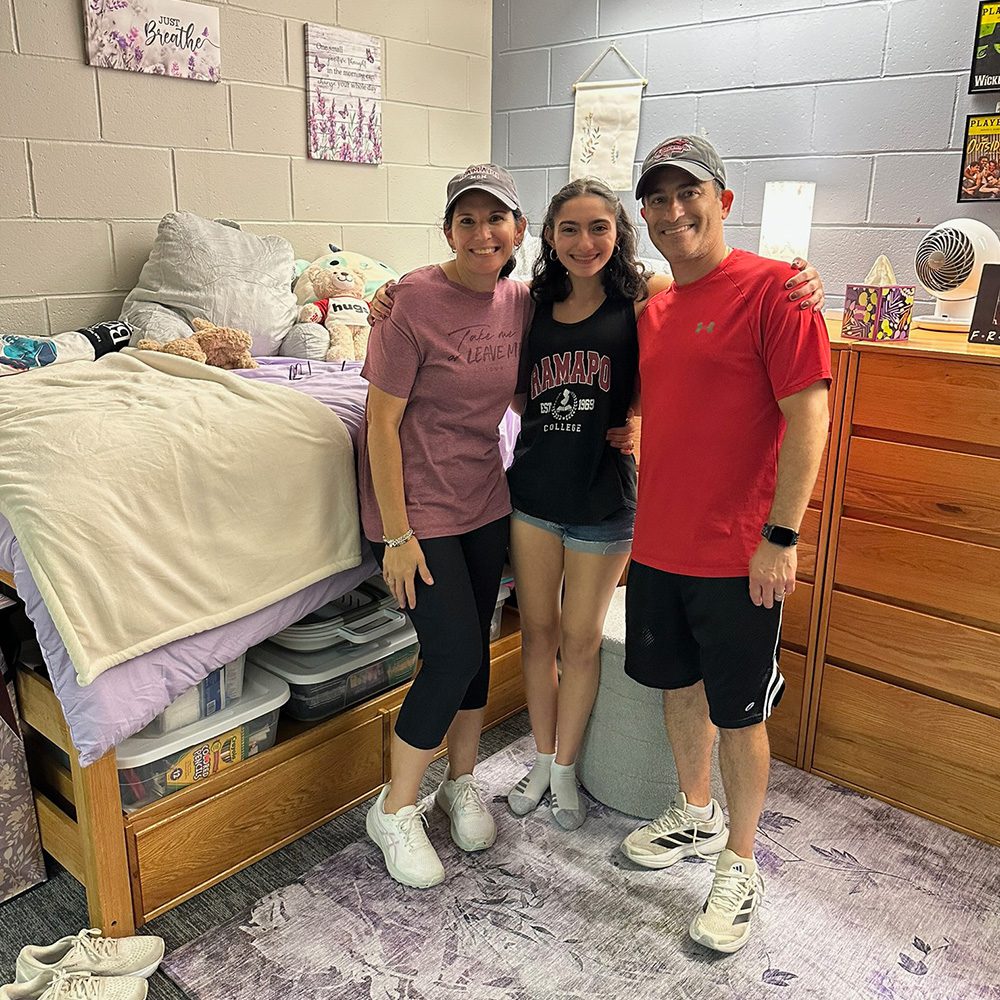
“We always wanted her to live on campus, but we wanted to be able to support or guide or help in any way we can,” said Deb Calderon, Rebecca’s mother. “So we were happy when she ended up being close.”
Rebecca ultimately chose Ramapo for the teacher education program to major in elementary education and earn a certificate in early childhood education. Now a sophomore living on campus, she participates in almost every campus activity offered throughout the week and weekends, has built close friendships, and maintains a life that is distinctly her own.
Deb sees an important distinction between living close to home and living at home.
“I still felt the separation and the difference because she lives on campus,” she said. “She’s not home.”
Rebecca manages her own schedule, attends activities with friends and handles more responsibilities for herself. At the same time, she can occasionally have dinner at home, attend an event in her community or continue babysitting for a family with whom she has a longstanding relationship.
Rather than limiting her college experience, proximity has allowed her to grow without giving up connections that remain meaningful to her.
Different Distances, the Same Growth
Deb has a useful point of comparison: Her son attends Penn State, several hours from Bergen County.
With both children now living on college campuses, she has discovered that geography does not determine how much support a student needs—or how independent that student becomes. Both children call and FaceTime. Both ask their parents questions. Both are learning to manage their responsibilities, relationships and time.
“It doesn’t matter that it’s Ramapo, 17 minutes from my door, or Penn State, three hours and 30 minutes away,” she said. “They’re looking for the same support.”
That realization challenges a familiar assumption: that distance itself produces independence.
“Living on campus, close to home or farther away from home, it’s still away from home,” she said. “You’re learning independence and handling friends, teachers, schedules and time management.”
A student several hours away might not come home frequently. Rebecca, despite living approximately 20 minutes away, generally remains on campus because that is where her classes, friends and activities are.
“She’s getting the college experience that she wants,” her mother said. “I don’t feel like she’s missing out on anything.”
An Education With Reach
For Emily, transferring closer to home opened doors to opportunities she had not anticipated.
She paired a data science major with a minor in sports management and completed an internship with the New Jersey Jackals, where she used TrackMan Baseball technology to collect and analyze data.
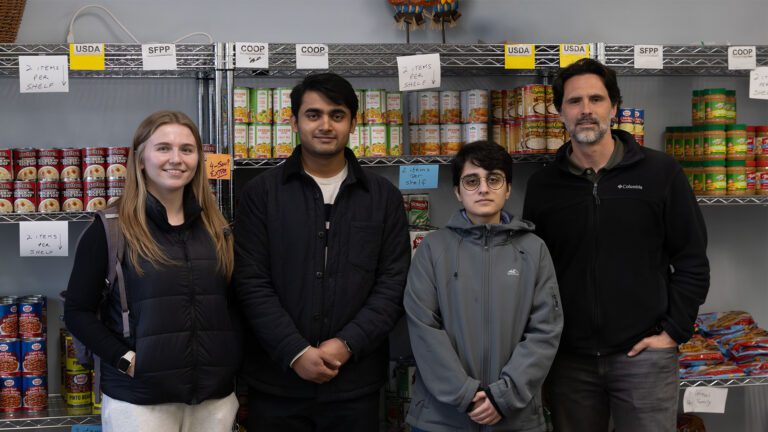
She also joined a student team working with the Center for Food Action through Ramapo’s Center for Data, Mathematical, and Computational Sciences. The students developed technology to help the nonprofit analyze operations and manage inventory across its food pantries– a game changer for intaking goods and recognizing trends in which food items are in greatest demand to those the organization serves.
The project, supported by the Daffron Family Foundation, brought together academic learning, technical expertise and community engagement. The Center for Food Action later honored Emily and her teammates for their contributions.
Emily graduated in May 2026 and is now completing Ramapo’s 4+1 Master of Science in Data Science program.
Her achievements are part of a broader record of student distinction that can be easy to overlook when a college is so familiar. Ramapo students have earned some of the nation’s most competitive academic honors, including Fulbright awards, and the College has celebrated its first Truman and Goldwater Scholars—recognitions spanning international study, public service leadership and scientific research. These accomplishments reflect the intellectual ambition, close faculty mentorship and access to opportunity that families may associate with colleges much farther from home.
Emily’s journey illustrates what can happen when interdisciplinary learning, faculty mentorship and practical experience converge. It also offers reassurance to students who discover that their original college choice is not working: Changing course is not failure. It can be an informed decision about what one needs to thrive.
The right college experience is personal. For one student, it may mean traveling hundreds of miles. For another, it may mean living on a nearby campus and building an independent life. For someone else, it may mean returning to a place once overlooked and seeing it with new eyes.
What matters most is finding an environment where a student can grow, form meaningful relationships and connect what they are learning with what they hope to contribute.
Emily and Rebecca took different paths to that environment. Their stories arrive at the same conclusion: Sometimes, you don’t have to go far to go far.
Any content, resident submissions, guest columns, advertisements, and advertorials are not necessarily endorsed by or represent the views of Best Version Media LLC (BVM) or any municipality, homeowners associations, businesses, or organizations that this publication serves. BVM is not responsible for the reliability, suitability, or timeliness of any content submitted, inclusive of materials generated or composed through artificial intelligence (AI). All content submitted is done so at the sole discretion of the submitting party.