Landscape lighting that makes the dark months safer and more inviting
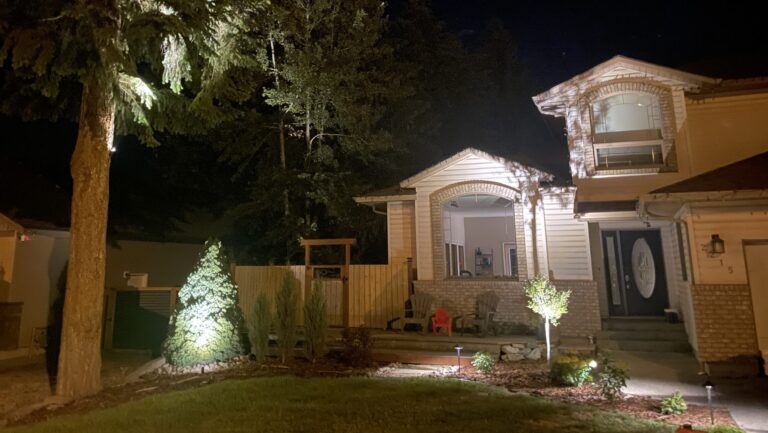
By mid-November the sun is setting before 5 p.m., and many of us are coming home in the dark. Good landscape lighting does more than make your yard look great – it makes icy walkways, steps, and driveways safer all winter, and gives you something worth looking at through the window on long, grey evenings.
Safety First, Ambiance Second
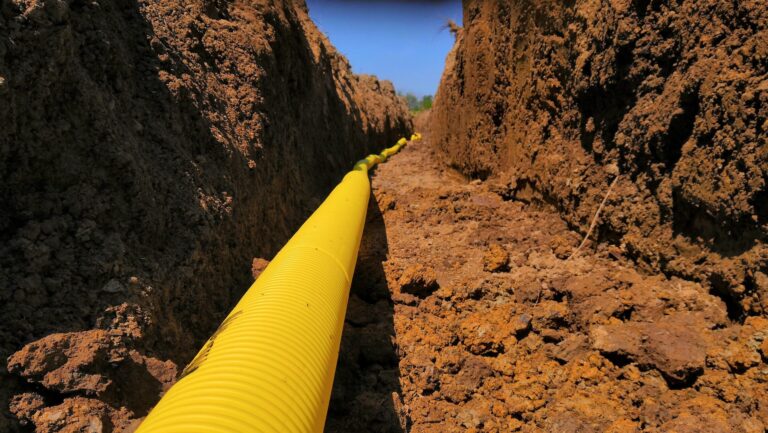
Dark steps and walkways are where winter slips happen. Lighting those areas first gives you the most practical value, and from there you can layer in accent lighting to highlight trees, stonework, and planting beds. A good design does both without turning your yard into an airport runway. How Low-Voltage Systems Work Most residential landscape lighting runs on 12-volt low voltage. A transformer plugs into a standard 110-volt outdoor outlet and steps household power down to 12 volts, and a buried cable feeds the fixtures. It’s safer and more flexible than line voltage, and LED fixtures use a fraction of the power of older halogen. Add a timer or photocell and the whole system runs itself – no rewiring of your home required.
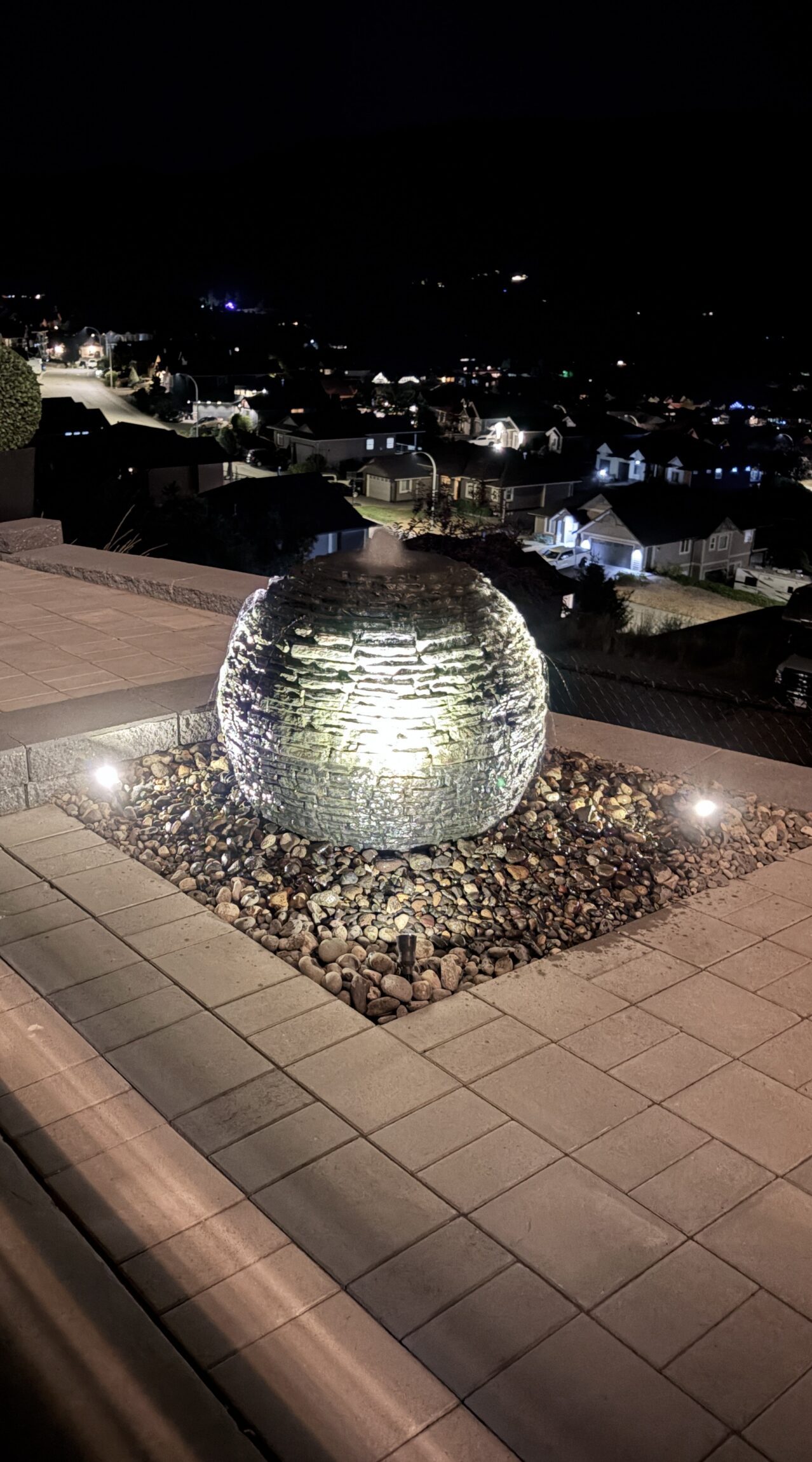
Submitted photo
Where to Put Lights
A few fixture types do most of the work:
- Path lights – low, shielded fixtures that light walkways and driveways without glare
- Uplighting – aimed at mature trees, boulders, or stone walls to add depth and texture
- Downlighting – fixtures mounted in trees or under eaves for a soft, moonlit wash over patios and lawns
- Wall and step lights – built into retaining walls, stairs, and columns for safe footing and a clean look
Built for Okanagan Winters
Not every fixture survives our winters. Choose solid brass, copper, or powder-coated aluminum over plastic, which turns brittle in a cold snap. Bury cable at the proper depth so freeze-thaw cycles don’t push it to the surface, and mount fixtures high enough to stay visible above the snowpack. Mark fixtures along paths and driveway edges before the snow flies so plow crews and snow blower operators know where they are. Warm white LEDs (2700-3000K) look best against snow and suit our natural landscape.
Plan It In Early
The best lighting is designed alongside the landscape, not added afterward. Conduit, wall lights, and step fixtures are far easier to install during construction than after stone is set. If you’re planning a spring project, think about lighting now, while the design is still on paper. A well-lit yard isn’t a luxury in a Vernon winter – it’s a safety feature that also happens to look great.
If you have more questions about landscape lighting, don’t hesitate to reach out to us. We’d love to help.
Any content, resident submissions, guest columns, advertisements, and advertorials are not necessarily endorsed by or represent the views of Best Version Media LLC (BVM) or any municipality, homeowners associations, businesses, or organizations that this publication serves. BVM is not responsible for the reliability, suitability, or timeliness of any content submitted, inclusive of materials generated or composed through artificial intelligence (AI). All content submitted is done so at the sole discretion of the submitting party.