
Maybe there’s a spot in your yard that turns into a puddle every time it rains.
Maybe part of your lawn stays wet for days, gravel keeps washing out of your driveway, or water seems to collect a little too close to your house. At first, these things can seem more annoying than serious. But drainage problems often give you smaller warning signs before they turn into bigger, more expensive problems.
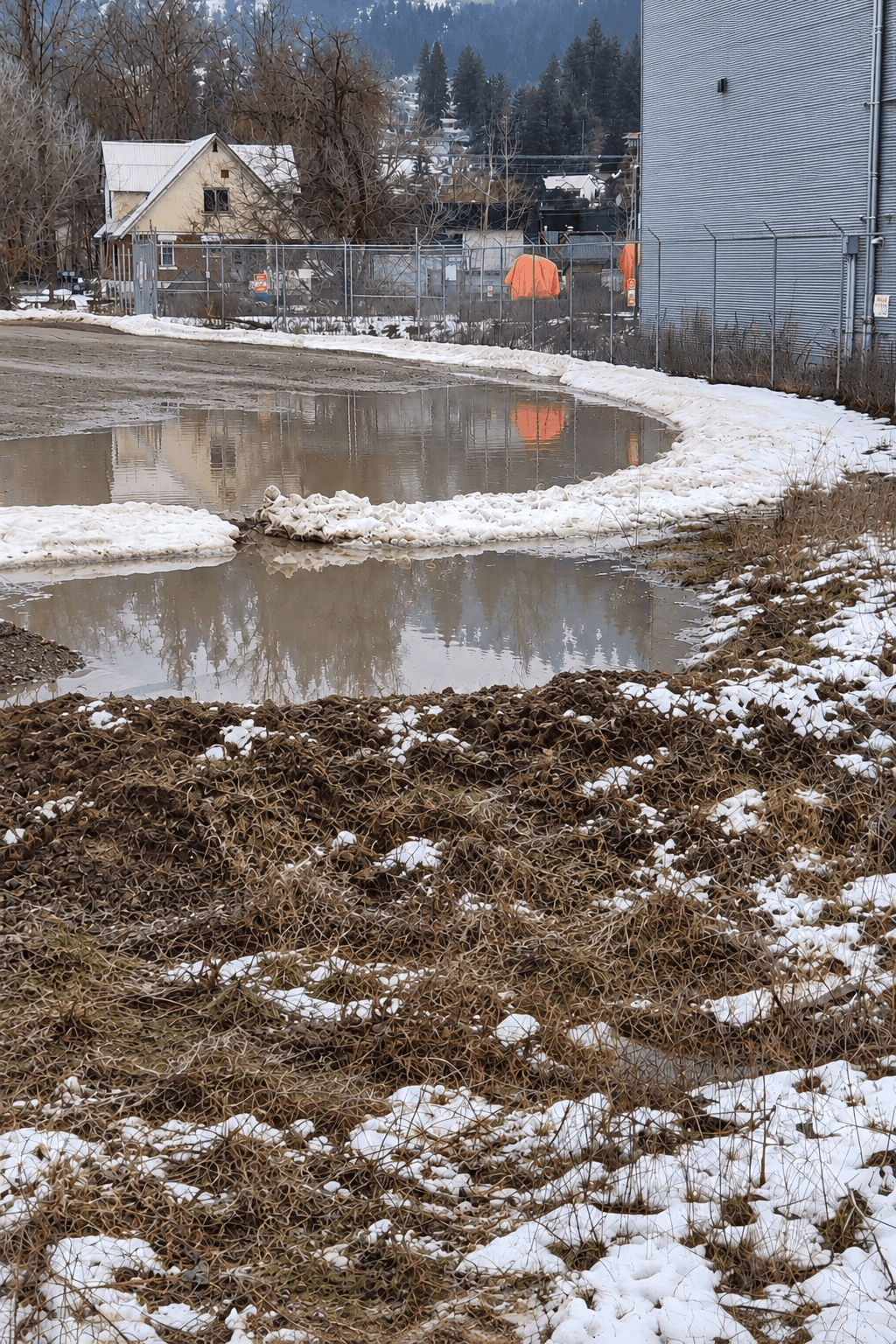
“Spring Meltwater” before. (Credit: Evan Ziemer)
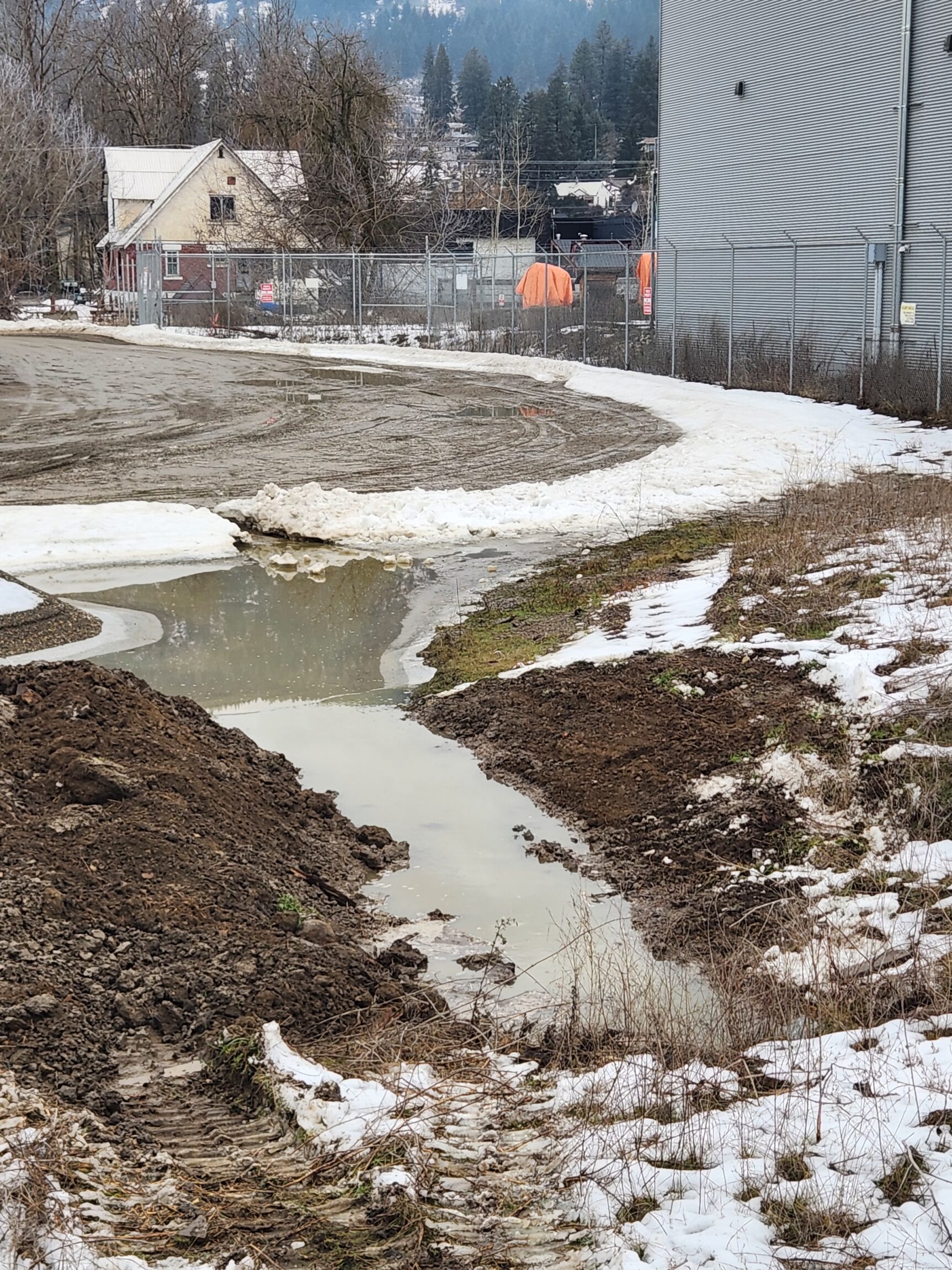
“Spring Meltwater” after: regrading the site to redirect spring meltwater away from the parking area and reduce pooling. (Credit: Evan Ziemer)
At Dirt Nerd Earthworks, grading and drainage are a regular part of the work we do throughout the North Okanagan. One thing we’ve learned is that two properties can show the same symptoms and need completely different solutions.
Here are five signs your property may have a drainage problem.
1. Water Pools in the Same Place After Rain
A puddle after a major storm isn’t automatically a problem. But if water regularly collects in the same place after normal rainfall, pay attention. There may be a low spot, poor grading, slow-draining soil, or water being directed into that area from somewhere else. The puddle is the symptom. It isn’t the diagnosis.
2. Part of Your Yard Stays Soggy
If one area stays muddy long after the rest of the yard has dried out, water may be having trouble moving through or away from that area. Poor grading, slow-draining soil, or water moving below the surface can all contribute.
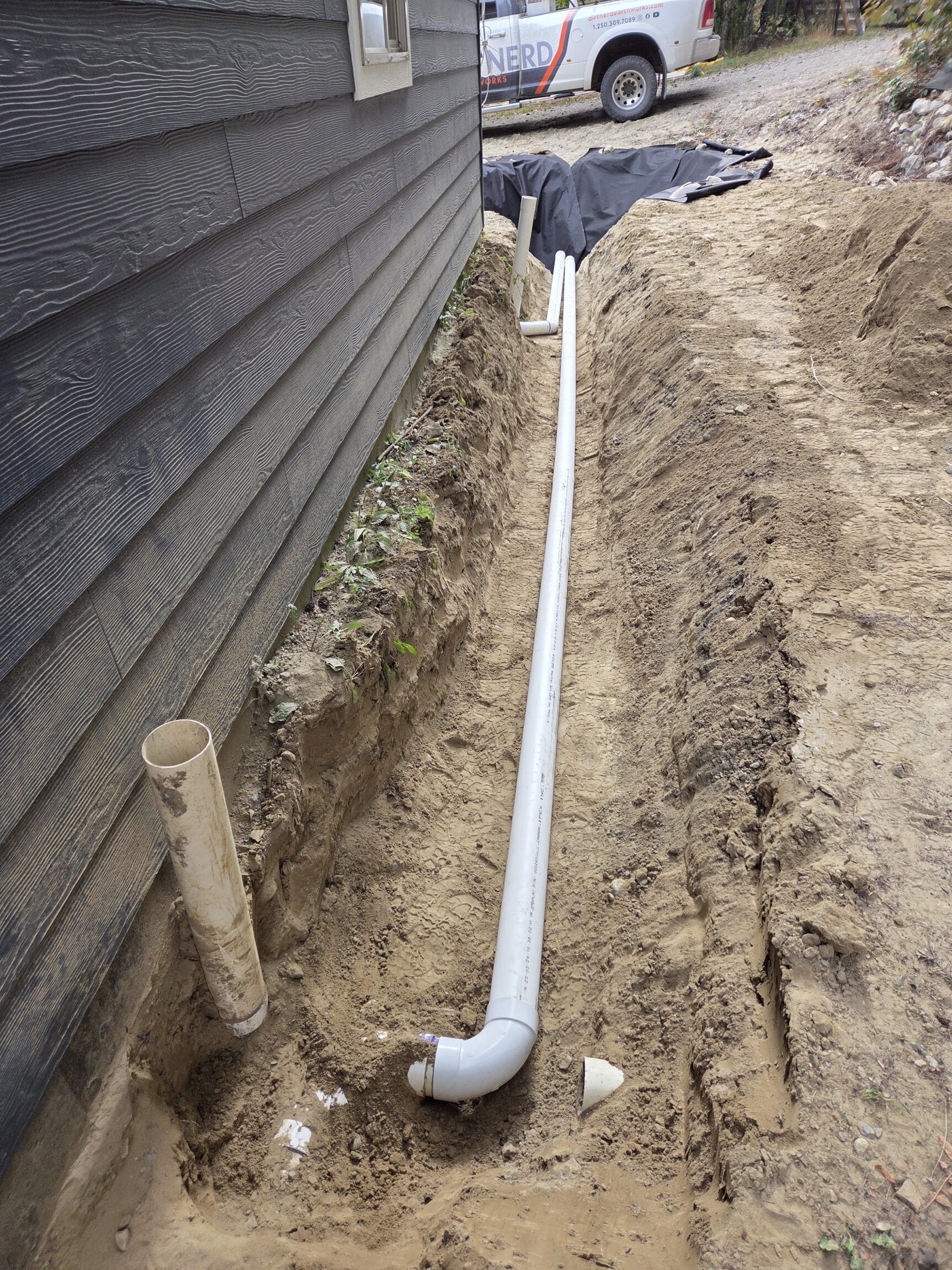
“Downspouts” – Downspout drainage redirected away from the house and into a rock pit, helping move roof runoff away from the foundation. (Credit: Evan Ziemer)
3. Soil, Gravel, or Mulch Keeps Washing Away
Drainage problems don’t always look like standing water. If gravel keeps disappearing from your driveway, mulch washes out of your garden beds, or small channels form in the soil, moving water may be causing erosion. Instead of repeatedly replacing the material, ask where the water is coming from.
4. Water Is Flowing Toward Your House
Surface water should generally have a path away from your foundation. If you see runoff travelling toward the house, pooling beside it, or heading toward a basement entrance, it’s worth investigating. One of the easiest ways to understand your drainage is to go outside during a good rainfall and simply watch where the water moves.
5. You’re Finding Moisture Where It Shouldn’t Be
Dampness in a basement or crawlspace, water staining, or moisture that appears after heavy rain can be another warning sign. But don’t assume you know the cause just because you know where the water appeared. The issue might involve grading, roof runoff, groundwater, perimeter drainage, or something else entirely.
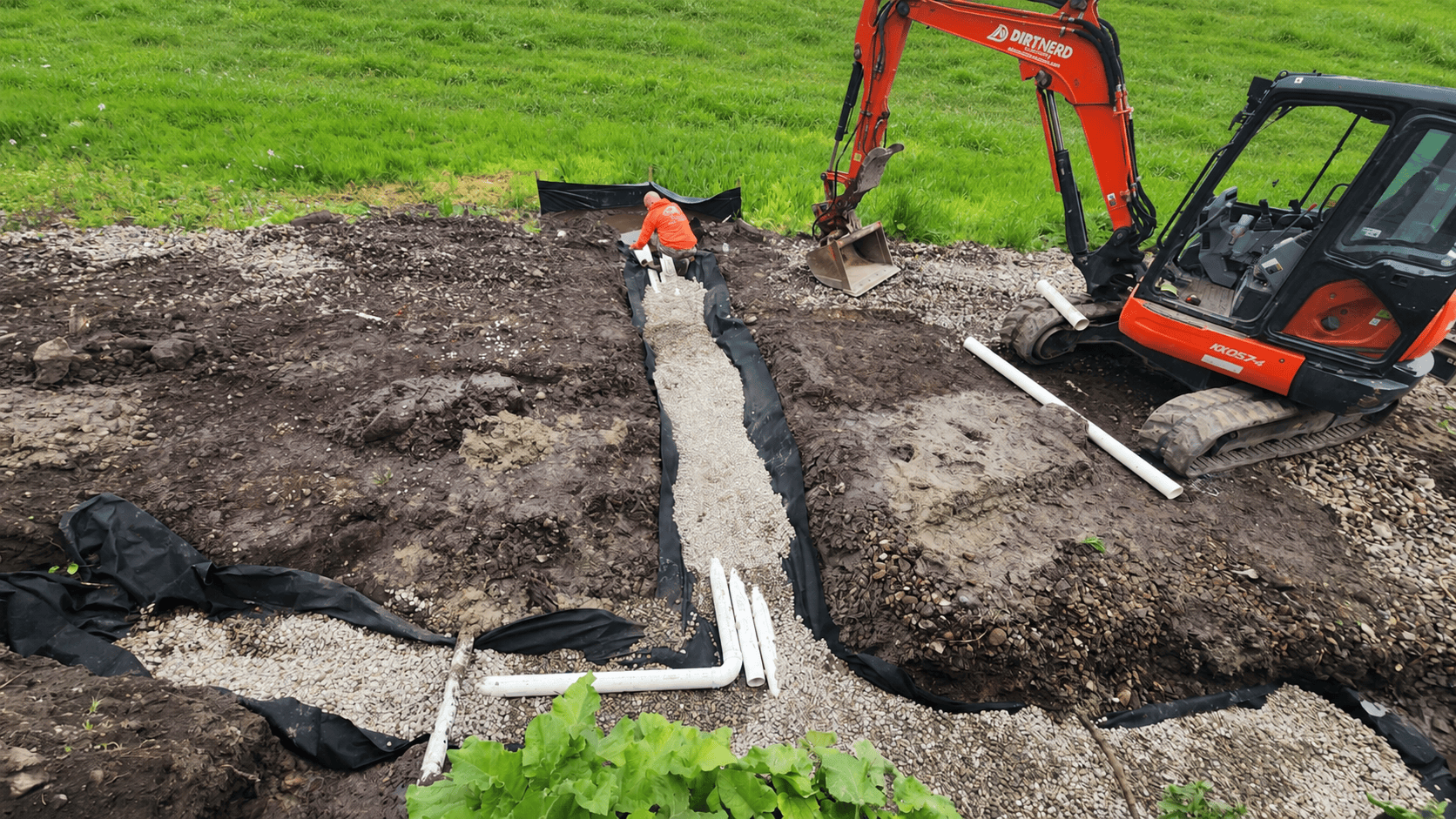
“French Drain” – French drain system installed to collect and redirect water, with the outlet daylighting at the edge of the pad. (Credit: Evan Ziemer)
Do You Need a French Drain?
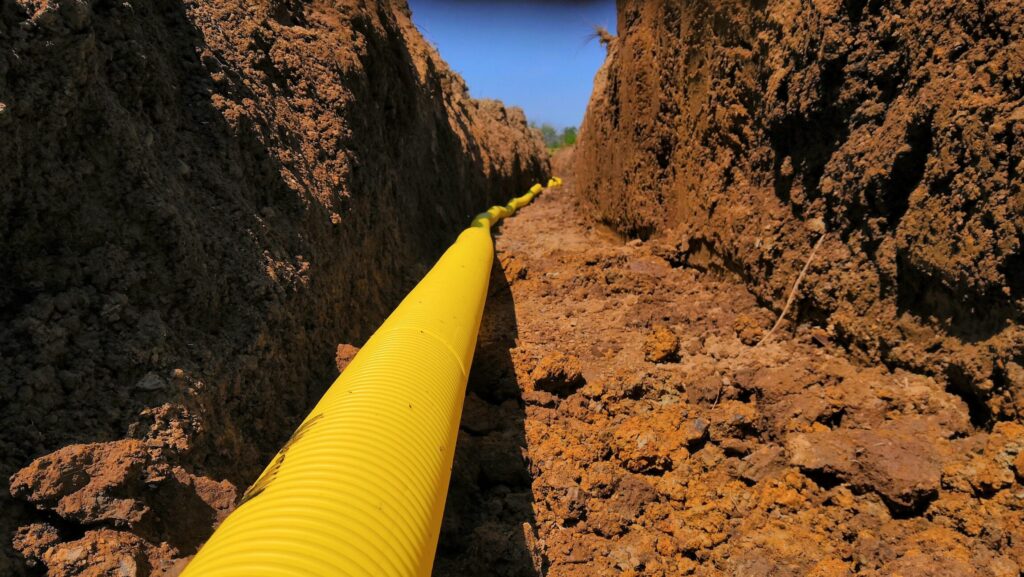
Not necessarily. French drains are useful, but they are only one possible solution. Depending on the property, the answer might be grading, a swale, a catch basin, drainage pipe, downspout management, or a combination of methods.
Good drainage work starts by answering one question: Where is the water coming from, and why is it ending up here? Once you understand that, you’re much closer to the right solution.
Any content, resident submissions, guest columns, advertisements, and advertorials are not necessarily endorsed by or represent the views of Best Version Media LLC (BVM) or any municipality, homeowners associations, businesses, or organizations that this publication serves. BVM is not responsible for the reliability, suitability, or timeliness of any content submitted, inclusive of materials generated or composed through artificial intelligence (AI). All content submitted is done so at the sole discretion of the submitting party.