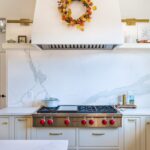
Choosing the right countertops for your home can seem overwhelming. The most common options are natural stone, quartz and large-scale porcelain slab. Price point, style and functionality are all considerations as not all products are best for every application. Learning the pros and cons of these three options will help make your decision easier.
I was recently invited to the Cosentino factory headquarters and quarry near Almeria, Spain. Cosentino is a global company that produces premium materials in all three categories. I spent three days learning in-depth about the design, manufacturing and sustainability initiatives of the industry. Even as a professional with over 30 years in the industry, I was blown away by the technological advances being developed and used to create these products.
Here is a breakdown of the differences:
Natural Stone (Quartzite, Marble, Granite etc.)
- Each slab is a unique creation from the earth. Finding the perfect slab is time-consuming but does bring organic beauty into the home.
- The cost is often higher than man-made products, especially exotic options.
- Maintenance is required; re-sealing once every 6-12 months.
- Hot pans do not cause damage, and chips are easily repaired.
- Polished, honed and leathered surface finish options are available as well as special edge details like chiseling.
Quartz
- This man-made material is 95% real stone with added pigments and resins. Every slab in a style is identical. Having predictable consistency reduces selection time and can reduce anxiety during the selection process.
- Products have similar durability to natural stone; however, no maintenance is required. It is nonporous and does not stain.
- Pans over 250 degrees will cause the material to fail.
- Quartz products can provide the look of white marble without the maintenance and staining risks of real marble. Concrete styles and solid colors are available.
- Some designs look unnatural.
Large-Scale Porcelain
- These products are durable, thin, beautiful and less expensive.
- Hot pans, extreme temperature variation and acidic substances do not affect these products.
- They are easy to clean.
- Realistic digital images of stone are printed on the material surface, so the sides are a different color. Mitering alleviates this visual issue. However, it also increases fabrication costs, which reduces the overall cost savings. Chips can be repaired, but will always be visible.
- The best applications are vertical shower walls, backsplashes, cabinet faces and fireplace surrounds.
Working with a knowledgeable design professional can help simplify the process and ensure the final selection fits both your space and how you live.
Any content, resident submissions, guest columns, advertisements, and advertorials are not necessarily endorsed by or represent the views of Best Version Media LLC (BVM) or any municipality, homeowners associations, businesses, or organizations that this publication serves. BVM is not responsible for the reliability, suitability, or timeliness of any content submitted, inclusive of materials generated or composed through artificial intelligence (AI). All content submitted is done so at the sole discretion of the submitting party.