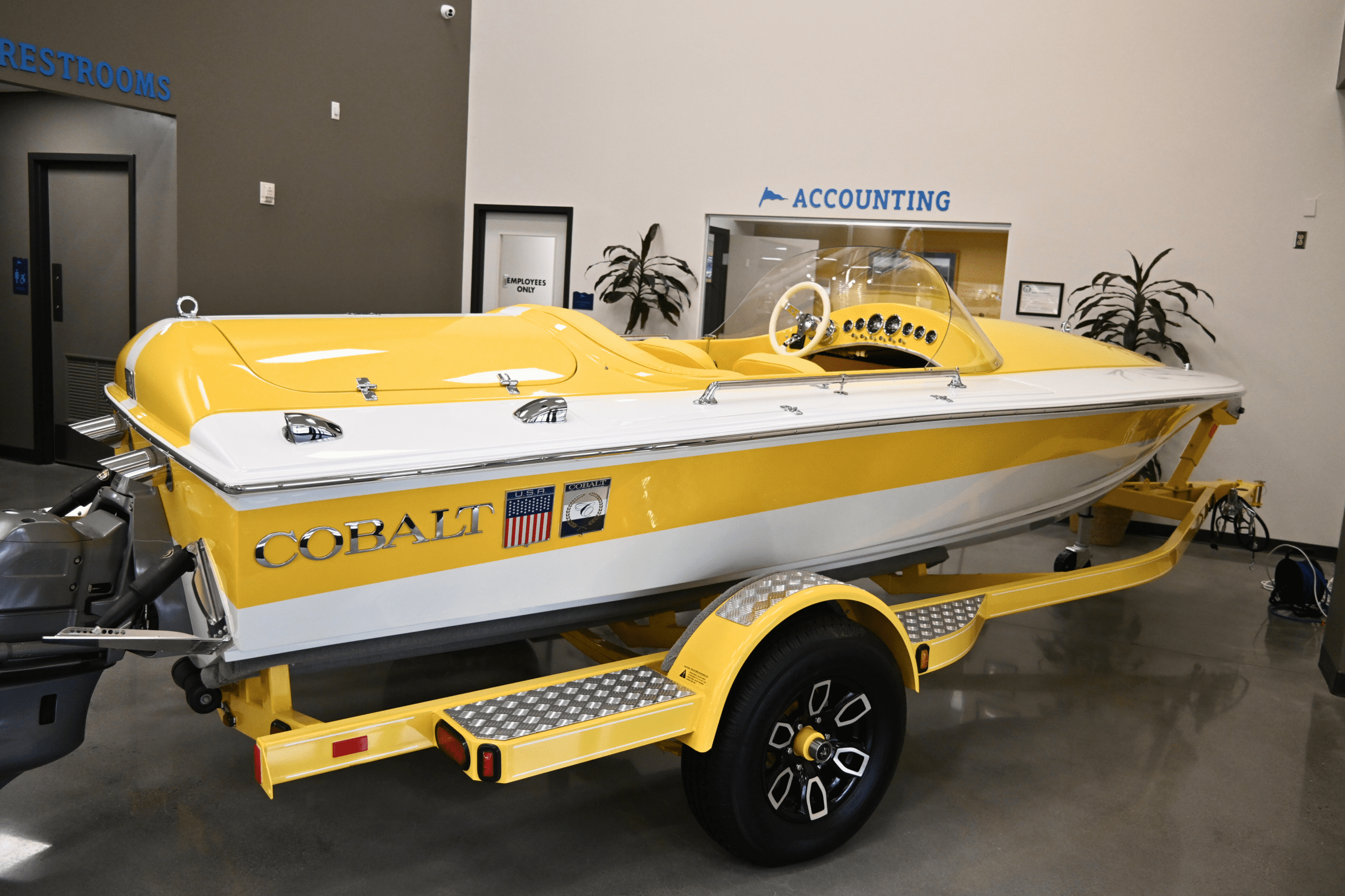
For visitors walking through the Boats by George showroom, it usually doesn’t take long before something catches their eye. Surrounded by today’s sleek surf boats and luxury bowriders sits something noticeably different. It’s smaller, lower, and carries the unmistakable lines of another era. Its profile is sharp and purposeful, the kind of shape that immediately sparks curiosity. Many people walk over, assuming it must be a vintage performance boat from another brand. Then they see the badge on the side: Cobalt.
The boat is a 1970 Cobalt GT500, and for many boating enthusiasts, it represents a chapter of Cobalt history that few people realize ever existed.
Long before Cobalt became known for the refined craftsmanship and timeless design that define the brand today, the company was still finding its identity. In the late 1960s and early 1970s, performance boating was exploding in popularity across the country. Sleek, fast boats with aggressive styling were capturing the imagination of boaters everywhere, and one of the most admired designs of the time was the 18-foot performance hull made famous by the Donzi 18 Classic and 18 Corsican. Like many enthusiasts of the era, Cobalt founder Pack St. Clair admired the way those boats handled and performed on the water.
That admiration influenced some of Cobalt’s earliest experiments in boat design. The company produced a small number of 18-foot performance models dubbed the XV and GT series that shared similar proportions and styling cues. The XV series closely resembled Donzi’s 16 and 18 Classics, while the GT series was made in the image of Donzi’s Corsican series of boats. The GT500 displayed at Boats by George is one of those boats.
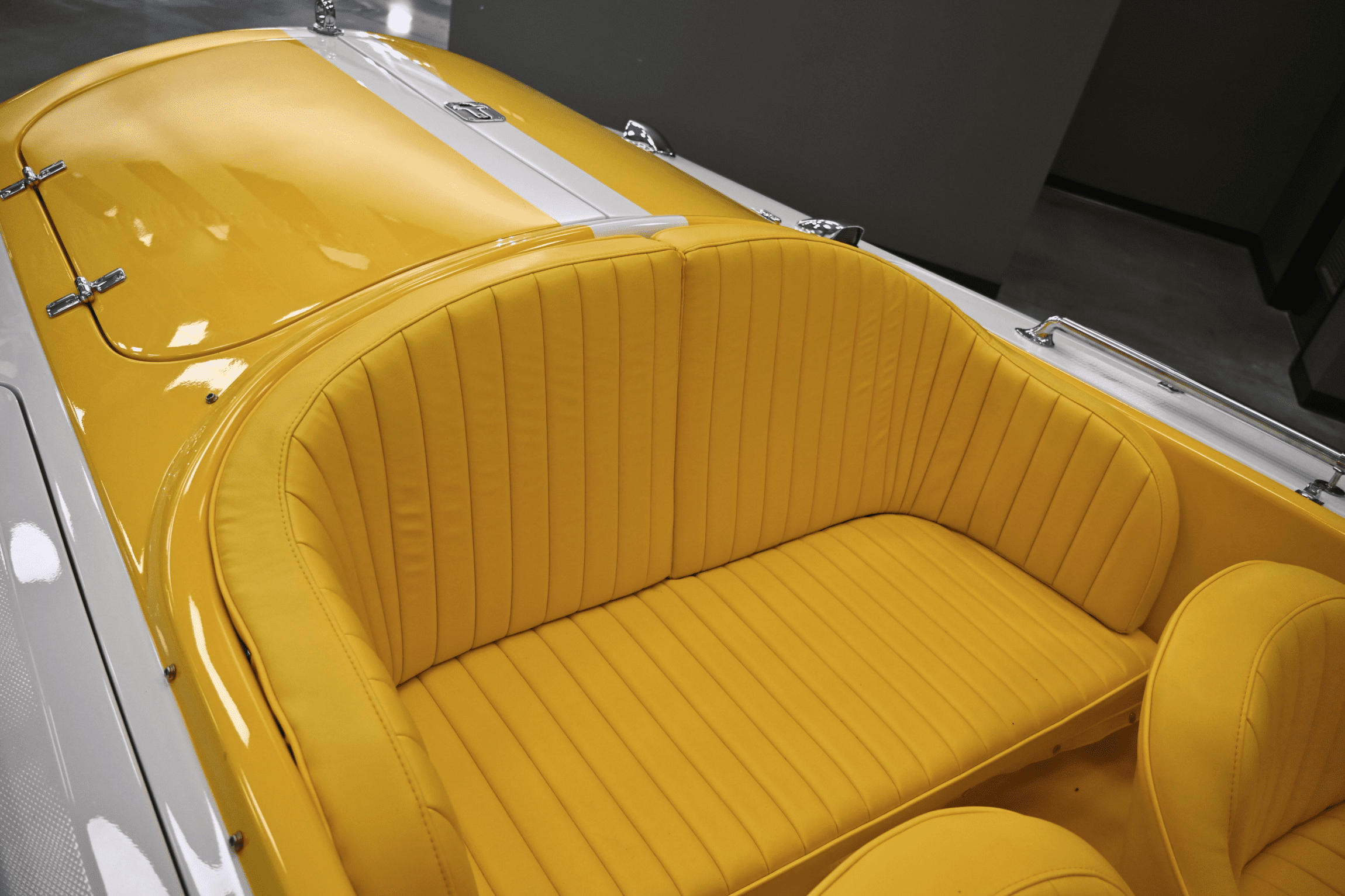
Production was extremely limited. Historical estimates suggest that fewer than one hundred of these Donzi-style Cobalt boats were ever built, with some accounts placing the number closer to fifty or sixty. Most of them were built as XV series boats mimicking the Classic line. But in 1970, Cobalt began building the GT series modeled after the Corsican. The run was short, but it marked an important moment in the company’s early development. As the story goes, the designs performed well, but the founders of Cobalt soon realized they wanted something different for the future of the brand.
The change of direction sparked persistent rumors about a legal dispute between Donzi and Cobalt over the designs. However, according to conversations with individuals familiar with the company’s early years, there was no direct dispute between the two manufacturers. Instead, the decision to move away from them came from within Cobalt.
Pack St. Clair wanted Cobalt to be known for boats that were distinctly their own. Continuing to produce models that closely resembled another brand simply didn’t feel right to him. And with the early success of their tri-hull, family-oriented bowriders, the decision to move on from their GT and XV series boats was easy. Cobalt pivoted toward new ideas and original hull designs. By the early 1970s, the company developed its brand’s unique DNA, exploring the design direction that would eventually lead to the modern Cobalt boats seen on lakes today.
Because of that shift, the XV and GT performance models quietly disappeared from production. Over time, they became a rare footnote in the brand’s history.
That rarity is part of what makes the boat now sitting at Boats by George so fascinating.
The GT500’s journey to Lake George began hundreds of miles away with a family in Minnesota who had the boat tucked away for years. When the Boats by George team learned about it, they quickly recognized that it might be something special. After some conversations and a bit of travel, the boat was purchased for what now sounds almost unbelievable: a thousand dollars and the cost of gas to make the trip.
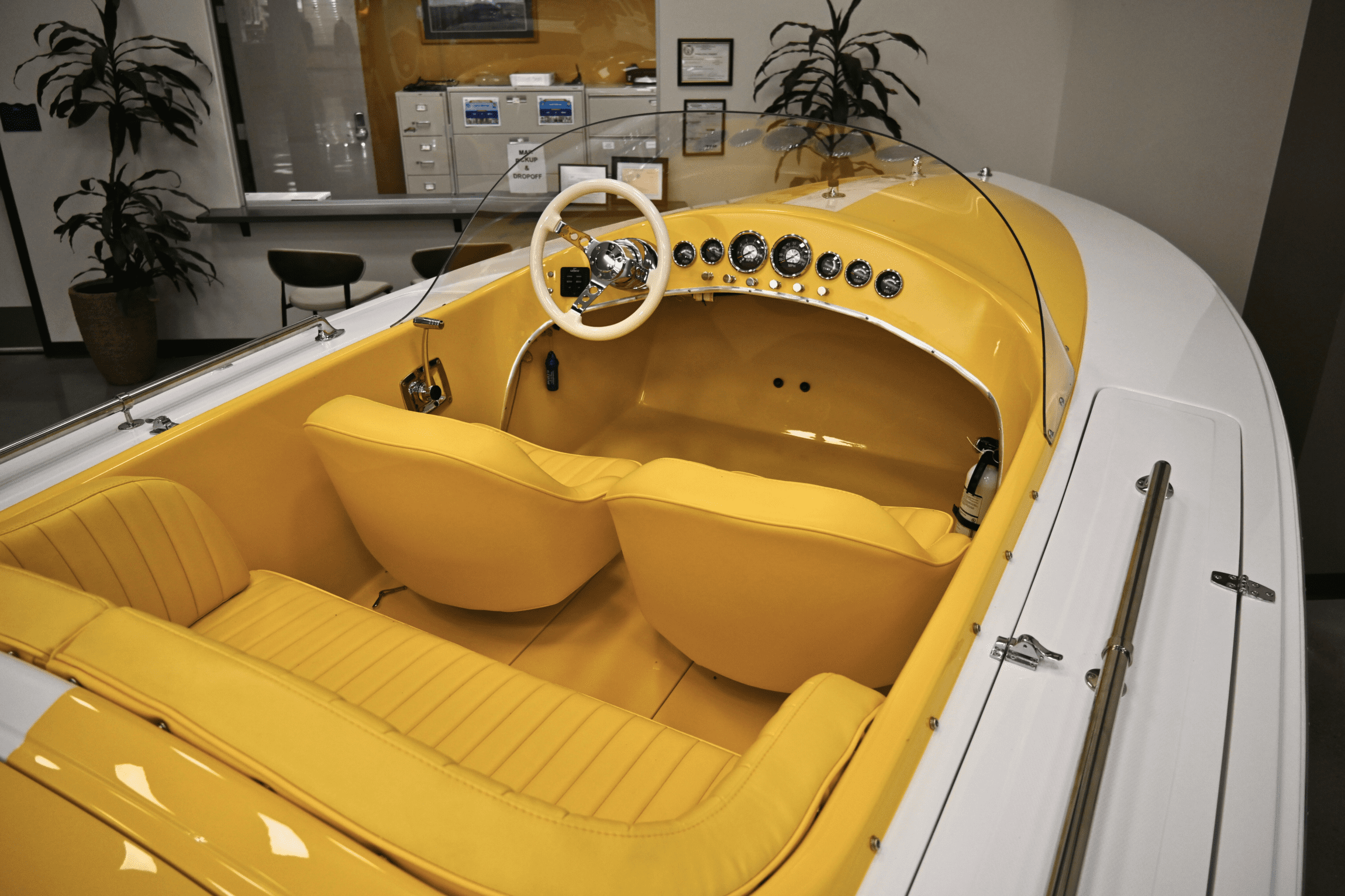
What followed was a careful effort to bring the boat back to life while preserving as much of its original character as possible. Rather than heavily modernizing it, the goal was to respect the boat’s history. The GT500 was repowered with a 5.3-liter Volvo Penta 350-horsepower engine paired with a dual-prop drive, providing reliable performance while maintaining the spirit of the original design. Throughout the process, the team worked with Dave Hartman of Hornet Marine to help dial in the details and ensure the restoration honored the boat’s heritage, keeping original hardware intact wherever possible. In addition, Mack the Knife of Queensbury, NY, was enlisted to refinish the fiberglass and paint—painstakingly filling and sanding every single ripple from years of settling to finish with a beautiful.
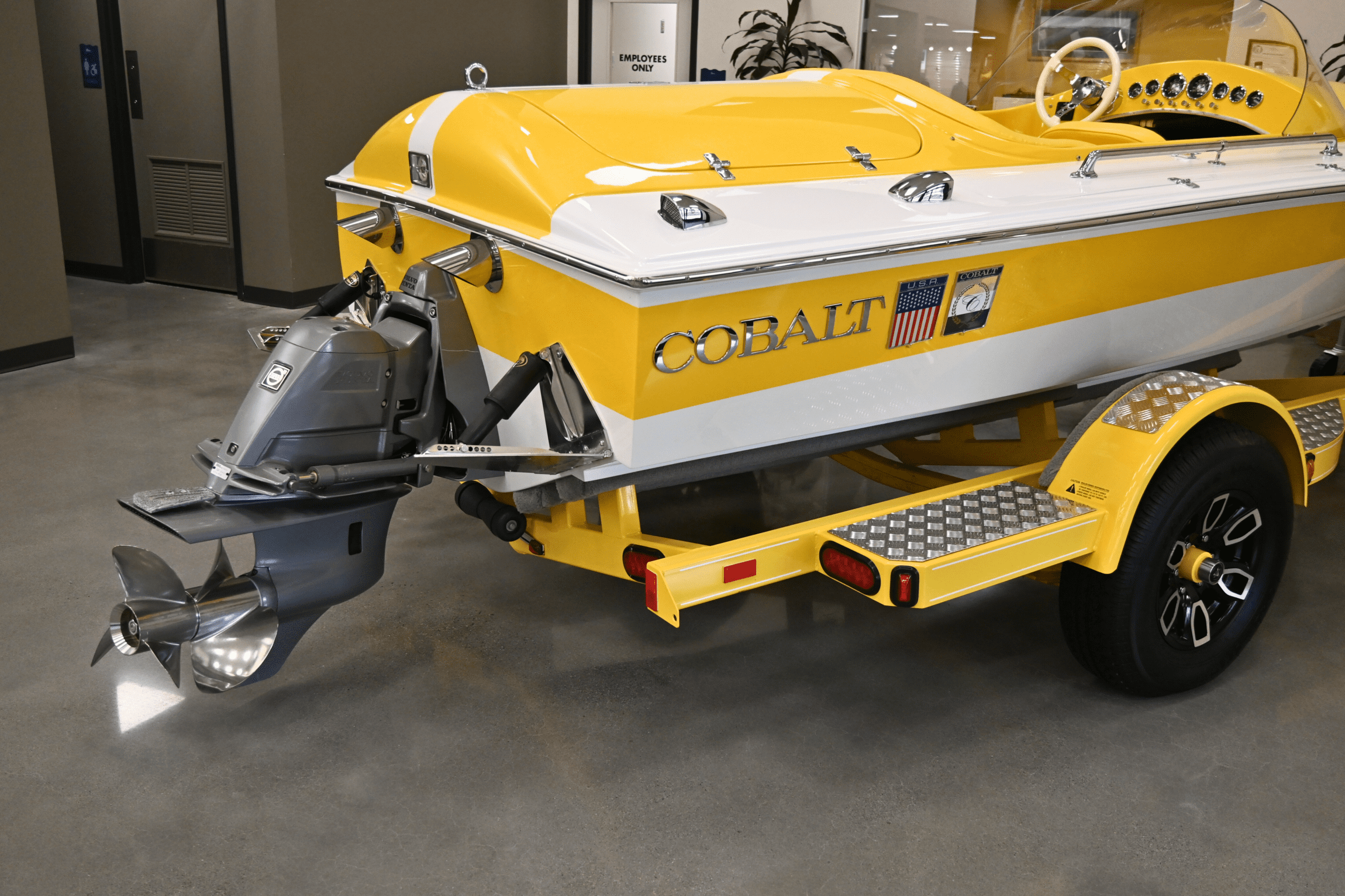
Today, the finished boat sits proudly in the lobby of the Boats by George showroom, where it has become one of the first things visitors notice when they walk through the doors. While many classic boats eventually find their way into private collections, this one isn’t going anywhere. The GT500 is not for sale. Instead, it has been kept as a piece of boating history that the Boats by George team is proud to preserve and share with visitors.
In many ways, the GT500 represents more than just a rare boat. It captures the spirit of an era when innovation often came through trial and exploration. For Cobalt, it marks the brief period before the company fully committed to creating designs that were entirely its own. The decision to move away from borrowed ideas and focus on originality helped shape the brand that would eventually become known worldwide for its craftsmanship and attention to detail.
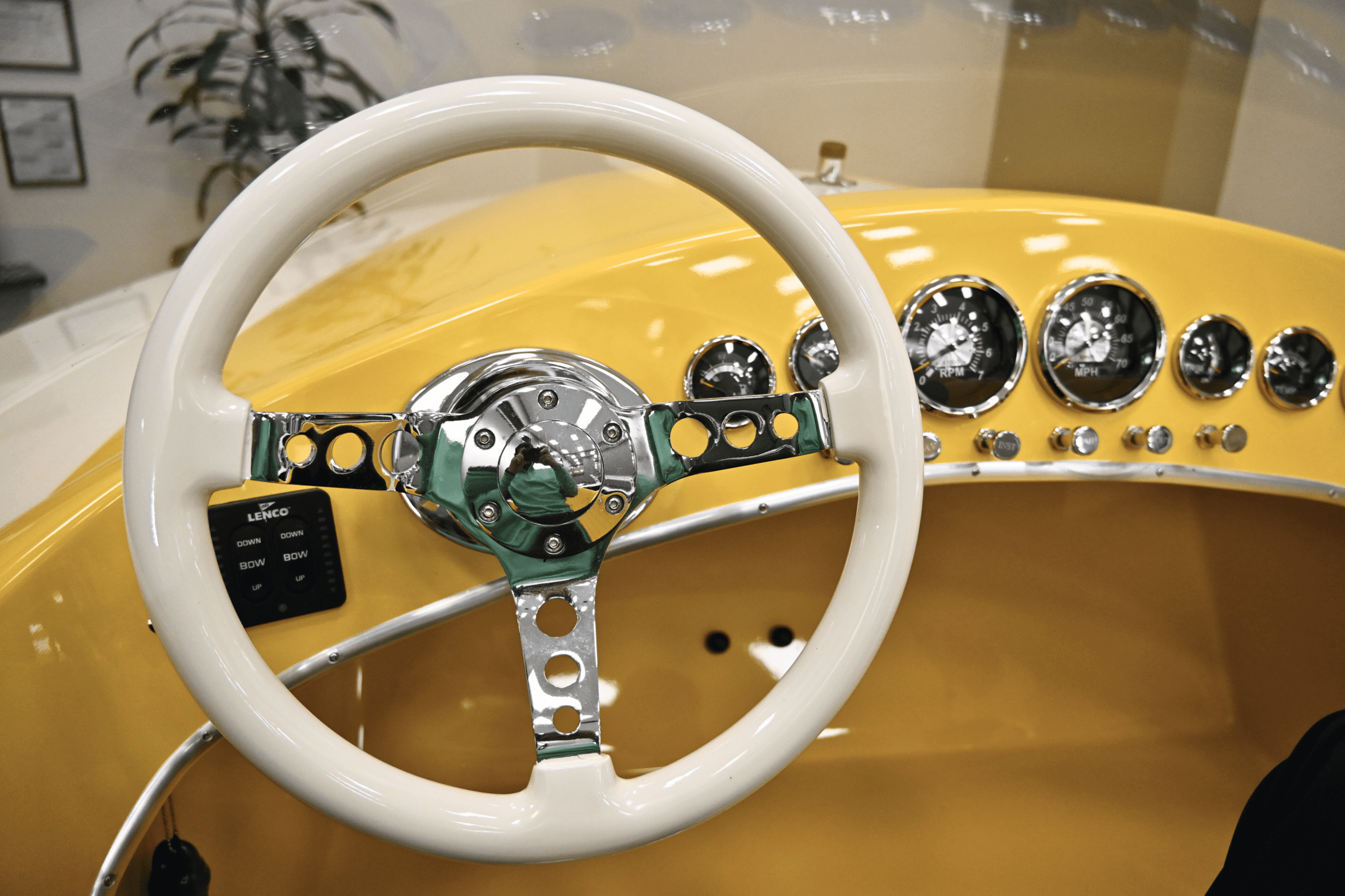
Seeing that early chapter sitting on display alongside modern Cobalt models tells a remarkable story about how far the company has come.
For visitors to Boats by George, the boat has quickly become a conversation piece. Some people are surprised to learn that Cobalt ever produced a design like it at all. Others immediately recognize its connection to the performance boats that defined the late 1960s and early 1970s. Either way, it tends to stop people in their tracks.
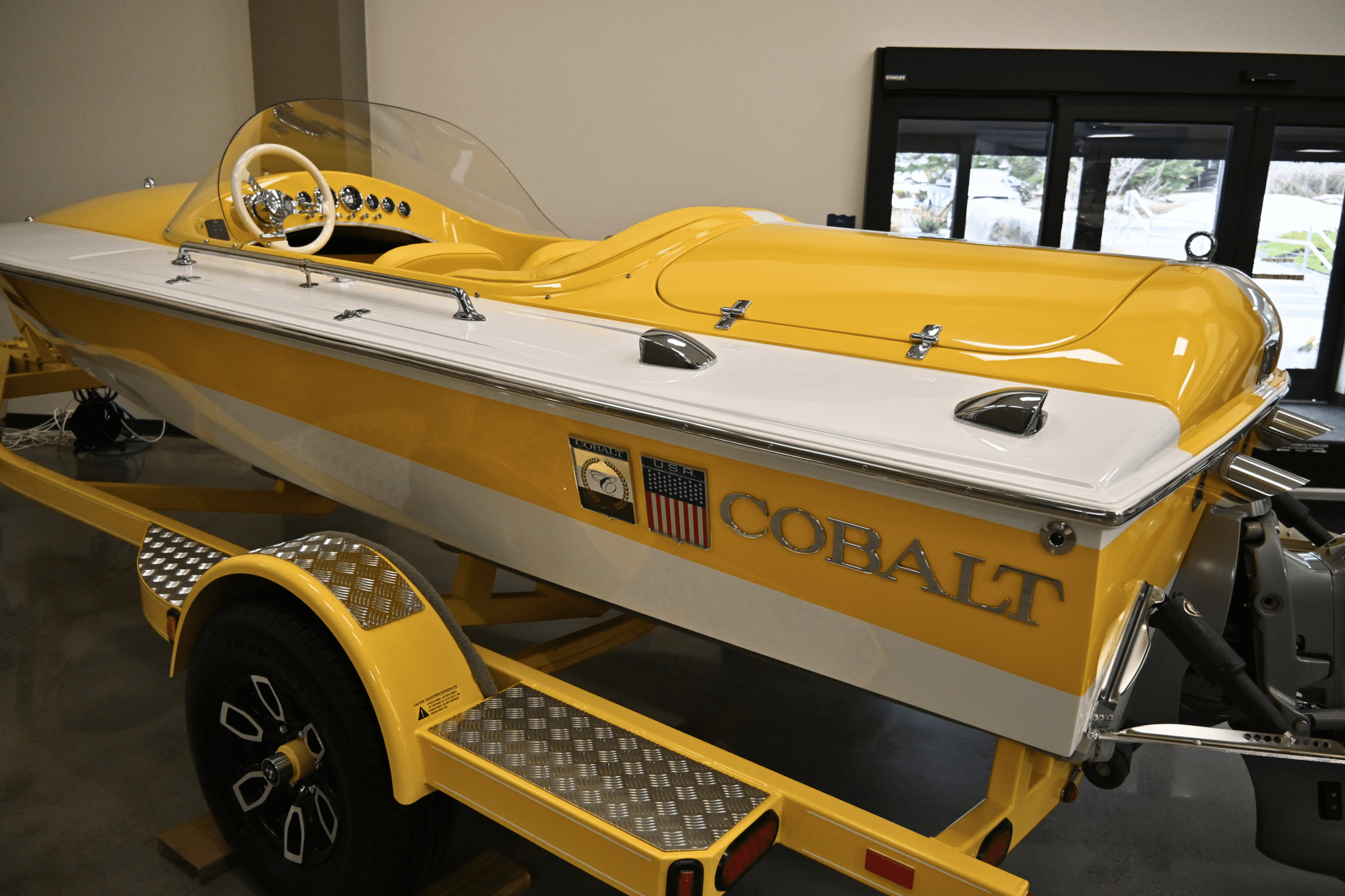
Boats like this rarely surface, and even more rarely do they end up somewhere the public can experience them up close. For now, this particular 1970 Cobalt GT500 has found a permanent home in the Boats by George showroom on Lake George, where it stands as a reminder of the experimentation, ambition, and craftsmanship that helped shape one of boating’s most respected brands.
Innovation in boating has never been linear. Sometimes it pushes boundaries. Sometimes it crosses them. And sometimes those early experiments become the rare pieces of history that tell the story of how a great brand found its identity.
Any content, resident submissions, guest columns, advertisements, and advertorials are not necessarily endorsed by or represent the views of Best Version Media LLC (BVM) or any municipality, homeowners associations, businesses, or organizations that this publication serves. BVM is not responsible for the reliability, suitability, or timeliness of any content submitted, inclusive of materials generated or composed through artificial intelligence (AI). All content submitted is done so at the sole discretion of the submitting party.