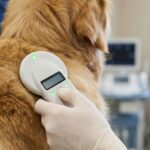
While we often associate May with the blooming of spring, it also marks National Chip Your Pet Month. This month-long awareness campaign serves as a vital reminder to pet owners that a simple, five-minute procedure could be the difference between a tragic loss and a joyful reunion.
Why Microchipping Matters
Every year, an estimated 10 million pets are lost in the US. While collars and ID tags are a great first line of defense, they are far from foolproof. Collars can snap, tags can become illegible over time, and a panicked pet can easily slip out of a harness.
A microchip, however, is permanent. About the size of a grain of rice, the chip is implanted just under the skin between the shoulder blades. Unlike a GPS tracker, it requires no battery and has no moving parts. It is a passive Radio Frequency Identification (RFID) device that sits dormant until it is read by a scanner at a shelter or veterinary office.
The Statistics Don’t Lie
The impact of a chip is staggering. Research shows that
- Dogs with microchips are reunited with their owners at a rate of 52%, compared to just 22% for those without.
- Cats see an even more dramatic benefit; chipped cats are reunited 20 times more often than those without (38% vs. less than 2%).
Debunking the Common Myths
Many owners hesitate to chip their pets due to common misconceptions. First, it is not a painful surgery. The implantation is performed with a needle and feels similar to a routine vaccination; most pets don’t even flinch. Secondly, it is not a tracking device. You cannot pull up an app to see your pet’s location. Instead, it acts as a permanent “Social Security Number” that links to your contact information in a secure database.
The Most Important Step
The most critical mistake a pet owner can make is getting the chip but failing to register it. A microchip without your current phone number and address is useless.
If you think your pet may already have a chip, ask your vet to scan your pet to ensure the chip hasn’t migrated and is still readable. Then, update your info: log in to your provider’s registry (like AKC Reunite or HomeAgain) to ensure your cell phone number and emergency contacts are up to date.
A microchip is a one-time investment in your pet’s safety that lasts a lifetime. This month, give yourself the peace of mind that comes with knowing your best friend always has a way back home.
Any content, resident submissions, guest columns, advertisements, and advertorials are not necessarily endorsed by or represent the views of Best Version Media LLC (BVM) or any municipality, homeowners associations, businesses, or organizations that this publication serves. BVM is not responsible for the reliability, suitability, or timeliness of any content submitted, inclusive of materials generated or composed through artificial intelligence (AI). All content submitted is done so at the sole discretion of the submitting party.