Every so often, when I send a quote for tree work, a homeowner will say something like, “Tree care feels so expensive – why?”
It’s a fair question, and it’s not always something I get to fully explain when I’m standing in a driveway or walking through a job. So I thought I’d take a moment to offer some transparency; for our clients and for anyone in the community considering hiring a professional arborist.
From the outside, tree work can look straightforward: a few people with chainsaws trimming branches for the day. But the reality of professional tree care is quite different.
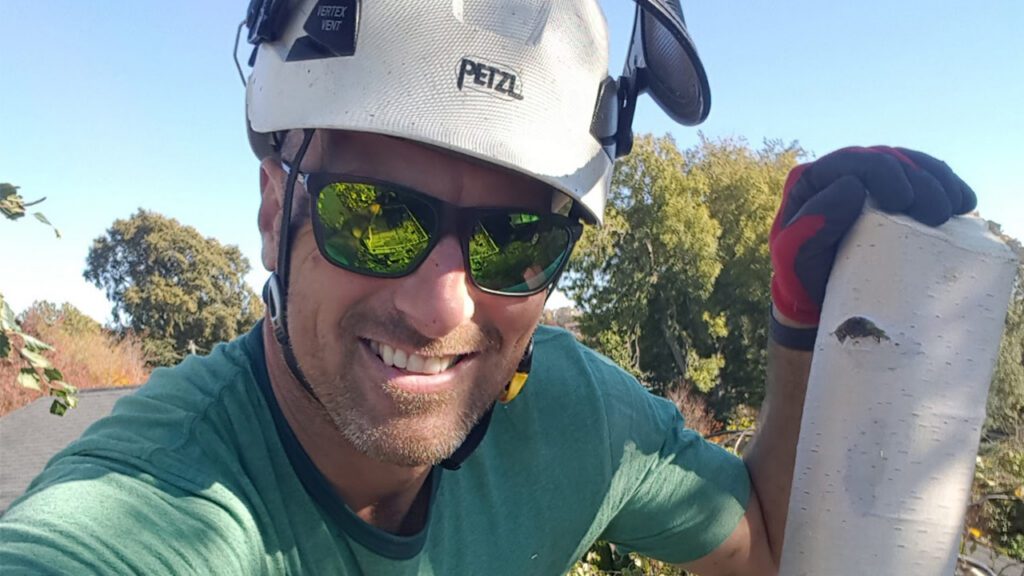
I often describe arboriculture as a form of aerial construction. Imagine dismantling part of a structure piece by piece while suspended in the air; sometimes upside down, working above roofs, gardens, fences, or glass greenhouses. Every branch we cut carries weight, leverage, and momentum. Once a cut is made, there’s no undo button. The work requires careful planning, complex rigging systems, clear communication between crew members, and precise control over every piece that comes down. Much of this happens high in the canopy, often between 30 and 170 feet above the ground.
Tree work is also one of the more hazardous trades in British Columbia. Arborists are the only professionals in landscaping insured to work at height, and that comes with significant WorkSafeBC requirements. Arboriculture falls into one of the highest-risk categories, which means insurance premiums are substantially higher than most other outdoor trades. Those costs exist to ensure workers are protected if something goes wrong.
Beyond WorkSafeBC, professional companies carry liability insurance (something homeowners should always confirm). When work is happening above homes, vehicles, and power lines, there is a shared responsibility to protect both the crew and the property.
There’s also a surprising amount of coordination that happens before a crew ever arrives. At our company, our office team manages scheduling, work orders, and permits. In municipalities like Oak Bay, that can include organizing street occupancy permits, tree removal or pruning approvals, and coordinating electrical shutdowns near power lines. It’s not always visible, but that planning is what allows each job to run safely and efficiently.
The work itself is physically demanding. Climbing, rigging, lifting, and running saws day after day takes a toll. Arborists are sometimes jokingly called “industrial athletes,” and there’s truth to that. Supporting a crew means investing not only in safety equipment and training, but also in fair wages, benefits, and a healthy work environment. Building a sustainable career in arboriculture is essential to retaining skilled people who can do this work well.
Then there’s the equipment.
Professional arborists rely on specialized climbing and rescue systems, rigging ropes rated for thousands of pounds, chainsaws, lowering devices, chippers, trucks, cranes, stump grinders, and other heavy machinery. Much of this equipment requires regular inspection and maintenance to meet safety standards. A tree crew doesn’t arrive with just a ladder and a saw, they arrive with what is essentially a mobile workshop designed to safely manage heavy wood in tight residential spaces.
Becoming a Certified Arborist through the International Society of Arboriculture (ISA) takes years of hands-on experience, along with ongoing education in tree biology, pruning techniques, structural assessment, and safety practices. In places like Oak Bay, many permitted removals and pruning projects must be completed by an ISA-certified arborist under local bylaws. Reaching that level of knowledge and confidence can take years in the field, often combined with formal training.
Those years aren’t just about learning how to cut wood. They’re about understanding how trees grow, how they respond to pruning, and how to identify structural issues before they become hazards. Arborists care for everything from ornamental shrubs to some of the largest living organisms on earth, and that knowledge needs to span the full range.
While removals often get the most attention, much of our work is focused on helping trees live longer. Proper pruning can improve structure, reduce storm damage, and support long-term health. In communities like Oak Bay, where mature trees define the character of the neighbourhood, that work plays an important role in preserving the landscape for future generations.
So when people ask why tree work costs what it does, the honest answer is that it’s a combination of risk, training, equipment, planning, and care.
And more personally it’s about showing up with a skilled team, doing complex work safely, and taking care of the trees that shape the places we call home, so they can continue to stand strong long after we’ve packed up and left the job site.
Any content, resident submissions, guest columns, advertisements, and advertorials are not necessarily endorsed by or represent the views of Best Version Media LLC (BVM) or any municipality, homeowners associations, businesses, or organizations that this publication serves. BVM is not responsible for the reliability, suitability, or timeliness of any content submitted, inclusive of materials generated or composed through artificial intelligence (AI). All content submitted is done so at the sole discretion of the submitting party.