There was a time when the rhythm of home life naturally extended across kitchen tables, living rooms and front porches. Over the years, much of that casual gathering shifted indoors or became more scheduled, more intentional and less frequent. Today, that pattern is beginning to change again—but not in the way many people expect.
Outdoor living spaces are becoming the setting where connection quietly returns. Not through formal events or planned occasions but through everyday moments that feel more natural outside than in. Dinner with family stretches longer. Conversations linger. Neighbors stop by and stay awhile. The space itself begins to shape behavior.
What’s driving this shift isn’t just aesthetics or home improvement trends. It’s a combination of design and technology working together in ways that fundamentally change how outdoor spaces function.
When Innovation Makes Outdoor Spaces Usable Every Day
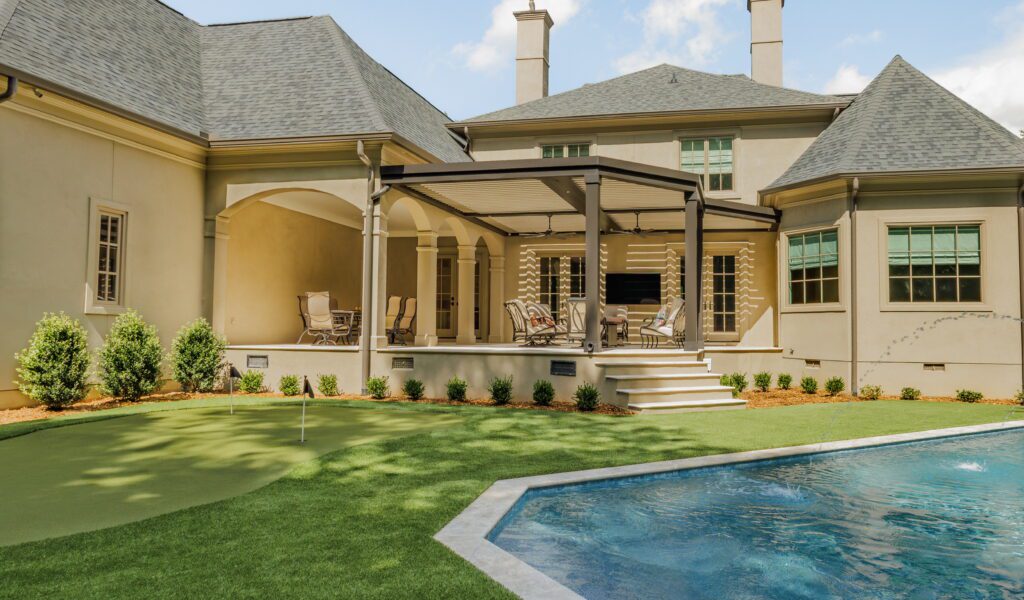
Comfort is no longer dependent on perfect weather or constant setup. With the integration of modern systems—such as automated shading, adjustable louvered roofs, integrated lighting and discreet drainage solutions—outdoor spaces can now adapt in real time to changing conditions.
A space can move from full sun to filtered shade within seconds. Lighting can extend usability well into the evening. Weather protection no longer requires moving indoors. The result is a space that behaves less like a traditional patio and more like a true extension of the home.
There’s a common assumption that outdoor living upgrades are primarily about luxury or resale value. While both can be true, they overlook something more personal. These spaces often become the most frequently used part of the home—not because they are extravagant, but because they are effortless. A well-designed and well-equipped outdoor environment removes barriers to gathering. There is no need to prepare it every time. It is always ready.
The Design Behind Everyday Connection
This has a direct impact on how families interact. Homes with thoughtfully designed outdoor areas tend to host more informal gatherings. Children play outside longer. Neighbors engage more often. Hospitality becomes less of an event and more of a habit.
What many people don’t realize is how much precision goes into creating this experience. It is not simply about adding a StruXure or placing furniture outdoors. It involves understanding proportion, movement, comfort zones and how people naturally occupy space over time. When paired with modern automation and structural engineering, these environments become responsive rather than static.
The technology disappears into the design. It doesn’t draw attention to itself—it simply allows the space to function better, more often and with less effort from the homeowner.
Ultimately, outdoor living is no longer just about improving a home. It’s about enhancing how people live within it—creating space not just for design, but for life.
Any content, resident submissions, guest columns, advertisements, and advertorials are not necessarily endorsed by or represent the views of Best Version Media LLC (BVM) or any municipality, homeowners associations, businesses, or organizations that this publication serves. BVM is not responsible for the reliability, suitability, or timeliness of any content submitted, inclusive of materials generated or composed through artificial intelligence (AI). All content submitted is done so at the sole discretion of the submitting party.