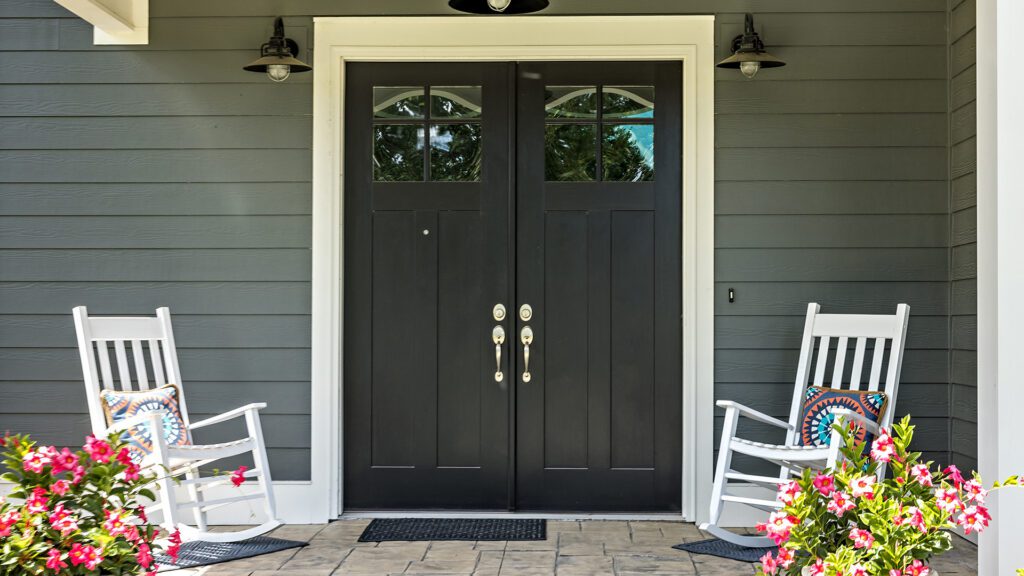
Luxury homes have always been defined by the details you can see—materials, finishes, and architectural style. But increasingly, the difference between a home that simply looks beautiful and one that performs beautifully over time comes down to something far less visible: how it’s built.
Nowhere is that more apparent than at the front entry.
For decades, traditional double door systems have followed the same construction model. Multiple pieces are fabricated separately, then welded together to form the final unit. While this approach has been widely accepted across the industry, it introduces a structural reality that most homeowners are never told about—those connection points can become long-term stress areas.
Over time, even the most visually impressive doors can begin to show subtle signs of movement. Alignment shifts. Air gaps form. Performance changes. And what once felt solid and seamless starts to require adjustment or maintenance.
Most homeowners assume this is normal. In many cases, it’s simply the result of how the door was built.
Today, that standard is beginning to change.
A new approach to double door construction is redefining what long-term performance looks like—one that focuses not on assembling multiple components, but on engineering the system as a unified structure from the start.
This patented double door system introduces a single-piece structural framework that eliminates many of the traditional connection points found in conventional designs. Instead of relying on multiple welded sections, the door system is built as a cohesive unit, designed to maintain its integrity over time.
The impact of that shift is significant.
With fewer structural breakpoints, the system is better able to resist the subtle forces that affect doors every day—temperature fluctuations, settling, and repeated use. The result is improved alignment, more consistent sealing, and a level of long-term stability that homeowners can feel every time the door opens and closes.
It also changes how the home performs as a whole.
A properly aligned entry system plays a direct role in minimizing air and water infiltration, improving energy efficiency, and maintaining interior comfort. While these factors are often associated with windows or insulation, the front entry is one of the most critical—and most overlooked—components in that equation.
For homeowners building or renovating at a high level, these are the kinds of considerations that matter.
Not just how something looks on day one, but how it holds up five, ten, even fifteen years down the line.
And increasingly, that’s where conversations are shifting.
Builders and architects are beginning to prioritize not just design, but construction methodology. They’re asking different questions. How is the system engineered? Where are the stress points? What happens over time?
Because in a market like Southlake—where homes are thoughtfully designed and built to last—those answers carry weight.
What makes this evolution particularly notable is that it doesn’t require homeowners to compromise on aesthetics. The visual impact remains just as striking—clean lines, custom configurations, and a fully tailored design. The difference is what’s happening beneath the surface.
It’s a shift from decorative craftsmanship to structural innovation.
And while it may not be the first thing you notice when you walk up to a home, it’s something you experience every time you use it.
As more homeowners become aware of how these systems are built, many are choosing to see the difference firsthand before making a final decision. Not just comparing finishes or styles, but understanding how one system performs versus another.
Because at the highest level of home design, true quality isn’t just about appearance. It’s about what lasts.
When you’re ready to explore your home improvement options, remember you know a guy at Love That Door!