At Habitat, we work with volunteers just about every week. So we know, there’s a lot you can do yourself to keep your home in shape. But we’re contractors, too, so we also know there are limits to what non-pros should tackle.
The first 3 questions to ask yourself when considering a DIY project are: Can it hurt you? Might it require a permit? Can it damage your home?
The Big Four: Gas, Electric, Walls, and Asbestos
These project types cover all three bases. Natural gas can kill you by inhalation or explosion, and should be left entirely to the pros. Electricity can also be fatal or burn your home down.
Even apparently simple fixes like changing out a switch or receptacle can be deceptive – maybe the part’s fine and the real problem is a rodent nest in the wall. Or maybe a previous DIY job poses an electrocution risk. And only a certified electrician should be working on old “knob and tube” systems, or on your circuit panel, where dangers like arcing are ever-present even if the main breaker is off.
Removing walls is also best left to professionals. There’s a danger of removing load-bearing beams, and pipes and wires inside the walls present a hazard. Toxic asbestos is another risk lurking in drywall, joint compounds, pipe insulation, and plaster from the 1920s through the ’70s.
The Dangerous Half-Dozen: Roofs, Trees, Plumbing, Stairs, Chimneys, and Foundations
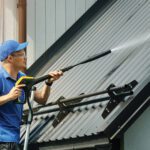
Roof work isn’t necessarily dangerous by itself, but any time you’re on a sloped surface high above the ground, you’re at risk. If you must work on your own roof, please keep it to light maintenance and use safety gear! Chimneys are also inherently dangerous and should be left to the pros.
There are some small plumbing jobs that can be done DIY, like changing a shower head or swapping a rusted P-trap. But if water gets loose, it can damage places that are hard to reach and therefore very expensive to repair. Similarly, tree work like planting and pruning can be done by most homeowners, but dropping trees or large limbs is not work for amateurs.
Stair work, too, can be trickier than it looks. To be safe, steps must be even, level, and properly supported. Get it wrong, and the outcome can be much nastier than a simple fall on flat ground. Foundation work is also not for folks without training. Remember, your entire house rests on the foundation, so a correct diagnosis of the problem and proper repair are essential.
Give Some Thought to Floors and Tile
Floors and tiling are typically not dangerous jobs, but they do require skill to do right. The last thing you want is for your floors or walls to look DIY, so I recommend leaving these jobs to experienced workers.
The bottom line is, when it comes to jobs that can cause injury, cause property damage, get you in hot water with the city, or are just really easy to do badly, personal confidence isn’t enough. Experience, training, and in some cases, proper paperwork are a must. Y’all stay safe!
Any content, resident submissions, guest columns, advertisements, and advertorials are not necessarily endorsed by or represent the views of Best Version Media LLC (BVM) or any municipality, homeowners associations, businesses, or organizations that this publication serves. BVM is not responsible for the reliability, suitability, or timeliness of any content submitted, inclusive of materials generated or composed through artificial intelligence (AI). All content submitted is done so at the sole discretion of the submitting party.