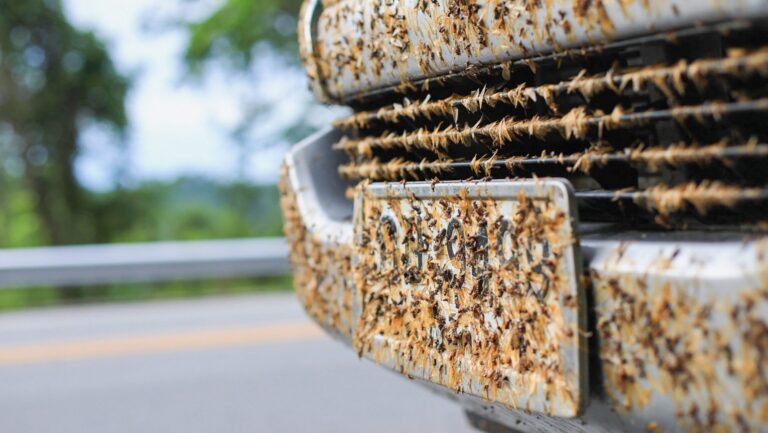
Summer brings warmer weather, family vacations, road trips, and unfortunately, an increase in one of the most overlooked threats to your vehicle’s paint: bug splatter. While many drivers view bug residue as a minor inconvenience, it can actually cause lasting damage to a vehicle’s finish if not removed in a timely manner.
When insects collide with a vehicle at highway speeds, they leave behind more than just visible remains. Bug residue contains proteins, acids, and enzymes that begin breaking down almost immediately. During the hot summer months, these contaminants are baked into the paint surface by the sun, allowing them to bond more aggressively to the clear coat.
The clear coat is the transparent protective layer applied over your vehicle’s paint. Although it is designed to withstand normal environmental exposure, it is not immune to damage. As bug residue remains on the surface, it can begin to etch into the clear coat, leaving behind stains, discoloration, or permanent marks that may require paint correction to remove.
The risk is even greater during July and August when pavement temperatures can exceed 120 degrees. The heat accelerates the chemical reactions occurring within the bug residue, making damage happen much faster than many vehicle owners realize. In some cases, bug splatter left untreated for only a few days can leave visible etching.
Many people attempt to remove bug residue by scrubbing aggressively with sponges, brushes, or rough towels. While this may seem effective, it can often create additional problems. Excessive scrubbing can introduce scratches and swirl marks into the paint, especially if dirt and debris are trapped between the cleaning tool and the vehicle’s surface.
The safest approach is to remove bugs as soon as possible using proper washing techniques and products specifically designed for automotive finishes. Pre-soaking affected areas helps soften the residue, allowing it to be removed with less effort and reducing the risk of scratching. Regular washing during peak bug season can significantly reduce the likelihood of permanent damage.
Vehicles that frequently travel on highways are particularly vulnerable. The front bumper, grille, mirrors, windshield, hood, and leading edge of the roof typically collect the largest concentration of insect remains. Drivers who commute long distances or take frequent summer road trips should inspect these areas regularly and clean them promptly.
Protective products can also help reduce the impact of bug contamination. Waxes, paint sealants, and ceramic coatings create a sacrificial barrier between contaminants and the vehicle’s paint. While no product can completely prevent bug accumulation, protected surfaces are generally easier to clean and less likely to suffer permanent staining or etching.
Keeping bug residue off your vehicle is about more than appearance. Routine maintenance helps preserve the integrity of the paint, maintain resale value, and reduce the need for costly corrective work in the future. A few minutes spent removing bug splatter today can help prevent much larger paint issues down the road.
Any content, resident submissions, guest columns, advertisements, and advertorials are not necessarily endorsed by or represent the views of Best Version Media LLC (BVM) or any municipality, homeowners associations, businesses, or organizations that this publication serves. BVM is not responsible for the reliability, suitability, or timeliness of any content submitted, inclusive of materials generated or composed through artificial intelligence (AI). All content submitted is done so at the sole discretion of the submitting party.