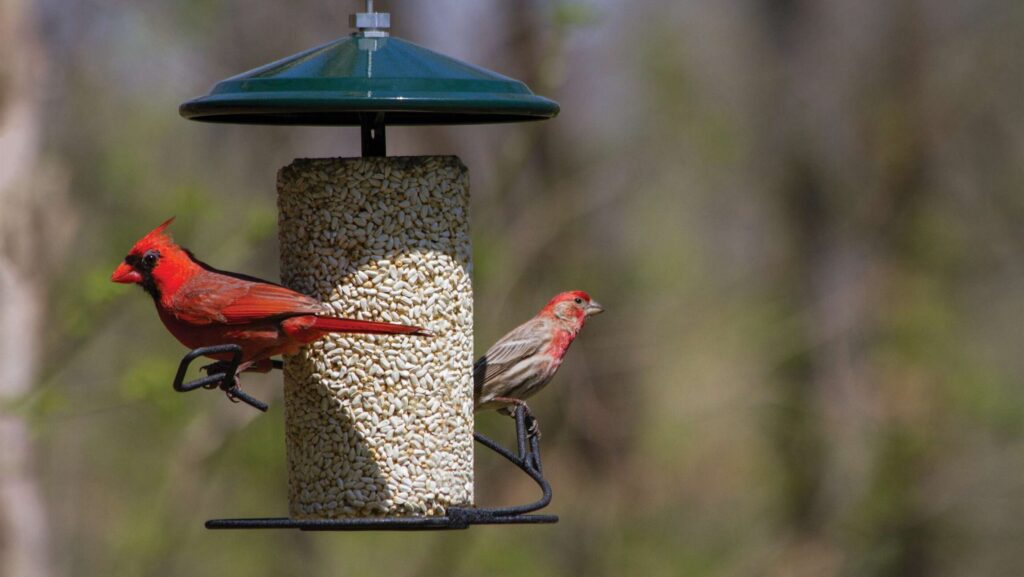
Grackles, starlings, and blackbirds are eating all my bird food! We hear this a lot around this time of year. But no worries! There are ways to slow them down or defeat them. For the sake of this article, we’ll combine these three birds into one group, “problem birds”. It’s not really fair to call them that, but it will make for a reference in this article. They can dominate feeders and binge in groups, and when the babies leave the nest, it compounds the problem as mom and dad show them where to get free food. Fortunately, there are some things we can do to remedy/lessen the issue. Most will have some tradeoffs, though.
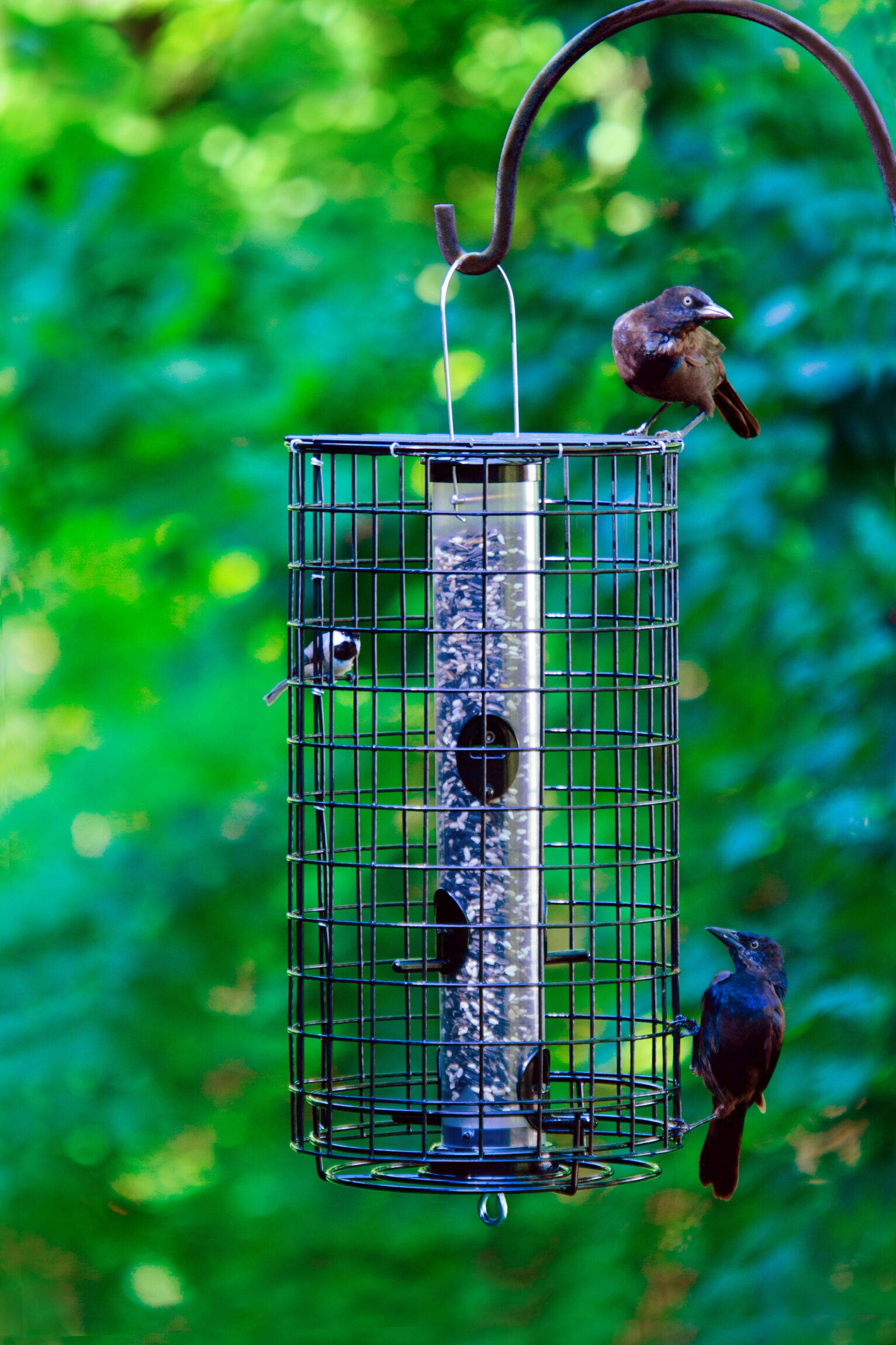
Submitted photo
One of the best solutions is to add cages around feeders. Sometimes cages can be added to an existing feeder, and other times feeders can come with cages already around them. Seed tube feeders can have cages added onto them (see picture) as well as seed cylinder feeders. Stick with ones that have 1.5” openings. This size is enough to allow the smaller birds like chickadees, nuthatches, finches and downy woodpeckers in. There are also some cons to this solution, though. Cages with 1.5” openings will block cardinals, blue jays and larger woodpeckers. Many times, people will just add the cages over their feeders during the parts of the year where the problem birds are the greatest, and remove them afterward.
Hard-shell seeds like white safflower and striped sunflower are another option. They can be used in most traditional feeders, and the problem birds have a tougher time cracking the shell to get to the seed. Safflower is enjoyed by cardinals, grosbeaks, chickadees, house finches, nuthatches and some woodpeckers. Striped sunflower can be eaten by some of those birds, plus blue jays. You need to use these seeds straight, not mixed in with other seeds. If mixed with other seeds, the problem birds will scatter and toss the seeds to get to the seeds they want. That can get messy fast! The cons to this solution are that some songbirds, in addition to the problem birds, can’t break the shells. Goldfinches are a good example.
Submitted photo
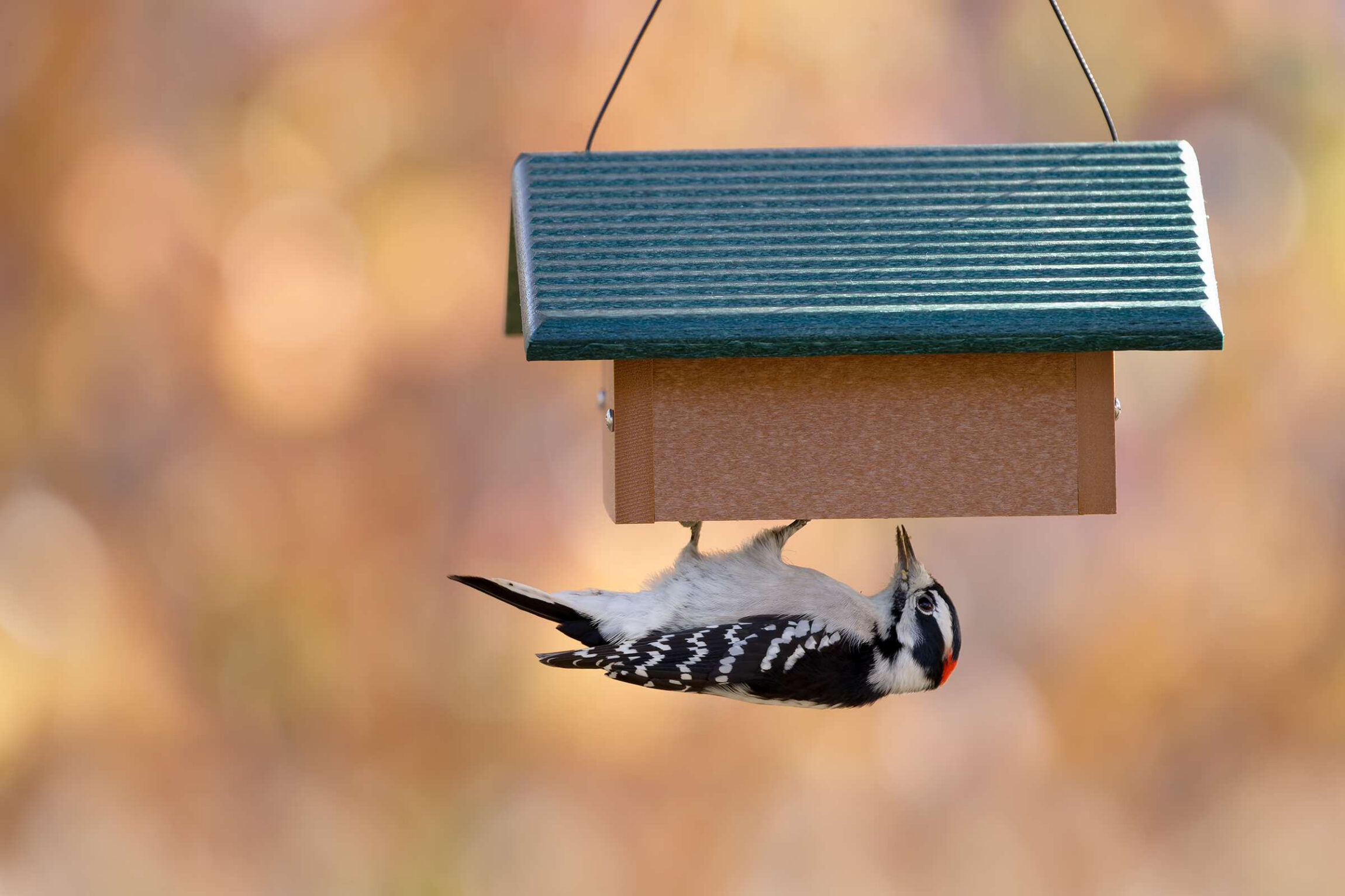
Starlings are notorious for cleaning out a suet cake in little time, but using an upside-down suet feeder can make things more difficult for them (see photo). They aren’t the most athletic birds, whereas woodpeckers are acrobatic clingers. Some suet feeders can also come with built-in cages or have cages added to them. The cons are that these cages will keep out the red-bellied and pileated woodpeckers. But, during peak starling time, it can be worth it to add a cage for a while.
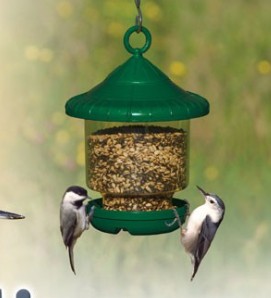 Small feeders with only the slightest edge to cling to can also be of help to prevent the bigger, more clumsy problem birds from holding on long enough to get any seed, yet allow birds like chickadees and nuthatches to grasp and hang on (see photo).
There are no perfect solutions that work exactly as we want, but if you can live with some cons for a while, these solutions can all be effective during the summer months when the grackles, starlings, and blackbirds are at their height in numbers.
Any content, resident submissions, guest columns, advertisements, and advertorials are not necessarily endorsed by or represent the views of Best Version Media LLC (BVM) or any municipality, homeowners associations, businesses, or organizations that this publication serves. BVM is not responsible for the reliability, suitability, or timeliness of any content submitted, inclusive of materials generated or composed through artificial intelligence (AI). All content submitted is done so at the sole discretion of the submitting party.